

Disclosure: As an Amazon Associate, Veranoz earns from qualifying purchases. Some other links are affiliate links too. We may earn a commission at no extra cost to you. Veranoz hasn’t run its own clinical test of the products listed; this guide is based on American Academy of Dermatology (AAD) guidance, ingredient research and brand information. It’s not a substitute for medical advice; talk to your doctor about menopause symptoms and treatment options.
One of the most common skin changes women notice in perimenopause and menopause is sudden, stubborn dryness. Your face feels tight an hour after moisturizing, makeup looks patchy, your shins flake, and your skin itches at night. It isn’t your imagination. Falling estrogen changes how your skin holds water and how much oil it makes. The good news: a few changes to how you cleanse, shower and moisturize make a dramatic difference. Here’s the routine, the science behind it and the products worth using.
Free: the Winter Dry Skin Rescue Plan
A printable 14-day plan for dry, tight winter skin: shower rules, a face routine, and fixes for hands, lips and heels.
Free. You will also get a few short emails with tips and offers. Unsubscribe anytime. Privacy policy.
The Real Problem
Most women respond to menopausal dryness by switching moisturizers again and again. But the routine around the moisturizer often matters more: long hot showers, foaming cleansers, fragranced products and dry indoor air keep stripping the skin faster than any cream can repair it. Fixing those habits first lets a good moisturizer actually work.
Short Answer
Why it happens: lower estrogen means less oil, less water-holding ability and faster collagen loss. What fixes it: a mild non-soap cleanser, 5–10 minute warm (not hot) showers, a fragrance-free cream or ointment applied to damp skin, humectants like glycerin and hyaluronic acid sealed in with ceramides or petrolatum, a humidifier, and SPF 30+ daily. Add later: a gentle retinoid or peptides for thinning and lines once your skin is comfortable. See a dermatologist if dryness persists, itches badly or comes with a rash.

The Winter Dry Skin Rescue Plan
Winter shower rules, a face routine for very dry skin, mini-routines for hands, lips and heels, an ingredient cheat sheet and a 14-day rescue checklist.
Send me the free plan →In This Guide
Why Menopause Dries Out Your Skin
Estrogen supports oil production, the skin’s water-holding molecules (like hyaluronic acid) and collagen. As levels fall, skin becomes drier, thinner and slower to repair. The AAD notes skin loses about 30% of its collagen in the first five years of menopause, then about 2% a year for the next 20 years, and that skin loses some of its ability to hold water, so it can get very dry, especially in dry air.
| Change | What you notice | What helps |
|---|---|---|
| Less oil (sebum) | Tightness, flaking, dull skin | Emollients like squalane, shea, ceramides |
| Lower water-holding ability | Fine dehydration lines, rough texture | Humectants: glycerin, hyaluronic acid |
| Weaker barrier | Stinging, itchiness, new sensitivity | Fragrance-free products, fewer actives |
| Collagen loss | Thinner, crepey skin; easier bruising | Sunscreen, retinoids or peptides (later) |
| Slower healing | Irritation lasts longer | Gentle routine, patience |
Face Routine: Morning and Night
| Step | Morning | Night |
|---|---|---|
| 1. Cleanse | Lukewarm water rinse, or a creamy non-soap cleanser | Creamy non-soap cleanser (micellar water first if wearing makeup) |
| 2. Hydrate | Hyaluronic acid or glycerin serum on damp skin | Hyaluronic acid serum on damp skin |
| 3. Treat | Vitamin C (optional, once skin is calm) | Retinoid or peptide serum (add after 4 weeks of comfort) |
| 4. Moisturize | Fragrance-free cream | Richer cream or ceramide night cream |
| 5. Seal (optional) | — | 2–3 drops squalane, or a thin layer of balm on very dry patches |
| 6. Protect | Broad-spectrum SPF 30+ | — |
- Cleanse gently. The AAD recommends a mild cleanser instead of soap, which can be too drying for already-dry skin, and skipping deodorant bars. See best cleansers for dry skin.
- Apply serum to damp skin. Humectants pull water into skin better when there’s water to grab.
- Moisturize within a minute. Choose a cream over a lotion; the AAD notes creams and ointments add more moisture. Our picks: best moisturizer for dry skin and best night cream for dry skin.
- Seal very dry areas. A few drops of squalane or a thin layer of balm at night. See our squalane guide.
- Wear SPF 30+ daily, even in winter, on the face, neck and hands. The AAD notes sunscreen also helps prevent further skin thinning.
Ingredients That Help (and Hurt)
| Helps (AAD-listed ingredients in bold) | What it does |
|---|---|
| Glycerin, hyaluronic acid | Humectants: draw water into the skin |
| Shea butter, jojoba oil, squalane | Emollients: soften and smooth |
| Petrolatum, mineral oil, dimethicone, lanolin | Occlusives: lock moisture in |
| Lactic acid (low strength, body) | Hydrates and gently smooths rough skin |
| Ceramides, cholesterol, fatty acids | Rebuild the barrier |
| Colloidal oatmeal | Soothes itchy, dry skin |
| Hurts | Why |
|---|---|
| Fragrance | Irritates sensitive, dry skin; the AAD recommends fragrance-free |
| Alcohol (high in the list) | Drying |
| Soap and deodorant bars | Strip oils |
| Strong acids and scrubs | Damage an already weak barrier |
| Too many actives at once | Irritation that’s slow to heal |
Want a full ingredient breakdown? See our hydrating ingredients guide.
Body Routine and Shower Habits
Dry shins, itchy backs and rough arms often bother menopausal women more than the face. The AAD’s dry-skin advice is simple and works:
- Keep showers to 5–10 minutes and use warm, not hot, water.
- Close the bathroom door to keep humidity in.
- Use cleanser only where you need it (armpits, groin, feet) and avoid a thick lather.
- Shave at the end of your shower.
- Pat dry instead of rubbing.
- Moisturize while skin is still damp, within a few minutes of stepping out.
- Choose a cream or ointment over a lotion for the body.
| Body concern | What to use | Guide |
|---|---|---|
| Crepey arms | Rich cream; lactic acid or urea lotion a few nights a week | Crepey skin on arms |
| Crepey legs and knees | Cream after showering; body SPF | Crepey legs and knees |
| Dull, rough skin | Body oil on damp skin, then cream | Body oil vs lotion |
| Itchy, flaky shins | Ointment or thick cream at night | See a dermatologist if itching persists |
For a full in-shower plan, see our everything shower routine.
Pro Tip
Use the “3-minute rule”: apply body moisturizer within three minutes of turning off the water. Skin is still damp, and the cream traps that water instead of letting it evaporate. Keep a tub of cream in the bathroom so you never skip it.
Products Worth Buying
La Roche-Posay Toleriane Hydrating Gentle Cleanser
A creamy, fragrance-free, non-soap cleanser with ceramides and glycerin.
Check on Amazon →The Ordinary Hyaluronic Acid 2% + B5
A simple, affordable humectant serum to apply on damp skin.
Check on Amazon →CeraVe Skin Renewing Night Cream
A rich, fragrance-free cream with ceramides, peptides and niacinamide.
Check on Amazon →CeraVe Moisturizing Cream
A classic fragrance-free tub with ceramides, hyaluronic acid and petrolatum.
Check on Amazon →Aquaphor Healing Ointment
An occlusive ointment that seals in moisture overnight.
Check on Amazon →Bedroom Humidifier
The AAD suggests running a portable humidifier in the bedroom while you sleep.
Check on Amazon →Quick Comparison: Moisturizer Textures
| Texture | Moisture level | Best for |
|---|---|---|
| Lotion | Light | Humid weather, oily areas |
| Gel-cream | Light to medium | Combination skin |
| Cream | Medium to rich | Most menopausal skin, face and body |
| Ointment / balm | Richest | Very dry patches, cracked skin, overnight |
More on textures: cream vs gel moisturizer.
Free: the Winter Dry Skin Rescue Plan
A printable 14-day plan for dry, tight winter skin: shower rules, a face routine, and fixes for hands, lips and heels.
Free. You will also get a few short emails with tips and offers. Unsubscribe anytime. Privacy policy.
Home and Lifestyle Fixes
- Run a humidifier in your bedroom while you sleep, and clean it regularly to prevent mold.
- Wear gloves for dishwashing, cleaning and gardening, and in cold weather.
- Choose loose cotton clothing, and avoid wool or polyester directly on dry skin.
- Use lip balm or petroleum jelly for dry lips; switch if a balm stings.
- Keep hand cream by every sink and use it after each wash.
- Talk to your doctor about menopause symptoms in general. Some treatments can affect skin, and your doctor can help you weigh options.
Adding Retinol and Other Actives
Once your skin feels comfortable for about four weeks, you can add one active for fine lines. The AAD notes retinol or peptide products may increase collagen to help with sagging and wrinkles, and that a dermatologist may recommend a retinoid cream for thin, easily bruised skin. Start slowly: retinoids can be drying, which is exactly what menopausal skin doesn’t need.
| Active | Dryness risk | How to add it |
|---|---|---|
| Peptides | Low | Nightly, under moisturizer. See best peptide serums |
| Bakuchiol | Low | Once daily, then twice. See best bakuchiol serums |
| Gentle retinol | Moderate | 2 nights a week, “sandwiched” between moisturizer layers. See retinol for beginners |
| Prescription retinoid | Higher | Only with your dermatologist’s guidance |
Comparing a retinol-and-peptide cream with drugstore options? See Kollagen Intensiv vs drugstore retinol. Kollagen Intensiv contains retinol and isn’t for pregnancy.
When to See a Dermatologist
The AAD recommends seeing a dermatologist if:
- Dryness doesn’t improve with a gentle routine, or before trying exfoliation or microdermabrasion at home.
- You have itching that keeps you up at night, a rash, or cracked, bleeding skin.
- Acne won’t clear, or rosacea or eczema gets worse.
- You notice new or changing spots. Skin cancer can look like a sun spot, so get it checked before treating it.
- You develop an infection or a sore that’s slow to heal.
- Your hair starts thinning.
Mistakes to Avoid
- Long, hot showers. Keep them to 5–10 minutes, warm water.
- Waiting to moisturize. Apply within minutes, on damp skin.
- Using lotion instead of cream. Menopausal skin usually needs a richer texture.
- Fragranced body washes and creams. Go fragrance-free.
- Scrubbing flakes off. It worsens the barrier. Moisturize instead.
- Adding retinol while skin is already irritated. Fix dryness first.
- Skipping sunscreen in winter. UV keeps thinning skin year-round.
Your Menopause Dry Skin Checklist
- Mild, non-soap cleanser; skip deodorant bars
- 5–10 minute warm showers, door closed
- Moisturize within 3 minutes on damp skin
- Cream or ointment, fragrance-free
- Hyaluronic acid or glycerin serum on damp skin
- Humidifier in the bedroom
- SPF 30+ daily, face, neck and hands
- Add one active only after 4 comfortable weeks
Frequently Asked Questions
Why is my skin suddenly so dry in menopause?
Lower estrogen reduces oil production and the skin’s ability to hold water, and collagen drops quickly in the first years after menopause.
What is the best moisturizer for menopausal skin?
A fragrance-free cream with humectants (glycerin, hyaluronic acid) and barrier ingredients (ceramides, petrolatum, dimethicone or shea). Apply it to damp skin.
Does drinking more water fix dry skin?
Staying hydrated supports overall health, but topical care and shower habits make the biggest difference to dry skin.
Can I use retinol on menopausal dry skin?
Yes, once your skin is comfortable. Start with a gentle formula 2 nights a week and apply moisturizer underneath and on top.
Why does my skin itch at night?
Dry air, hot showers and fragranced products are common causes. A humidifier and a thick cream at bedtime help. See a dermatologist if itching persists or you have a rash.
Is facial oil enough on its own?
Usually not. Oils soften skin but don’t add water. Use a hydrating serum and cream first, then a few drops of oil.
Can menopause cause adult acne too?
Yes. The AAD advises avoiding drying acne products and seeing a dermatologist if acne isn’t under control. See hormonal acne in adult women.
Do I need different products for my body?
The same principles apply: gentle cleanser, warm short showers, and a fragrance-free cream or ointment on damp skin.
Sources: American Academy of Dermatology, Skin care during menopause and Dermatologists’ tips to relieve dry skin. Veranoz has not lab-tested every product listed. This article is informational and not medical advice.
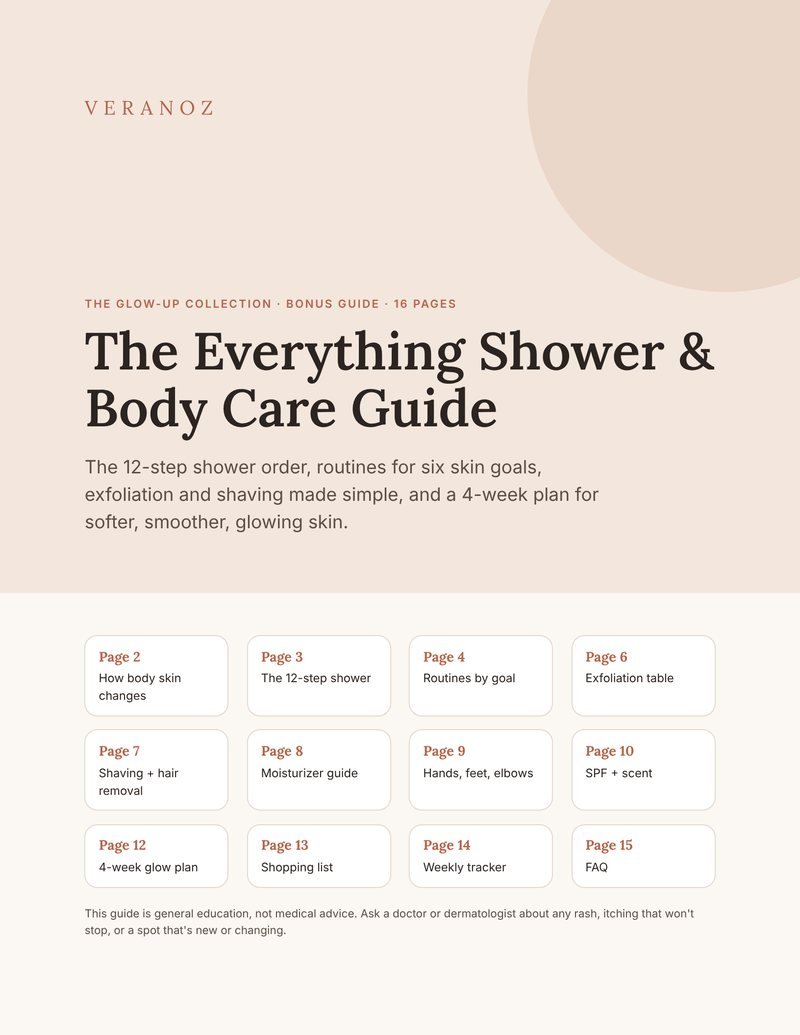
The Everything Shower & Body Care Guide
The 12-step shower order, routines for dry, crepey, bumpy or breakout-prone body skin, exfoliation and moisturizer guides, hands, feet and body SPF, and a 4-week body glow plan. 16 printable pages, instant access.
Get the Guide ($17) →Kollagen Intensiv — The One Treatment Step Worth Adding
Once your cleanser, moisturizer, and sunscreen feel steady, Kollagen Intensiv is the treatment step we suggest adding. It combines SYN-COLL and other peptides with a low dose of retinol, vitamin C and hyaluronic acid, so it can replace a separate retinol and moisturizer. Start every other night, wear SPF daily, and judge it after about 12 weeks. Not for use during pregnancy or breastfeeding. Read our honest review.
Affiliate link — we earn a commission at no extra cost to you. Statements not evaluated by the FDA. Individual results vary.
Eyelasticity — For Puffiness & Crepey Eyes
If the eye area is your main concern, Skinception’s Eyelasticity is a retinol-free peptide eye cream (Matrixyl, Haloxyl and Eyeliss) for puffiness, crow’s feet and crepey lids. Do you need an eye cream?
Get the Free 7-Day Glow-Up Checklist
One simple beauty and self-care habit per day: everything shower, body care, hair, nails, fragrance, and your Sunday reset ritual. Free PDF, instant access.
Veranoz Guides to Go Deeper
Affiliate disclosure: This post contains affiliate links. We earn a commission if you purchase through our links at no extra cost to you. Individual results vary. This content is informational and not medical advice.