

Disclosure: As an Amazon Associate, Veranoz earns from qualifying purchases. We may earn a commission if you buy through links in this post, at no extra cost to you.
Yes. A humidifier can help dry skin when the air indoors is very dry, which is common in winter when the heat is running. Raising bedroom humidity to about 30–50% slows the water your skin loses overnight, so you wake up less tight and itchy and your moisturizer works better. It won’t fix dry skin on its own, and an unclean humidifier can spread mold and bacteria, so the setup and cleaning matter as much as the machine.
Free: the Winter Dry Skin Rescue Plan
A printable 14-day plan for dry, tight winter skin: shower rules, a face routine, and fixes for hands, lips and heels.
Free. You will also get a few short emails with tips and offers. Unsubscribe anytime. Privacy policy.
This guide covers the humidity level to aim for, which type to buy, where to put it, how to keep it clean, and our picks for bedrooms and desks.
The Real Problem
Cold outdoor air holds little moisture, and indoor heating dries it further. When indoor humidity drops below about 30%, skin loses water faster, especially overnight. That’s why your face feels tight, your hands crack, and your lips peel every winter, even if your routine hasn’t changed. Moisturizer helps, but it’s working against dry air for eight hours a night.

Short Answer
Aim for 30–50% indoor humidity, measured with a cheap hygrometer. Choose a cool-mist or evaporative humidifier sized for your bedroom, place it a few feet from the bed on a raised surface, use distilled water if you have an ultrasonic model, empty it daily and clean it every three days. Keep using a rich moisturizer: humidity helps it work, it doesn’t replace it.

The Winter Dry Skin Rescue Plan
Winter shower rules, a face routine for dry skin over 40, mini-routines for hands, lips and heels, an ingredient cheat sheet and a 14-day rescue checklist.
Send me the free plan →In This Guide
How Humidity Affects Your Skin
Your skin constantly loses a little water to the air. The drier the air, the faster that happens. Over a winter night in a heated room, that can be enough to leave the outer layer of skin dry, tight and flaky. Dermatologists include a humidifier in their standard advice for dry skin because it slows that loss at the source, while moisturizer seals water in on the surface.
Mature skin feels this more. After 40 and through menopause, skin produces less oil and its barrier lets water out more easily, so dry air hits harder.
The Right Humidity Level
| Indoor humidity | What happens | What to do |
|---|---|---|
| Below 30% | Dry skin, cracked lips, static, dry eyes and sinuses | Run a humidifier, especially at night |
| 30–50% | The comfortable target range | Maintain it |
| Above 50–60% | Condensation on windows, mold and dust mite growth | Turn it down or off |
The EPA recommends keeping indoor humidity between 30 and 50% and below 60% to prevent mold. More humidity isn’t better. Use a hygrometer so you’re not guessing.
Digital Hygrometer (Humidity Monitor)
An inexpensive digital monitor shows your room’s humidity at a glance, so you can keep it in the 30–50% range.
Check on Amazon →Cool Mist vs Warm Mist vs Evaporative
| Type | How it works | Pros | Cons |
|---|---|---|---|
| Ultrasonic cool mist | Vibrations turn water into a fine mist | Very quiet, energy-efficient | With tap water, can leave white mineral dust; needs regular cleaning |
| Evaporative cool mist | A fan blows air through a wet wick | No white dust; naturally self-limiting | Fan noise; wicks need replacing |
| Warm mist | Boils water into steam | Mist is sterilized by heat | Burn risk around kids and pets; uses more energy |
For most bedrooms, a cool-mist humidifier is the practical choice. Health organizations recommend cool-mist models in homes with children because warm-mist units can cause burns.
Related ReadWinter Shower Routine for Dry, Itchy SkinWhere to Put It and How to Run It
- Size it to the room. Check the square footage on the box. Too small won’t help; too big can over-humidify a small room.
- Place it 3–6 feet from the bed, on a raised, water-safe surface, not on carpet or wood that can get damp.
- Point the mist away from walls, curtains and electronics.
- Close the door while it runs so the moisture stays in the room.
- Run it in the evening and overnight, when your skin loses the most water and the heating is on.
- Watch for condensation on windows. If you see it, humidity is too high.
Free: the Winter Dry Skin Rescue Plan
A printable 14-day plan for dry, tight winter skin: shower rules, a face routine, and fixes for hands, lips and heels.
Free. You will also get a few short emails with tips and offers. Unsubscribe anytime. Privacy policy.
How to Keep It Clean (Important)
A dirty humidifier can grow mold and bacteria and spray them into the air you breathe. Mayo Clinic recommends these basics:
- Empty and refill with fresh water every day. Don’t let water sit.
- Clean the tank every three days following the maker’s instructions, often with a vinegar or hydrogen peroxide solution, then rinse well.
- Use distilled or demineralized water in ultrasonic models to avoid white mineral dust and buildup.
- Replace filters and wicks as often as the manufacturer recommends.
- Dry it out completely before storing it at the end of the season.
Best Humidifiers for Dry Skin
Levoit Cool Mist Ultrasonic Humidifier
Levoit’s top-fill cool-mist models are quiet, easy to refill and widely available. Many include a sleep mode and a humidity setting.
Check on Amazon →Honeywell Evaporative Humidifier
Evaporative humidifiers don’t release mineral dust and naturally slow down as the room gets more humid. You’ll replace the wick filter periodically.
Check on Amazon →Vicks Filter-Free Cool Mist Humidifier
A simple, affordable cool-mist humidifier for smaller rooms. Pair it with a hygrometer to avoid over-humidifying.
Check on Amazon →Small Desk Humidifier
A small USB humidifier won’t humidify a room, but it adds a little moisture to your immediate space. Clean it as often as a full-size one.
Check on Amazon →The Rest of Your Dry-Skin Routine
A humidifier works best alongside a few habits:
- Short, lukewarm showers with a gentle, fragrance-free cleanser.
- Moisturizer within a few minutes of bathing, while skin is still damp.
- Creams and ointments rather than thin lotions in winter.
- A thick hand cream and cotton gloves for cracked hands. See our cracked hands guide.
- Gloves and a scarf outdoors to block cold, dry wind.
For face care, see the best moisturizer for dry skin, and our body care routine for women over 40 for everything below the neck.
Humidifier Checklist
- Hygrometer reading 30–50%
- Cool-mist or evaporative, sized for the room
- 3–6 feet from the bed, on a raised surface
- Distilled water for ultrasonic models
- Empty and refill daily
- Clean the tank every 3 days
- Replace wicks and filters on schedule
- Turn down if windows fog
Frequently Asked Questions
Does sleeping with a humidifier help dry skin?
Yes, when the air is dry. Keeping your bedroom at 30–50% humidity slows overnight water loss, so skin feels less tight and itchy in the morning. Keep moisturizing too.
What humidity is best for skin?
Between 30 and 50%. Above about 50–60%, mold and dust mites become more likely.
Is a cool-mist or warm-mist humidifier better for skin?
Both add moisture equally. Cool mist is usually recommended for bedrooms and homes with kids because warm-mist units can cause burns.
Can a humidifier make skin worse?
A dirty one can spread mold or bacteria, and too much humidity encourages mold and dust mites, which can aggravate allergies. Keep it clean and stay within 30–50%.
Should I use tap water or distilled water?
Distilled or demineralized water is best for ultrasonic humidifiers, because tap water minerals can create white dust. Evaporative models handle tap water better.
Sources: EPA, A Brief Guide to Mold, Moisture and Your Home; Mayo Clinic, Humidifiers: Ease skin, breathing symptoms; American Academy of Dermatology, dermatologists’ tips to relieve dry skin. Veranoz has not tested these humidifiers.
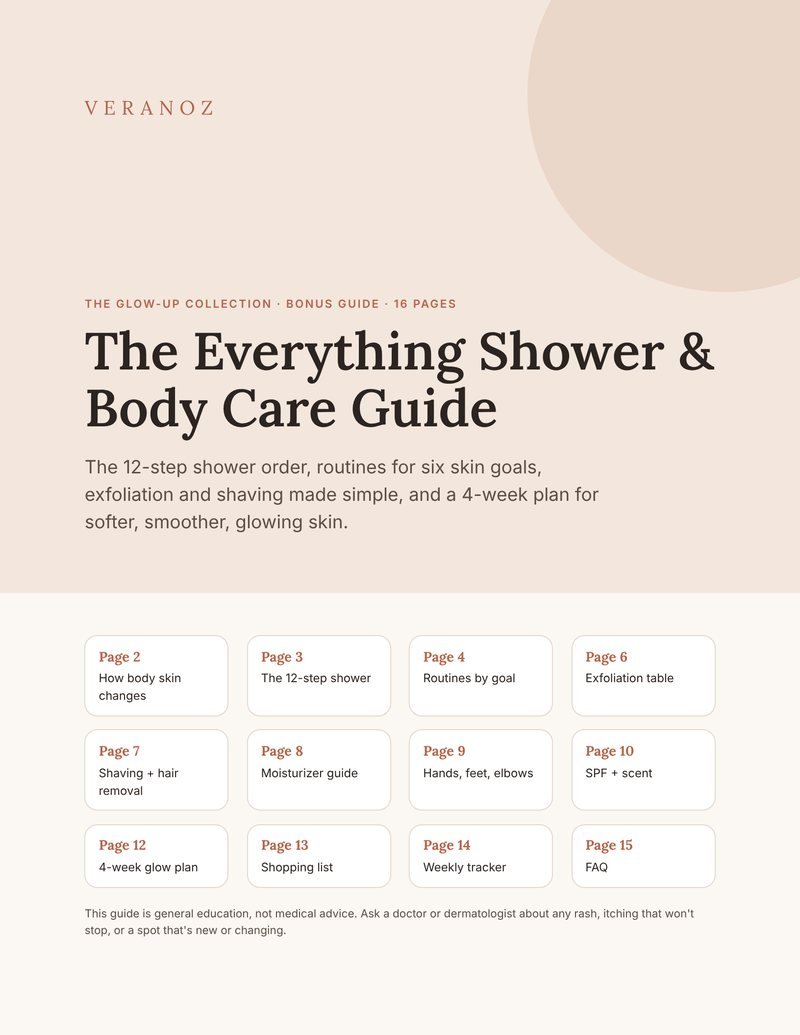
The Everything Shower & Body Care Guide
The 12-step shower order, routines for dry, crepey, bumpy or breakout-prone body skin, exfoliation and moisturizer guides, hands, feet and body SPF, and a 4-week body glow plan. 16 printable pages, instant access.
Get the Guide ($17) →Get the Free Self-Care Reset Kit
Daily, weekly and monthly self-care checklists, the everything shower order, a 3-hour at-home spa day plan and a 30-day reset tracker. Free printable, instant access.
The Veranoz 30-Day Glow-Up Planner
Routines only work when you actually keep them. The planner gives you daily planning pages, weekly resets and habit trackers so your skincare, body care and self-care steps become automatic instead of something you remember once in a while.
Veranoz Guides to Go Deeper
Some links on Veranoz are affiliate links; we may earn a commission at no extra cost to you. This content is informational and not medical advice.