
Disclosure: Some links in this post are affiliate links. If you buy through them, Veranoz may earn a commission at no extra cost to you. As an Amazon Associate, Veranoz earns from qualifying purchases.
That serum tucked in the back of your bathroom drawer may still look perfectly lovely, but skincare does not last forever. This skincare expiration guide makes the decision simpler: learn what the label is telling you, notice a few quiet changes in your products, and keep only what still feels fresh enough for your daily ritual.
Free: the Skincare Layering Cheat Sheet
The morning and night order, what not to mix, and how long to wait between steps, on one printable page.
Free. You will also get a few short emails with tips and offers. Unsubscribe anytime. Privacy policy.
There is no need to panic-clean your entire vanity. Most products have a reasonable window of use, and a calm check-in every few months is usually all it takes. Think of it as a small act of care for your skin, your space, and the routine that helps you feel put together.
Skincare Expiration Guide: Start With the Package
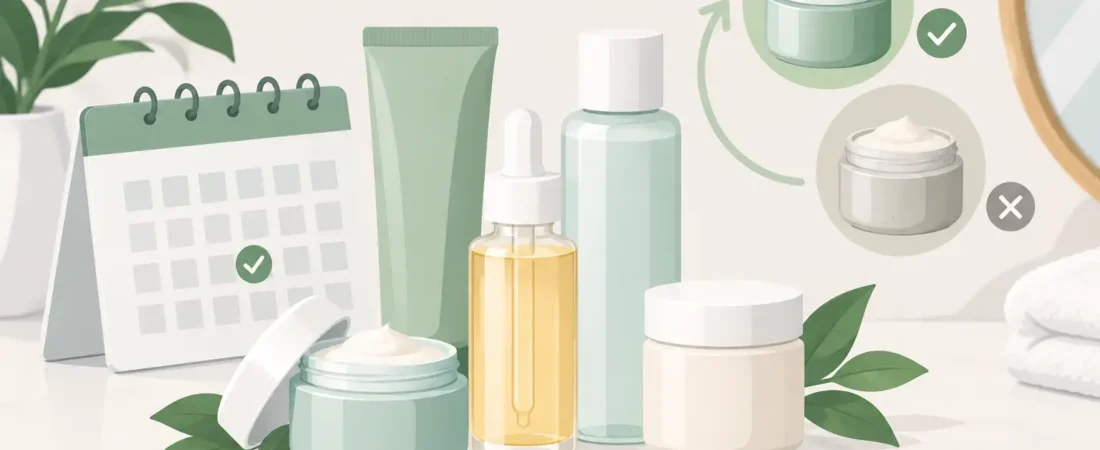
There are two dates or symbols you may see on skincare packaging. The first is a printed expiration date, often marked with “EXP,” a month and year, or a small batch code. If a product has a clear expiration date, follow it. This is especially wise for sunscreen, because its listed protection may no longer perform as intended after that date.
The second is the open-jar symbol, also called the period-after-opening symbol. It looks like a tiny container with a number inside or beside it, such as 6M, 12M, or 24M. The number tells you how many months the product is generally meant to stay at its best after you open it.
For example, a moisturizer marked 12M is designed to be used within 12 months of opening. It does not mean you need to throw it away exactly one year after buying it if the seal was never broken. The clock starts when air, fingers, and everyday use enter the picture.
If you cannot find either marker, look for a batch code stamped on the bottom, back, or crimped edge of the package. Brands can sometimes identify the production date from this code. Still, when a product’s age is unclear and it has been open for a long time, it is kinder to your routine to replace it rather than guess.
A simple way to remember when you opened it
Write the month and year on the bottom of new products with a fine-tip marker, or add a note in your phone. This tiny habit is particularly helpful for products that last a while, like masks, exfoliating treatments, and larger bottles of lotion.
You do not need to track every lip balm or travel-size cleanser. Save the system for products you use slowly or reach for only occasionally. The goal is ease, not another task to manage.
Related: How to read a skincare ingredient label
Typical Skincare Shelf Life After Opening
The package always comes first, but these general ranges can help when a symbol is missing. They are best treated as a gentle reference, not a promise that every formula will behave exactly the same way.
Cleansers, moisturizers, and body lotions often stay fresh for about 6 to 12 months after opening. Pump bottles tend to be easier to keep clean than wide jars, so their formulas may have a little more protection from repeated exposure.
Serums are commonly best within 6 to 12 months. Vitamin C formulas deserve a closer look because they can change more quickly when exposed to light and air. A fresh vitamin C serum may be clear or pale, while a formula that has turned deep yellow, orange, or brown is usually ready to leave your routine.
Face oils can last around 6 to 12 months, depending on the blend and packaging. Oils do not always show obvious separation, so scent matters here. If an oil smells sharp, stale, or a little like old cooking oil, it has likely oxidized.
Masks and exfoliating products often last 6 to 12 months after opening. Because they may be used less often, they are easy to forget. Check the texture before bringing one back into your Sunday reset.
Sunscreen should be replaced by the expiration date printed on the package. If there is no date, many unopened sunscreens are generally made to remain stable for about three years, but storage conditions matter. Once a sunscreen has been sitting in a hot car, beach bag, or sunny windowsill, it is better to choose a fresh one rather than rely on a timeline.
Makeup follows similar common-sense rules. Liquid complexion products and cream products are often best within 6 to 12 months after opening, while powders may last longer if kept dry and clean. Mascara usually has a shorter window, often around three to six months, because the tube is opened so frequently and used near the eyes.
Veranoz pick
Want a short list of the products we point readers to? See the Veranoz recommendations page.
The Signs Your Product Is Past Its Best
A date is useful, but your senses are useful too. Skincare can change before the listed timeframe if it has been stored poorly, opened repeatedly, or exposed to heat. On the other hand, a product close to its suggested date may still look and smell normal. When in doubt, let the condition of the formula and the label guide you together.
Look for a noticeable change in color, especially in clear serums and lighter creams. Separation can also be a clue, although some formulas naturally settle and can be mixed gently. If shaking does not bring the product back to its usual smooth texture, it is time to let it go.
Pay attention to scent as well. A fragrance-free product may develop an unusual odor when it is no longer fresh, while scented products can smell flat, sour, or different from when you first opened them. Changes in texture matter too: unexpected grittiness, clumps, watery pooling, curdling, or a sticky finish that was not there before are all good reasons to replace a product.
If you see mold, discoloration around the opening, or a damaged package, do not try to salvage it. The same goes for a product that feels uncomfortable when you use it. A calm routine should feel supportive, not like something you need to question.
Free: the Skincare Layering Cheat Sheet
The morning and night order, what not to mix, and how long to wait between steps, on one printable page.
Free. You will also get a few short emails with tips and offers. Unsubscribe anytime. Privacy policy.
Storage Can Make a Real Difference
Your bathroom is convenient, but it is not always ideal for every product. Frequent steam and temperature swings can shorten a formula’s best life. A closed cabinet away from the shower is often better than leaving everything on an open counter.
Keep skincare out of direct sunlight and away from radiators, hot cars, and window ledges. Heat and light are particularly unkind to delicate serums, oils, and sunscreen. You do not need a dedicated skincare fridge for a beautiful routine, though a cool, dry drawer or cabinet can go a long way.
Use clean, dry hands when reaching into a jar. Better yet, use the small spatula that comes with certain creams and masks, then wash it regularly. Close caps firmly after use, and wipe away product buildup around pumps and droppers. These simple habits help preserve the texture and freshness you paid for.
Do not save products for a someday routine
It is easy to hold onto a special mask, a beautiful oil, or a serum you planned to use once life felt less busy. But skincare is meant to support your everyday moments, not wait untouched for a perfect occasion.
If you have several open products serving the same purpose, choose one to enjoy consistently before opening another. A smaller, edited routine is easier to use up and easier to keep fresh. It also gives you a clearer sense of what you genuinely enjoy.
A Gentle Seasonal Check-In
Every three or four months, take ten quiet minutes to look through your skincare and beauty products. Pull out anything you have not used recently, check the open-jar symbol or date, and notice whether the formula still looks and smells as it should.
Keep the products that fit your current routine, set aside unopened backups, and discard anything expired or changed. If a product is still fresh but simply not for you, consider whether a friend or family member might enjoy it, as long as it is unopened or has been used hygienically and is appropriate to share.
This is also a lovely moment to clean your makeup bag, wipe down shelves, and place your most-used essentials where you can reach them. A tidy, current collection makes your daily routine feel lighter.
When Replacing Is the Better Choice
Replacing a product is not wasteful when it helps you use your routine with more confidence. The goal is not to own less for the sake of it. It is to make room for products that feel pleasant, dependable, and easy to reach for.
Start with the essentials you use most: cleanser, moisturizer, sunscreen, and any serum or treatment that is part of your regular rhythm. Then refresh occasional products only when you know you will enjoy using them. A thoughtful routine does not need to be crowded to feel special.
Let your skincare shelf reflect the kind of care you want to give yourself: simple, fresh, and easy to return to. A few well-loved products in their best condition can make an ordinary morning or evening feel like a small, steady reset.