
Disclosure: As an Amazon Associate, Veranoz earns from qualifying purchases. We may earn a commission if you buy through links in this post, at no extra cost to you.
Body oil is one of the simplest ways to get glowing skin on your arms, legs and chest: press a few drops onto damp skin right after a warm shower, and it softens, smooths and holds in the water your skin just absorbed. It works best as a seal, not as your only source of hydration, so dry or mature skin often does best with a cream or lotion first and oil on top.
Free: the Winter Dry Skin Rescue Plan
A printable 14-day plan for dry, tight winter skin: shower rules, a face routine, and fixes for hands, lips and heels.
Free. You will also get a few short emails with tips and offers. Unsubscribe anytime. Privacy policy.
Below you’ll find which oils suit which skin (jojoba, squalane, sunflower, argan, mineral oil and the truth about coconut oil), body oil vs lotion and the right layering order, how to apply it on damp skin, who should skip it, how to avoid slips and stains, and a short list of body oils worth considering.
The Real Problem
Skin after 40 makes less oil and loses water faster, so it can look dull, flaky or crepey even when you moisturize. Many women try body oil once, rub it onto dry skin, feel greasy, stain a favorite top and give up. Others pick a heavily scented or coconut-based oil and end up with itchy patches or bumps on the chest and back. The fix is choosing the right oil and putting it on at the right moment, in the right order.
Short Answer
When: within a few minutes of a warm shower, while skin is still slightly damp. How much: a few drops per limb, pressed in, not rubbed hard. Order: water-based products first, oil last. If your skin is dry, use a cream or lotion and then seal with oil; if your skin is normal, oil alone on damp skin is often enough. Best oils to start with: jojoba, squalane, sunflower seed or a fragrance-free blend. Go easy on: coconut oil on the chest, shoulders and back if you break out, and fragranced oils if your skin is sensitive.
The Self-Care Reset Kit
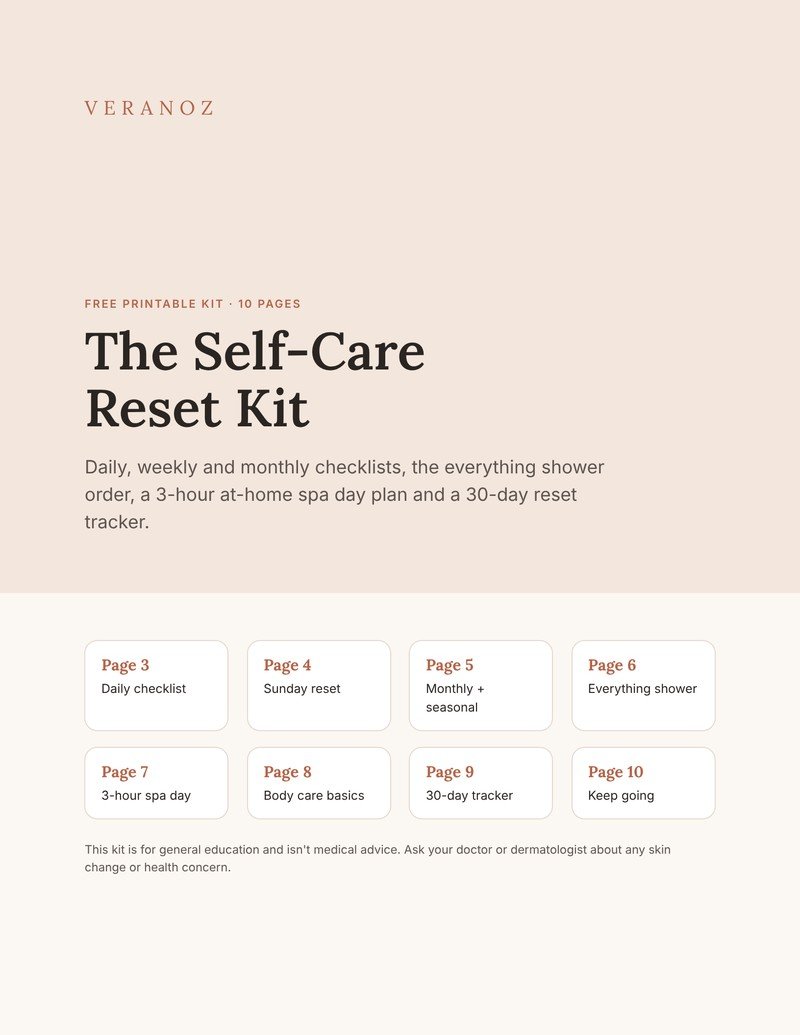
Daily, weekly and monthly self-care checklists, the everything shower order, a 3-hour at-home spa day plan and a 30-day reset tracker.
Send me the free kit →In This Guide
What Body Oil Actually Does for Your Skin
Moisturizers work in three ways. Humectants, like glycerin and hyaluronic acid, draw water into the outer layer of skin. Emollients fill in the tiny cracks that dryness leaves behind, so skin feels smoother and softer. Occlusives form a light film that slows water loss, so skin stays hydrated longer.
Most body oils are emollients, and many also act as occlusives. That’s why they make skin look glossy and feel silky. What oils don’t do is add water. A body oil smoothed onto bone-dry skin can feel slick on top while the skin underneath stays thirsty. Put the same oil on damp skin, or over a water-based lotion, and it helps hold that moisture in. That is where the “glow” comes from: smooth, well-hydrated skin reflects light more evenly.
The American Academy of Dermatology (AAD) recommends moisturizing while skin is still damp after bathing and choosing creams and ointments over thin lotions for dry skin. It lists jojoba oil and mineral oil among the ingredients worth looking for, alongside glycerin, shea butter, dimethicone and petrolatum. Body oil fits right into that advice when you use it as the last step.
Think of body oil as the lid on the jar. Water (from your shower or a lotion) goes in first, and the oil helps keep it there.
Types of Body Oil and Who They Suit
Not all oils behave the same way on skin. Some feel weightless and sink in quickly; others sit on top and stay glossy. Some support the skin barrier well; a few can work against it with heavy, daily use.
| Oil | Feel | Best for | Watch out for |
|---|---|---|---|
| Jojoba | Light, absorbs well | Most skin types, including breakout-prone areas | Rare sensitivity; patch test |
| Squalane | Very light, almost dry | Oily, acne-prone, sensitive or very dry skin | Added fragrance or dyes in some blends |
| Sunflower seed | Light to medium | Dry, easily irritated skin | Check for added essential oils |
| Argan | Medium, silky | Dry, mature skin on arms and legs | Pricier; can feel rich in humid weather |
| Mineral oil (baby oil) | Slick, stays on top | Very dry shins, heels and hands | Can feel greasy; stains fabric |
| Coconut | Rich, solid when cool | Dry elbows, knees, hands and feet | Can clog pores on chest, shoulders and back |
| Olive | Heavy | Occasional use on rough spots | Research suggests it can weaken the skin barrier with regular use |
Jojoba Oil
Jojoba is technically a liquid wax, not a true oil, and it feels lighter than most. The AAD names it as a helpful ingredient for dry skin, and a research review of plant oils in the International Journal of Molecular Sciences described it as a possible option for supporting the skin barrier in several skin conditions, including acne. It’s a solid first body oil if you’re not sure where to start.
Squalane
Squalane is a stabilized form of squalene, a lipid your skin naturally makes less of as you age. Cleveland Clinic dermatologists describe it as lightweight, noncomedogenic (it shouldn’t clog pores) and suitable for all skin types, from oily to very dry. It’s a good choice if you hate the feel of greasy products. The main risk, they note, comes from what else is in the bottle, such as fragrance, preservatives or dyes.
Sunflower Seed Oil
Sunflower seed oil is rich in linoleic acid, a fatty acid that supports the skin’s water barrier. The same research review reported that it preserves the outer skin layer and improves hydration without causing redness. It’s often found in budget-friendly, fragrance-free body oils.
Argan Oil
Argan oil has a silky feel and is a popular choice for mature skin. The review cites studies reporting that daily topical use improved skin hydration and elasticity. These were small studies, so treat argan as a pleasant, nourishing option rather than a firming treatment.
Mineral Oil
Mineral oil gets a bad reputation online, but the AAD lists it among recommended ingredients for dry skin, and Cleveland Clinic notes it works as both an emollient and an occlusive. Plain baby oil on damp shins is an inexpensive way to soften very dry, flaky legs. It does feel slicker than plant oils and is more likely to mark clothing.
Coconut Oil: Useful, With Caveats
Coconut oil can reduce water loss and soften dry skin, and research has found it as effective and safe as mineral oil for mild to moderate dry skin. But Cleveland Clinic dermatologists call it highly comedogenic. It can worsen acne, increase blackheads and whiteheads, and cause milia, the small white bumps that tend to appear on thin skin. If you’re breakout-prone, keep it off your chest, shoulders and back, and don’t use it on your face. It’s best saved for elbows, knees, hands and feet.
Related ReadSimple Body Care Routine for Glowing SkinBody Oil vs Lotion: Which Goes On First?
The simple rule: water-based products first, oil last. Lotions and creams contain water and humectants that hydrate. Oil helps seal that hydration in. If you put a thick layer of oil on first, a lotion on top has a harder time getting through it.
| Body lotion | Body cream | Body oil | |
|---|---|---|---|
| Texture | Thin, more water | Thicker, richer | No water, silky or slick |
| Main job | Quick, light hydration | Hydrates and protects | Softens, seals, adds glow |
| Best for | Normal skin, humid weather | Dry, mature or crepey skin | Finishing step, normal to dry skin |
| Use on | Damp skin | Damp skin | Damp skin, or over lotion or cream |
| Downside | Can be too light for dry skin | Slower to absorb | Doesn’t add water on its own |
Cleveland Clinic dermatologists suggest a cream rather than a lotion for the body if your skin is dry, because lotions contain more water and often more alcohol, which can be drying. The AAD agrees that creams and ointments work better than lotions for dry skin.
Three Ways to Layer Body Oil
- Dry or mature skin: pat dry, apply a cream or rich lotion to damp skin, then press a few drops of oil over the top, especially on shins, arms and the chest.
- Normal skin or humid weather: oil alone on damp skin. The water left on your skin from the shower is the hydration layer, and the oil seals it.
- Quick option: mix two or three drops of oil into a palmful of lotion and apply together.
You may also see a fourth order in our everything shower routine: oil on damp skin first, then cream only on the driest spots. That works too, because the damp skin is still the water layer. The rule that matters most is timing: get something on while skin is damp, within a few minutes of stepping out.
If your arms and legs look thin and crinkly, start with a cream designed for that and add oil on top. Our guide to the best body lotion for crepey skin explains which ingredients to look for.
How to Use Body Oil for Glowing Skin
Step 1: Keep the Shower Warm and Short
The AAD recommends 5 to 10 minute showers in warm, not hot, water, and closing the bathroom door to keep the air humid. Hot water strips the natural oils you’re trying to replace. Use a gentle cleanser only where you need it.
Step 2: Exfoliate Occasionally, Not Daily
Oil absorbs more evenly over smooth skin. A gentle body scrub or lactic acid lotion once a week is plenty for most people. Our guide to body scrub vs acid exfoliation helps you pick one. Skip exfoliation on freshly shaved or irritated skin.
Step 3: Pat Dry, Leaving Skin Damp
Pat, don’t rub. Cleveland Clinic suggests applying moisturizer within about three minutes of drying off, while skin is still slightly damp but not dripping.
Step 4: Warm a Few Drops in Your Hands
Start with three or four drops per arm or leg. Rub your palms together to warm the oil, then press and glide it over the skin in long strokes. You can always add more; it’s harder to take away.
Step 5: Focus on Dry and Visible Areas
Shins, the backs of arms, knees, elbows and the décolletage often show dryness first. For a subtle glow, finish with a drop smoothed over collarbones and shoulders.
Step 6: Give It a Few Minutes
Wrap yourself in a robe or towel and do your face routine while the oil settles. If skin still feels slick after ten minutes, use less next time or choose a lighter oil like squalane.
Keep your body oil on the bathroom counter, not in a drawer. If you can grab it while you’re still damp, you’ll use it. That small habit matters more than which oil you choose.
For a full head-to-toe plan built around this step, see our body care routine for women over 40.
Free: the Winter Dry Skin Rescue Plan
A printable 14-day plan for dry, tight winter skin: shower rules, a face routine, and fixes for hands, lips and heels.
Free. You will also get a few short emails with tips and offers. Unsubscribe anytime. Privacy policy.
Who Should Skip or Limit Body Oil
Body oil is gentle for most people, but it isn’t right for every skin or every area.
- Breakout-prone chest, shoulders or back: skip coconut oil and heavy blends there. Choose squalane or jojoba, or a non-comedogenic lotion instead.
- Eczema or very sensitive skin: avoid fragranced and botanical-heavy oils. A plain, fragrance-free product is safer. Ask your dermatologist before trying something new during a flare.
- Nut allergies: some body oils contain sweet almond, macadamia or other nut oils. Read the full ingredient list.
- Broken, sunburned or infected skin: let it heal first and follow your doctor’s advice.
- Very oily skin in hot, humid weather: a light gel lotion may feel better than oil.
- Before sun exposure: body oil is not sunscreen. Apply a broad-spectrum SPF 30 or higher on exposed skin, as the AAD recommends.
If you get itching, redness or a rash after starting a new oil, stop using it. See a dermatologist if a rash doesn’t settle or keeps coming back.
Shower Slips, Stains and Fragrance Sensitivity
Avoid Slipping in the Shower
Oils make tubs and shower floors slick. If you use an in-shower body oil, apply it at the very end, turn off the water and stand on a non-slip mat, or step out onto the bath mat before applying. Rinse oily residue off the shower floor with hot water and a little dish soap afterward. If balance is a concern, apply oil sitting on the edge of the tub or a shower stool, or skip in-shower oils altogether and use one after you’re out.
Prevent Stains on Clothes and Sheets
- Use less than you think: a thin layer absorbs; a thick layer transfers.
- Wait five to ten minutes before dressing, and choose lighter oils like squalane or jojoba before work.
- Save richer oils like mineral or argan for evenings, under older pajamas.
- Pre-treat oily spots on fabric with dish soap before washing.
- Keep oil off silk and suede, which mark easily.
Watch for Fragrance Sensitivity
Many body oils are scented with essential oils. Cleveland Clinic dermatologists point out that fragrances and botanicals are common allergens that can cause inflammation, flakiness and itching, and list lavender, lemon or limonene, peppermint, rose, tea tree and ylang-ylang among ingredients that may irritate sensitive skin. The AAD adds that “unscented” isn’t the same as “fragrance-free”: unscented products may contain chemicals that mask odors. If your skin reacts easily, look for “fragrance-free” on the label and patch test on your inner arm for a few days first.
If you love scent, wear perfume on clothing or pulse points rather than layering a strongly fragranced oil all over your body.
Body Oils Worth Considering
Veranoz hasn’t tested these products. These are product types matched to common skin needs, so compare ingredient lists before you buy.
Pure Jojoba Oil
A single-ingredient jojoba oil is simple, light and easy to layer over lotion. Look for 100% jojoba with no added fragrance.
Check on Amazon →Plant-Derived Squalane Oil
Feels almost dry and absorbs quickly, so it’s the easiest oil to wear before getting dressed. Look for 100% plant-derived squalane.
Check on Amazon →Fragrance-Free Body Oil for Dry Skin
Blends built on sunflower seed oil or similar oils, without essential oils, are a gentle everyday choice for dry arms and legs.
Check on Amazon →In-Shower Body Oil
Applied to wet skin at the end of your shower and lightly rinsed or patted off. Use a non-slip mat and clean the floor regularly.
Check on Amazon →Kollagen Intensiv Anti-Aging Serum
Body oil softens and adds glow, but it isn’t designed to target fine lines. If your neck and décolletage are your concern, this peptide-based serum from Skinception is made for mature skin. Read our Kollagen Intensiv review to see who it suits and who should skip it.
See Kollagen Intensiv →Body Oil Checklist
- Warm, short shower with a gentle cleanser
- Exfoliate once a week at most
- Pat dry, leaving skin slightly damp
- Cream or lotion first if your skin is dry
- Three or four drops of oil per limb, pressed in
- Extra on shins, elbows, knees and décolletage
- Wait a few minutes before dressing
- Fragrance-free if sensitive; no coconut oil on breakout-prone areas
- Non-slip mat if you use oil in the shower
- Sunscreen on exposed skin during the day
Body oil is one step in a bigger picture. Pair it with our simple body care routine for glowing skin and, in colder months, the winter shower routine for dry, itchy skin.
Frequently Asked Questions
Is body oil better than lotion?
Neither is better for everyone. Lotion adds water-based hydration; body oil softens and seals it in. Dry or mature skin usually does best with a cream or lotion followed by a little oil.
Do you put body oil on before or after lotion?
Usually after. Apply lotion or cream to damp skin first, then press a few drops of oil on top. If you use oil alone, apply it straight onto damp skin after the shower.
Should I apply body oil to wet or dry skin?
Slightly damp skin. Pat off the drips, then apply within a few minutes so the oil helps hold in the water from your shower.
What is the best body oil for dry skin?
A fragrance-free oil such as jojoba, squalane or sunflower seed oil is a good place to start. For very dry shins, plain mineral oil on damp skin is an inexpensive option. Layer it over a cream for best results.
Can body oil clog pores?
Some can. Coconut oil is considered highly comedogenic and may cause breakouts on the chest, shoulders and back. Squalane is noncomedogenic, and jojoba is generally well tolerated.
Is coconut oil good for your body?
It can soften dry elbows, knees, hands and feet. Avoid it on your face and on breakout-prone areas, and stop if you notice bumps or blackheads.
Will body oil stain my clothes or sheets?
It can. Use a thin layer, wait five to ten minutes before dressing, choose lighter oils during the day, and pre-treat any spots with dish soap before washing.
Can I use body oil every day?
Yes, most people can use body oil daily after showering. If your skin feels greasy or you notice breakouts, use less, switch to a lighter oil or use it only on dry areas.
Does body oil help crepey skin?
It can make crepey skin look smoother and more hydrated for a while, but it won’t rebuild firmness. Pair it with a good body cream, daily sunscreen and a consistent routine.
Sources: American Academy of Dermatology, Dermatologists’ top tips for relieving dry skin; Cleveland Clinic, The best moisturizer for your dry skin; Cleveland Clinic, Should you use coconut oil on your skin?; Cleveland Clinic, What is squalane?; Lin TK, Zhong L, Santiago JL, Anti-inflammatory and skin barrier repair effects of topical application of some plant oils, International Journal of Molecular Sciences, 2018. Veranoz has not tested every product listed. This guide is general information, not medical advice; see a dermatologist for persistent itching, rashes or skin changes.
Get the Free Self-Care Reset Kit
Daily, weekly and monthly self-care checklists, the everything shower order, a 3-hour at-home spa day plan and a 30-day reset tracker. Free printable, instant access.
The Veranoz 30-Day Glow-Up Planner
Routines only work when you actually keep them. The planner gives you daily planning pages, weekly resets and habit trackers so your skincare, body care and self-care steps become automatic instead of something you remember once in a while.
Veranoz Guides to Go Deeper
Some links on Veranoz are affiliate links; we may earn a commission at no extra cost to you. This content is informational and not medical advice.