

Disclosure: As an Amazon Associate, Veranoz earns from qualifying purchases. We may earn a commission if you buy through links in this post, at no extra cost to you.
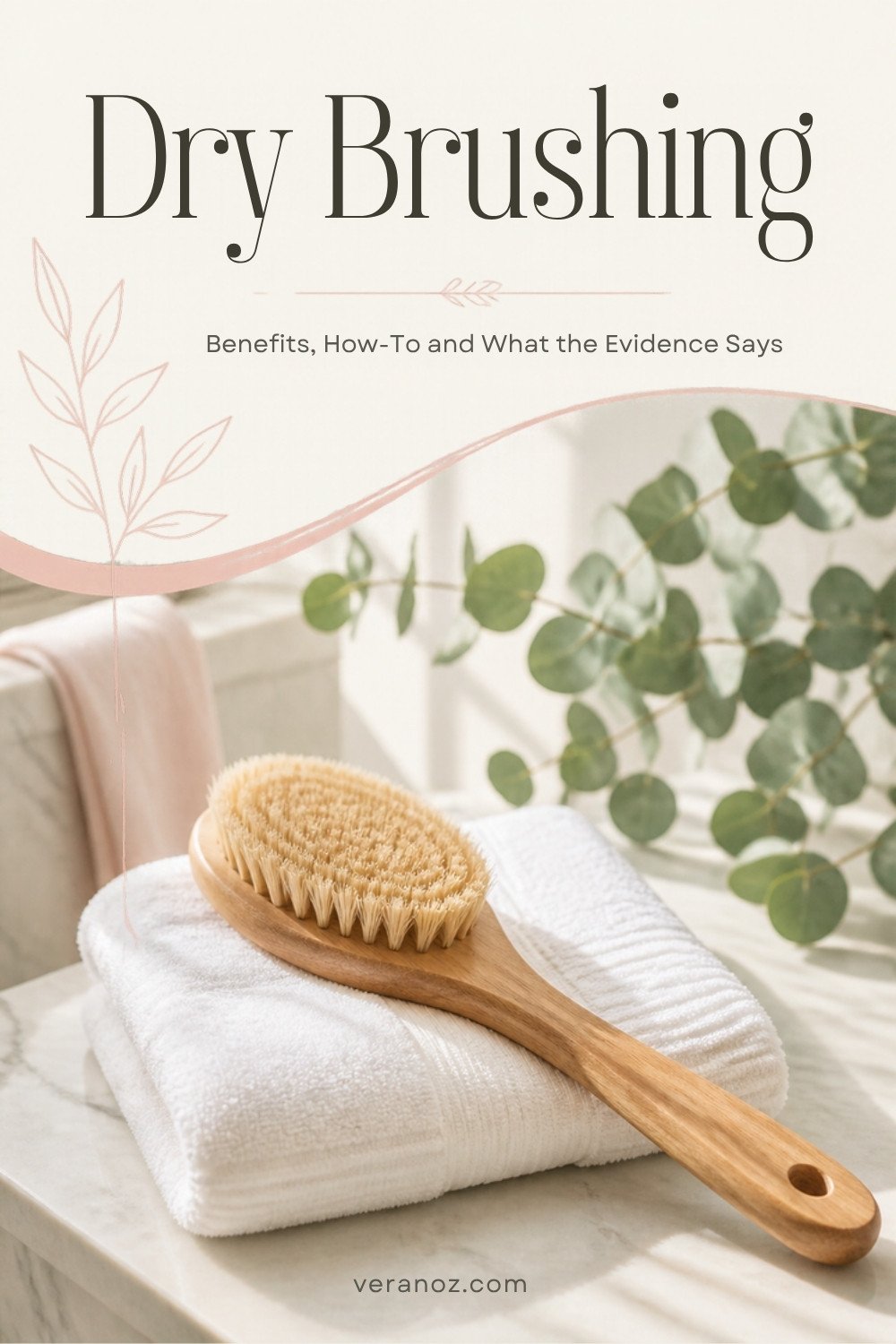
Dry brushing is the practice of sweeping a firm, dry brush over dry skin, usually right before a shower, to loosen dead skin cells. Its real, dermatologist-backed benefit is exfoliation: rough, dry, flaky skin feels smoother and can look brighter for a while afterward. Many people also find it invigorating. The bigger claims you see online, like “detox,” lymphatic drainage and cellulite reduction, are not supported by good evidence.
Free: the Winter Dry Skin Rescue Plan
A printable 14-day plan for dry, tight winter skin: shower rules, a face routine, and fixes for hands, lips and heels.
Free. You will also get a few short emails with tips and offers. Unsubscribe anytime. Privacy policy.
Below is an honest look at what dry brushing does and doesn’t do, a step-by-step guide to how to dry brush (direction, pressure and frequency), who should skip it, how to choose and clean a brush, and how to fit it into a gentle body care routine after 40.
The Real Problem
Dry brushing is often sold as a miracle: melt cellulite, flush toxins, drain your lymph, tighten skin. Those promises set you up for disappointment, and they encourage scrubbing too hard and too often. Skin over 40 tends to be drier and more easily irritated, so aggressive daily brushing can leave it red, raw or itchy. Used lightly and for the right reasons, though, a dry brush is a simple, low-cost way to smooth rough skin and make your shower feel like a ritual.
Short Answer: Is Dry Brushing Worth It?
What it does: exfoliates dry, rough skin, leaves it feeling smoother and temporarily brighter, and feels energizing. What it doesn’t do: there is no proof it reduces cellulite, and “detox” and lymphatic claims aren’t backed by solid research. How to do it: on dry skin before a shower, start at the feet, use light, overlapping upward strokes on limbs and gentle circles on the torso, a few passes per area, then shower and moisturize. Skip it on broken, sunburned, inflamed or infected skin, during an eczema or psoriasis flare, and on your face.
The Self-Care Reset Kit
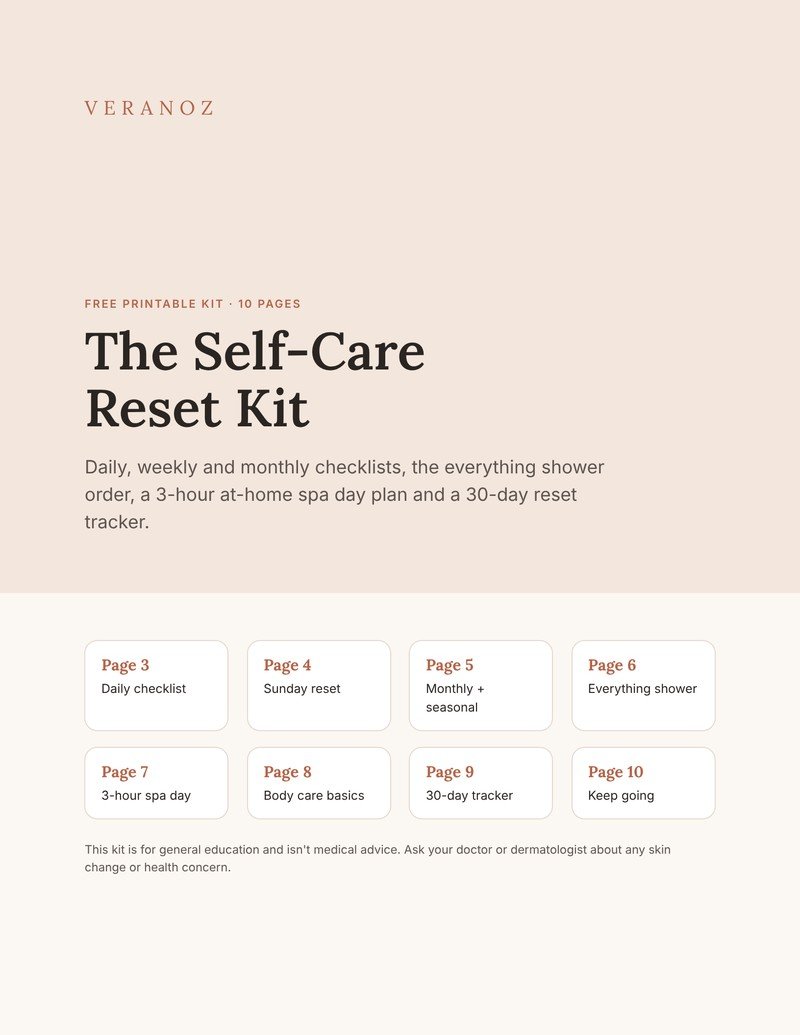
Daily, weekly and monthly self-care checklists, the everything shower order, a 3-hour at-home spa day plan and a 30-day reset tracker.
Send me the free kit →In This Guide
What Is Dry Brushing?
Dry brushing means brushing your body with a stiff, dry brush while your skin is dry, then showering to rinse away the loosened flakes. It’s a form of mechanical exfoliation, in the same family as body scrubs, exfoliating gloves and textured washcloths. The difference is that it happens before water touches your skin.
Think of it as a quick, gentle buff for elbows, knees, thighs and the backs of arms, not as a treatment for anything medical.
Cleveland Clinic dermatologist Shilpi Khetarpal, MD, describes dry brushing as excellent for exfoliating rough, dry skin, and notes it can be gentler than scrubbing in a long, hot shower, since hot water can strip the skin’s natural oils. She also says plainly that not all the popular claims are true.
Dry Brushing Benefits: What the Evidence Says
Here’s an honest scorecard of the most common dry brushing benefits you’ll see online.
| Claim | What the evidence says | Verdict |
|---|---|---|
| Exfoliates dry, rough skin | A Cleveland Clinic dermatologist calls it excellent for exfoliating rough, dry skin | Supported |
| Smoother, brighter-looking skin | Removing dead skin can leave skin smoother and temporarily brighter | Supported (short term) |
| Feels invigorating, like a massage | Many people find it energizing; a matter of experience rather than measurement | Reasonable |
| Unclogs pores | Exfoliation can help clear surface buildup; not a fix for body acne on its own | Partly |
| Reduces cellulite | Cleveland Clinic: no proof it reduces cellulite. Mayo Clinic: dry brushing doesn’t work as a cellulite treatment | Not supported |
| “Detoxes” the body | A popular claim, but no good evidence that brushing skin removes toxins | Not supported |
| Lymphatic drainage | Medical lymphatic drainage is a specific, gentle hands-on therapy for lymphedema, not brushing | Not supported |
| Tightens loose or crepey skin | No evidence it firms skin; any plumped look is temporary | Not supported |
The real benefits are modest but genuine: smoother skin and a few calm minutes before your shower.
The Benefit That Matters Most After 40
As skin gets drier, dead cells tend to build up in patches, especially on shins, elbows, knees and the backs of arms. A light weekly or twice-weekly dry brush lifts those flakes so moisturizer can spread more evenly. Pair it with a rich cream on damp skin after your shower, and rough patches often feel noticeably softer. Our simple body care routine for glowing skin shows how exfoliation and moisturizing fit together.
Dry Brushing Before and After: What to Realistically Expect
Right after brushing, skin usually looks a little pink and feels smoother and more awake. That pinkness should fade within minutes. According to Dr. Khetarpal, any improvement people notice in cellulite is likely a temporary plumping of the skin from increased blood flow, not a lasting change.
Over a few weeks of gentle, regular use, the realistic “after” is softer, less flaky skin that takes moisturizer better. If your before-and-after photos show redness, scratches or new dark marks, you’re brushing too hard or too often.
Dry Brushing for Cellulite and Lymphatic Drainage
Does Dry Brushing Help Cellulite?
No, not in any lasting way. Cleveland Clinic states there is no proof dry brushing reduces cellulite or its appearance. Mayo Clinic dermatologist Dawn Davis, MD, says dry brushing, massage and skin wraps don’t work as cellulite treatments, and that no over-the-counter remedy has been shown to treat cellulite effectively.
Mayo Clinic also notes that no treatment can completely eliminate cellulite. If cellulite bothers you, a dermatologist can explain which in-office treatments have evidence behind them. If it doesn’t bother you, it’s perfectly fine to leave it alone.
Does Dry Brushing Help Lymphatic Drainage?
This claim borrows its language from a real medical treatment. Cleveland Clinic describes lymphatic drainage massage as a gentle massage, done by a trained therapist with light pressure, used mainly to relieve swelling from lymphedema, for example after breast cancer surgery when lymph nodes have been removed. It notes that people without lymphedema may not see meaningful results.
A dry brush is not the same as that therapy, and there isn’t good evidence that brushing your skin “drains” your lymph. If you have lymphedema or unexplained swelling in an arm or leg, don’t try to treat it yourself with a brush. Talk to your doctor or a certified lymphedema therapist.
Love the ritual but not the hype? Keep the habit and change the reason. Dry brush because it smooths your skin and makes your shower feel like a treat, not because you’re hoping to drain, detox or reshape anything.
How to Dry Brush, Step by Step
Here’s how to dry brush in about five minutes, based on the technique Cleveland Clinic’s dermatologist recommends and the American Academy of Dermatology’s general advice on exfoliating safely.
Step 1: Start With Dry Skin and a Dry Brush
Brush before you shower, on completely dry skin, with a dry brush. Stand in the tub or on a towel to catch the flakes.
Step 2: Begin at Your Feet
Start at your feet or ankles. Use long, smooth strokes moving upward toward your heart: over the tops of the feet, then the shins and calves, then the knees and thighs. Give each area a few overlapping strokes, then move on.
Step 3: Work Up the Body
Move to your hips and buttocks, then brush your hands and arms, stroking from your fingers up toward your shoulders. On your torso and back, switch to gentle circular motions. A long-handled brush makes your back much easier to reach.
Step 4: Go Lighter on Delicate Areas
Lighten up on thinner, more sensitive skin: the abdomen, breasts, inner arms, inner thighs and neck. Many people skip the chest and neck entirely. Don’t brush your face at all; facial skin is more delicate and needs products made for it.
Step 5: Keep It Short and Light
Use light pressure and only a few passes per area. Going over the same spot again and again is what leads to irritation, scratches and even bleeding. Your skin should look faintly pink at most, never red, raw or stinging.
Step 6: Shower, Then Moisturize
Shower in warm, not hot, water with a gentle body wash to rinse away loosened skin. Pat dry, then moisturize right away, while skin is still slightly damp. The AAD notes that exfoliation can dry the skin, so moisturizing immediately afterward matters. A body oil followed by a cream on drier areas works well; our guide to body oil for glowing skin covers how to apply it.
Want dry brushing to be part of a bigger weekly ritual? It’s the optional first step in our everything shower routine.
Direction and Pressure by Body Area
| Area | Direction | Pressure | Notes |
|---|---|---|---|
| Feet and ankles | Upward strokes | Light to medium | Soles tolerate more; skip cracked heels |
| Shins and calves | Long upward strokes | Light | Shins are often dry and thin; go gently |
| Knees and thighs | Long upward strokes | Light to medium | Lighter on inner thighs |
| Hips and buttocks | Upward strokes or circles | Light to medium | Avoid freshly shaved or waxed skin |
| Arms and hands | From fingers up to shoulders | Light | Backs of arms benefit most from exfoliation |
| Abdomen | Gentle circles | Very light | Thinner, more sensitive skin |
| Back | Circles or upward strokes | Light | Use a long handle; skip active breakouts |
| Chest, breasts, neck | Gentle circles or skip | Very light | Many people leave these out |
| Face | Don’t dry brush the face. Use a gentle facial exfoliant instead. | ||
Don’t dry brush and use a body scrub or acid exfoliant on the same day. Pick one exfoliation method per session. Our guide to body scrub vs acid exfoliation explains when each one makes more sense.
How Often Should You Dry Brush?
Cleveland Clinic’s dermatologist suggests dry brushing can be done once a day, just before a shower. That’s an upper limit, not a goal. The AAD’s general rule for exfoliation is that more isn’t better: over-exfoliating leaves skin red and irritated, and the more aggressive the method, the less often you should use it. Dry, sensitive or mature skin usually does best with less.
| Your skin | A sensible starting point | Brush and pressure |
|---|---|---|
| Normal, not easily irritated | 2 to 3 times a week; build up only if skin stays calm | Medium-firm bristles, light pressure |
| Dry or mature | 1 to 2 times a week | Softer bristles, very light pressure, rich cream after |
| Sensitive | Once a week, or a dry washcloth instead | Softest option; stop at any redness |
| Oily or thick skin on body | Up to several times a week if comfortable | Firmer bristles may be tolerated |
| Darker skin with a tendency to dark marks | Once a week, very gently, or skip | Soft bristles; aggressive exfoliation can increase pigmentation |
Watch for the signs you’ve overdone it: lasting redness, stinging when you apply moisturizer, dry patches that feel tight, tiny scratches, or new dark marks. If you notice any of these, stop for a week or two and let your skin settle. Our guide on how to calm irritated skin gently can help.
Free: the Winter Dry Skin Rescue Plan
A printable 14-day plan for dry, tight winter skin: shower rules, a face routine, and fixes for hands, lips and heels.
Free. You will also get a few short emails with tips and offers. Unsubscribe anytime. Privacy policy.
Who Should Avoid Dry Brushing
Dry brushing is a physical exfoliation method, so it isn’t for every skin or every day. Skip it, or ask a dermatologist first, if any of these apply:
- Broken skin: cuts, scrapes, sores, blisters or healing wounds.
- Sunburn: both Cleveland Clinic and the AAD say not to exfoliate sunburned skin.
- Eczema or psoriasis: don’t brush over patches or during a flare. Cleveland Clinic advises never brushing over redness, irritation or inflammation.
- Rosacea or easily flushed skin on the body: brushing can worsen redness and sensitivity.
- Infection or cellulitis: any warm, red, swollen or tender area needs a doctor, not a brush.
- Moles, warts, skin tags and raised bumps: brush around them, not over them.
- Areas of skin cancer or skin that has been treated with radiation.
- Freshly shaved or waxed skin: wait a day or two to avoid stinging and razor bumps.
- Retinoid or benzoyl peroxide use on the body: the AAD notes these products can make skin more sensitive, and exfoliating on top of them can worsen dryness or trigger breakouts. If you’re pregnant, trying to conceive or breastfeeding, avoid retinoids altogether.
- Darker skin tones prone to dark marks: the AAD warns that aggressive exfoliation can lead to increased pigmentation. Go very gently or choose a mild chemical exfoliant.
- Lymphedema, unexplained swelling, blood clots or circulation problems: check with your doctor first.
- Diabetes or reduced feeling in your feet: ask your doctor before brushing your feet and legs, since small scrapes can be easy to miss.
If a brush feels too harsh but you still want gentle exfoliation, Cleveland Clinic suggests a plain, dry washcloth instead. Stop if you notice redness, swelling or inflammation.
Related ReadBody Exfoliation: Scrub vs AcidHow to Choose and Clean a Dry Brush
Choosing a Brush
- Bristles: natural bristles are the classic choice. Plant fibers like sisal are often firm; softer natural or synthetic bristles suit dry or sensitive skin. Firmness is personal; start softer than you think you need.
- Handle: a long or detachable handle helps you reach your back without twisting.
- Size: a palm-sized head is easier to control on arms, ankles and knees.
How to Clean and Care for Your Dry Brush
A dry brush collects dead skin, so keeping it clean is part of the routine:
- After each use: tap or shake the brush over the tub to remove loose flakes.
- About once a week: wash the bristles with lukewarm water and a little mild soap or shampoo, working it in with your fingers. Keep the wooden back as dry as possible, rinse well and shake out excess water.
- Dry bristles down on a towel or hanging, in a well-ventilated spot, so water doesn’t soak into the wood. Let it dry completely before the next use.
- Store it outside the shower so it stays dry between uses.
- Replace it when bristles splay, fall out, smell musty, or show any mildew.
Dry Brushing Tools and Aftercare
You only need a good brush and a moisturizer you like. Check current listings and ingredient lists before you buy.
Natural Bristle Dry Brush With Long Handle
A classic body brush with a detachable handle gives you control on legs and arms and reach on your back. Look for evenly trimmed bristles that feel firm but not scratchy on your wrist.
Check on Amazon →Soft-Bristle Body Brush
Softer bristles still lift flakes but are kinder to thin skin on shins, arms and the abdomen.
Check on Amazon →Body Oil for Damp Skin
Smoothed onto damp skin after you towel off, a light body oil spreads easily over freshly exfoliated skin and leaves it soft.
Check on Amazon →Fragrance-Free Body Cream
The AAD favors creams and ointments over thin lotions for dry skin. Look for ingredients such as glycerin, shea butter, dimethicone, petrolatum or lactic acid, labeled “fragrance-free.”
Check on Amazon →If your arms or legs look crepey, exfoliation alone won’t fix it, but a good moisturizer helps skin look smoother. See our guide to the best body lotion for crepey skin.
Dry Brushing Checklist
- Skin and brush completely dry
- No cuts, sunburn, flares or irritation in the area
- Start at the feet, long upward strokes on limbs
- Gentle circles on torso and back
- Very light on abdomen, chest and neck; skip the face
- A few passes per area, faint pink at most
- Warm shower with a gentle body wash
- Pat dry and moisturize while skin is damp
- Tap out the brush; wash it weekly and dry it fully
- No other exfoliation the same day
Dry brushing works best as one small part of a consistent routine. To build it into a full weekly ritual, see our weekly beauty reset.
Frequently Asked Questions
Does dry brushing actually work?
For exfoliation, yes. Dermatologists say it’s an effective way to remove dead skin from rough, dry areas, leaving skin smoother and temporarily brighter. It doesn’t detox the body, drain your lymph or reduce cellulite.
Does dry brushing get rid of cellulite?
No. Cleveland Clinic says there’s no proof dry brushing reduces cellulite, and a Mayo Clinic dermatologist says it doesn’t work as a cellulite treatment. Any smoother look right after brushing is a temporary plumping from increased blood flow.
Does dry brushing help with lymphatic drainage?
There’s no good evidence that it does. Medical lymphatic drainage is a gentle massage done by a trained therapist, mainly for lymphedema. If you have swelling, see your doctor rather than brushing.
How often should you dry brush?
Cleveland Clinic’s dermatologist says up to once a day before a shower. If your skin is dry, sensitive or mature, one to three times a week is a gentler starting point. Cut back if you see redness or irritation.
Should you dry brush before or after a shower?
Before. Brush on dry skin, then shower to rinse away the loosened skin cells, and moisturize right after you pat dry.
Which direction should you dry brush?
Start at your feet and use long, upward strokes on your legs and arms, moving toward your heart. Use gentle circles on your torso and back, and go lighter on sensitive areas.
Can you dry brush your face?
It’s best not to. Facial skin is thinner and more sensitive than body skin. Use a gentle facial exfoliant or cleanser made for the face instead.
Is dry brushing good for crepey skin?
It can make crepey skin feel smoother by removing flakes, but it doesn’t tighten or firm skin. Pair gentle exfoliation with a rich moisturizer and daily sunscreen on exposed areas.
How do you clean a dry brush?
Tap out flakes after each use. About once a week, wash the bristles with lukewarm water and mild soap, rinse, and let the brush dry completely, bristles down, in a well-ventilated spot outside the shower.
Sources: Cleveland Clinic, The Truth About Dry Brushing and What It Does for You; Mayo Clinic News Network, Women’s Wellness: Reducing appearance of cellulite; American Academy of Dermatology, How to safely exfoliate at home; Cleveland Clinic, Lymphatic Drainage Massage. Veranoz has not tested every product listed. This guide is general information, not medical advice; see a dermatologist or doctor for rashes, swelling or skin changes.
Get the Free Self-Care Reset Kit
Daily, weekly and monthly self-care checklists, the everything shower order, a 3-hour at-home spa day plan and a 30-day reset tracker. Free printable, instant access.
The Veranoz 30-Day Glow-Up Planner
Routines only work when you actually keep them. The planner gives you daily planning pages, weekly resets and habit trackers so your skincare, body care and self-care steps become automatic instead of something you remember once in a while.
Veranoz Guides to Go Deeper
Some links on Veranoz are affiliate links; we may earn a commission at no extra cost to you. This content is informational and not medical advice.