
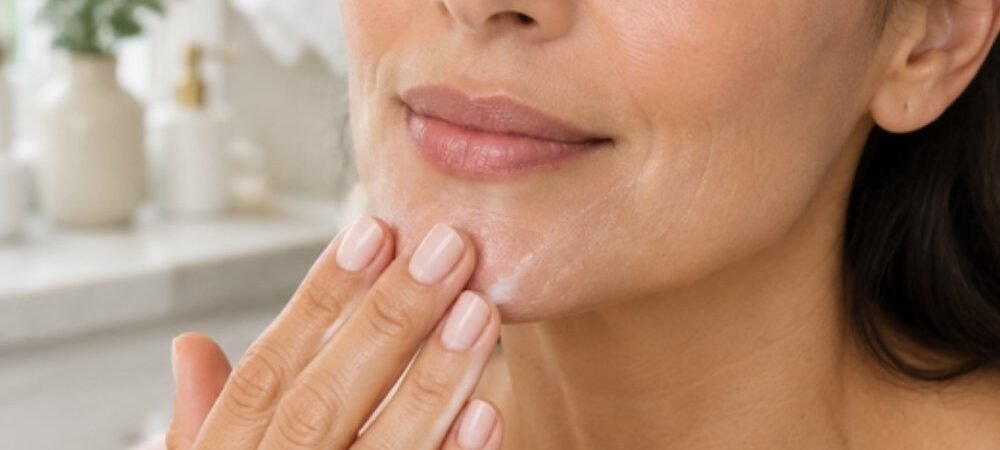

Dark skin around the mouth is most often melasma, post-inflammatory pigment, or a reaction to something that touches the area every day, such as toothpaste, lip products, food acids, shaving or picking. The fix is to identify the trigger, treat with a gentle brightener (azelaic acid, niacinamide or tranexamic acid), wear sunscreen every day, and allow 3 months. Strong peels and bleaching creams on this thin, reactive skin often make it worse.
Free: the Dark Spot Fade Plan
Find out which kind of spot you have, protect it from getting darker and follow a simple 12-week plan with a photo tracker.
Free. You will also get a few short emails with tips and offers. Unsubscribe anytime. Privacy policy.
Which kind of mouth pigment is this?
A shadow above the lip, at the corners, or in a ring around the mouth looks similar from the mirror but can have different causes. Use these clues.
Common patterns
- Symmetrical brown patch above the upper lip. Often melasma, especially if you also have patches on the cheeks or forehead, or it worsens in summer or pregnancy.
- Dark corners of the mouth. Often friction and moisture from lip licking, drooling at night or dry, cracked corners.
- Dark ring around the lips. Often a reaction to an ingredient such as cinnamon flavouring in lip products or toothpaste, or repeated irritation from lip-liner and hair removal.
- Dots or patches after waxing, threading or acne. Post-inflammatory hyperpigmentation.
Melasma behaves differently from the rest, so it is worth getting a diagnosis if the patch is symmetrical and has been getting worse. It is driven by hormones and light, and it comes back easily without ongoing sun care.
Remove the irritants before adding any treatment
Everything you put on this area for two weeks should be plain. Then reintroduce one thing at a time.
- Switch to a fluoride toothpaste without strong flavouring and wipe any foam off the skin after brushing.
- Pause lip balms with fragrance, menthol or cinnamon, and use plain petrolatum at night.
- Stop picking at dry skin or dabbing with rough towels.
- If you wax or thread the upper lip, try trimming or a gentle depilatory test patch instead until the skin is calm.
- Avoid wiping the mouth with harsh makeup wipes and rinse the area after oily or acidic food.
Nothing on the list is dramatic, but contact irritation is a surprisingly common reason a brightening routine stalls around the mouth.
Ingredients that suit thin skin near the lips
Start with one product, not a stack. Introduce it every second night for two weeks, then nightly if comfortable.
Azelaic acid, 10 to 15%. Reduces pigment and calms redness. Mild tingling is common in the first week. A prescription strength of 15 to 20% is available if the lower strength helps but does not finish the job.
Niacinamide, 2 to 5%. Slows the transfer of pigment to skin cells and supports the barrier. The 10% serums are popular but are more likely to sting around the mouth, so lower is better here.
Tranexamic acid, 2 to 5%. A common ingredient in melasma-focused products. It tends to be well tolerated and pairs with azelaic acid.
Vitamin C, 10 to 15%. Useful in the morning under sunscreen, as long as it does not irritate. Stop if the skin stings.
Prescription options such as hydroquinone, triple creams and tretinoin are for a dermatologist to supervise, particularly on the face. Do not use them near the lips on your own.
Sunscreen is not optional here
Visible light and UV both keep pigment active. Use a broad-spectrum SPF 30 or higher on the area every morning, and reapply if you are outside for hours. A mineral formula with iron oxides can help block visible light, which matters for melasma. A hat helps with the rest. Without this step, no brightener keeps its results.
Dermefface FX7 — Scar Reduction Therapy
If your dark marks came from ingrown hairs, acne, or irritation that also left texture changes, Dermefface FX7 addresses the scar-tissue side while your brightening routine handles the discoloration.
A 12-week plan for the mouth area
Week by week
- Weeks 1 to 2: irritant removal only, plain moisturiser, daily sunscreen
- Weeks 3 to 4: add azelaic acid or niacinamide every second night
- Weeks 5 to 8: nightly if comfortable; add vitamin C in the morning if skin is calm
- Weeks 9 to 12: compare photos taken in the same light; hold the routine steady
- After week 12: keep sunscreen and a maintenance product two or three nights a week
The early weeks can feel as if nothing is happening. Pigment in the skin around the mouth tends to fade gradually and is usually first noticed at the edges. Expect a visible difference at around 8 to 12 weeks, and a longer timeline if the cause is melasma.
When it is melasma, plan differently
Melasma is not cured by any cream. It is managed. People with it typically need strict daily sun protection, a gentle brightener, and sometimes prescription treatment such as tranexamic acid tablets (only after a doctor weighs the risks, including a history of blood clots), or in-office options chosen carefully, because heat and strong peels can make it darker. If you are pregnant, melasma often fades after delivery or after stopping the trigger, and you should not start retinoids or hydroquinone without your doctor’s advice.
Free: the Dark Spot Fade Plan
Find out which kind of spot you have, protect it from getting darker and follow a simple 12-week plan with a photo tracker.
Free. You will also get a few short emails with tips and offers. Unsubscribe anytime. Privacy policy.
Makeup, skincare order and daily habits that help
The order you apply things matters when the skin is reactive. In the morning: rinse or cleanse gently, apply vitamin C or niacinamide if you use one, moisturiser, then sunscreen, then makeup. At night: remove sunscreen and makeup with a gentle balm or micellar water, cleanse once, apply your treatment to dry skin, then a plain moisturiser. Wait a few minutes between steps if you notice stinging; damp skin lets actives penetrate faster and can increase irritation.
A few habits are easy to overlook. Hot showers and steamy rooms can worsen melasma because heat itself triggers pigment cells. Avoid pulling the skin tight when you remove makeup. If you use lip liner, choose one without strong dyes or fragrance. If you have braces or a retainer that rubs the corners of the mouth, ask your dentist about smoother edges.
Do food and diet matter?
Some people notice a ring of colour after contact with acidic or spicy food, citrus peel, or fragranced products that sit on the skin. Mango skin and raw citrus peel can also irritate sensitive people. This is a contact reaction, not a nutrient problem. Wash the skin after eating such foods, and keep a short diary for a few weeks if you suspect a trigger. There is no diet that reliably removes pigment, and cutting out whole food groups on a hunch is not recommended.
How to tell if a treatment is working
Judge by photos, not by the mirror. Take a picture every two weeks in the same bathroom light, without flash, with the same angle. Look at the edge of the patch: it should become less defined first, then lighter overall. Watch for the signs of a bad reaction too: persistent redness, a rash, swelling, peeling that does not settle within a few days, or new darkening. Those mean stop and simplify, not push through. Keep expectations realistic: significant improvement is common, but complete disappearance is not guaranteed, particularly with melasma.
What not to do
- Do not use lemon, baking soda or toothpaste on the skin. They irritate and can leave darker marks.
- Do not use a bleaching cream from an unlabelled source.
- Do not layer several acids on the same night.
- Do not apply anything strong right up to the lip line; stay a few millimetres away from the lip border.
- Do not stop sunscreen after the colour improves.
See a dermatologist if
- The patch is symmetrical, has been getting worse, or came up during pregnancy or after starting hormonal medicine
- The skin is itchy, swollen, scaly or has blisters, which may be dermatitis rather than pigment
- A single spot is growing, uneven in colour, or changing, since any changing mark should be checked
- Twelve weeks of consistent care has made no change
For the same ingredients applied to other areas, see the main guide on fading dark marks, and always patch test a new product on the jawline or inner arm for three days first.
Get the Free 7-Day Glow-Up Checklist
One simple beauty and self-care habit per day — everything shower, body care, hair, nails, fragrance, and your Sunday reset ritual. Free PDF, instant access.
Veranoz Guides to Go Deeper
Quick answers on the mouth area
Can a mustache shadow be pigment instead of hair?
Yes. Fine hair casts a shadow, but flat brown colour that stays after hair is removed is pigment.
Is it safe to use a retinoid there?
It can help, but the skin near the lips is sensitive and retinoids are not recommended in pregnancy. Ask a dermatologist for the right strength and routine.
Why are the corners of my mouth dark but not the rest?
Moisture and rubbing are the usual cause. Keep the corners dry, treat any cracking, and avoid licking.
Do laser treatments help?
They can, but the wrong settings can darken melasma, so see a clinician experienced with pigment.
The Veranoz Glow-Up Collection
Six guides in one library: a 30-day planner, the complete retinol plan, a retinol routine kit, the fuller-hair playbook, a body care guide and a Sunday ritual guide, plus a free self-care reset kit. $108 of guides for $47.
Affiliate disclosure: This post contains affiliate links. We earn a commission if you purchase through our links at no extra cost to you. Individual results vary. This content is informational and not medical advice — consult your healthcare provider.