
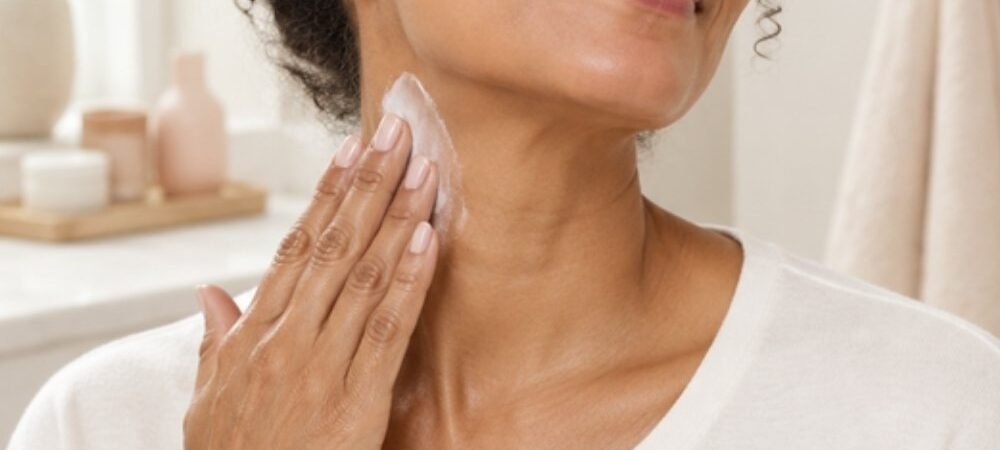
A dark neck is most often acanthosis nigricans: darker, velvety, slightly thick skin on the back and sides of the neck that is linked to insulin resistance. That kind needs a doctor’s check, and it lightens mainly when the cause is treated, helped by gentle creams. Other causes are easier: build-up that wipes off with rubbing alcohol, pigment from friction, jewellery or perfume, and sun damage on the sides of the neck. Work out which you have, protect the neck from sun, avoid harsh scrubbing, and expect gradual change over 3 to 6 months.
Free: the Dark Spot Fade Plan
Find out which kind of spot you have, protect it from getting darker and follow a simple 12-week plan with a photo tracker.
Free. You will also get a few short emails with tips and offers. Unsubscribe anytime. Privacy policy.
Start with a simple wipe test
Before buying anything, soak a cotton pad in 70% isopropyl alcohol (the kind in a first-aid kit) and rub the dark area firmly for 20 to 30 seconds. If brown residue comes off on the pad and the skin looks lighter, you may have a harmless build-up of dead skin and oil that dermatologists call terra firma-forme dermatosis. It isn’t about poor hygiene; it can happen to anyone, often in places that are hard to scrub. Repeating the alcohol wipe and then washing usually clears it, and gentle exfoliation stops it coming back. If nothing comes off, the colour is in the skin itself, and you need to look at the other causes below.
The main causes of a dark neck
| What you notice | Likely cause | First step |
|---|---|---|
| Velvety, thicker, darker skin at the back and sides; maybe also in armpits or groin; sometimes small skin tags | Acanthosis nigricans | Doctor visit and blood sugar tests |
| Brown film that rubs off with alcohol | Build-up of skin cells and oil | Alcohol wipe, then gentle exfoliation |
| Darker line where a necklace, collar or bag strap sits | Friction or a metal allergy | Remove the trigger, then brighteners |
| Brown streaks or drips where you spray perfume | Fragrance reacting with sunlight | Spray perfume on clothes instead |
| Red-brown, mottled sides of the neck with a paler area under the chin | Long-term sun damage | Daily sunscreen; clinic treatments |
| Patchy brown on the neck along with face patches | Melasma extending down | See our melasma guide |

If it’s acanthosis nigricans
This is the cause worth taking seriously, because the skin change is often the first visible sign of insulin resistance, a state where the body needs more insulin to keep blood sugar normal. It can come before type 2 diabetes. It is also common with polycystic ovary syndrome, with higher body weight, with some medicines, and in some families. It isn’t contagious and it isn’t caused by poor washing, so scrubbing harder won’t remove it.
What helps:
- See your doctor. Ask for blood sugar tests such as HbA1c or fasting glucose, and mention irregular periods, excess hair growth, tiredness or thirst if you have them.
- Treat the cause. When insulin resistance improves, through changes to food, activity, weight, or medicine your doctor prescribes, the skin often lightens and softens over months. This does more than any cream.
- Use gentle topicals to help. Dermatologists often suggest exfoliating creams with urea or lactic acid, a retinoid such as tretinoin or adapalene, or prescription options. These soften the velvety texture and reduce darkness, but they work best alongside treating the cause.
- Look for medicine triggers. If the darkening started with a new medicine, ask your doctor; don’t stop anything on your own.
The same pattern often appears in the armpits and inner thighs; our guides to dark underarms and dark inner thighs explain those areas.
If it’s from friction, jewellery, perfume or sun
These are forms of pigment produced in response to irritation or light, and they fade once the trigger stops.
- Jewellery. Cheap metal chains can contain nickel, a common allergen. Switch to stainless steel or solid gold, or take necklaces off at night and for workouts.
- Collars and straps. Stiff collars, scarves and bag straps rub the same line all day. Vary what you wear while the area heals.
- Perfume. Some fragrance ingredients make skin react to sunlight and leave brown streaks. Spray perfume on clothing or your wrists instead of your neck.
- Sun. The sides and front of the neck get plenty of sun and are often skipped with sunscreen. A daily broad-spectrum SPF 30 or higher on the whole neck prevents more darkening and lets marks fade.
Choosing a Brightening Treatment
Pick a serum or cream that combines two or more proven brighteners: alpha-arbutin, niacinamide, azelaic acid, vitamin C, licorice root extract or tranexamic acid. Skip unregulated bleaching creams and anything that stings. Apply to clean, dry skin, moisturize on top, and protect the area from sun and friction. Expect visible fading around 8–12 weeks, and see a dermatologist if a spot changes, bleeds or looks different from the others.
A gentle neck routine
Neck skin is thinner than facial skin and gets irritated easily, so go slower than you would on your face.
- Morning: rinse or cleanse gently, apply a niacinamide or vitamin C serum, moisturise, then sunscreen from jawline to collarbone.
- Evening, most nights: cleanse, then apply a brightener such as azelaic acid (10%), niacinamide (4% to 5%) or alpha-arbutin, followed by moisturiser.
- Evening, two or three nights a week: swap the brightener for a mild lactic acid lotion or, if your skin tolerates it, a small amount of retinoid. Don’t use both on the same night at first.
- Weekly: if you had build-up that wiped off with alcohol, repeat the wipe once a week to keep it clear.
- Monthly: take a photo of the back and sides of your neck in daylight, using a mirror or a friend.
Patch test each new product on a small spot behind the ear or under the jaw for a few days. If you are pregnant, avoid retinoids and hydroquinone and ask your doctor which brighteners suit you. Note that darker skin on the neck is also common during pregnancy and often fades afterwards.
Dermefface FX7 — Scar Reduction Therapy
If your dark marks came from ingrown hairs, acne, or irritation that also left texture changes, Dermefface FX7 addresses the scar-tissue side while your brightening routine handles the discoloration.
Free: the Dark Spot Fade Plan
Find out which kind of spot you have, protect it from getting darker and follow a simple 12-week plan with a photo tracker.
Free. You will also get a few short emails with tips and offers. Unsubscribe anytime. Privacy policy.
What a dermatologist can add
If home care isn’t enough, a dermatologist can prescribe stronger options. For acanthosis nigricans, that may mean prescription retinoids, stronger urea or lactic acid creams, or combination creams, alongside the medical care for insulin resistance from your doctor. For pigment from friction, perfume or jewellery, prescription brighteners used for a set period can speed up fading. For sun damage on the sides of the neck, vascular lasers and intense pulsed light can reduce both redness and brown tones, and gentle chemical peels can help even out colour. Neck skin heals more slowly than the face and scars more easily, so these treatments are done at lower settings with careful aftercare. On medium and deep skin, ask how the clinic will keep the risk of new darkening low, and choose someone who regularly treats skin like yours.
When to see a doctor
- The skin is velvety or thicker, or the darkness appeared fairly quickly.
- You also have darker, velvety skin in the armpits or groin, or many new skin tags.
- You have irregular periods, unwanted hair growth, increased thirst or tiredness.
- Darkening spreads fast or appears on the palms, lips or inside the mouth, which is rare but needs prompt attention.
- A dark spot is new, growing, changing colour or bleeding.
- A gentle routine hasn’t helped after three months.
How long lightening takes
Build-up that wipes off can clear in days. Pigment from friction, jewellery and perfume usually fades over two to six months once the trigger is gone, with sunscreen and a brightener. Sun damage on the sides of the neck improves slowly with sunscreen and may need laser or light treatments for a bigger change. Acanthosis nigricans changes over months as insulin resistance improves; topicals can soften it sooner, but the colour often returns if the cause isn’t addressed.
Mistakes that make a dark neck worse
- Scrubbing with pumice, loofahs or harsh scrubs, which inflames the skin and darkens it further.
- Using lemon juice, baking soda or bleaching creams with unclear ingredients.
- Spraying perfume straight onto the neck before going outside.
- Skipping the neck when applying sunscreen.
- Treating the skin but ignoring a possible blood sugar problem.
If the neck is only one of several uneven areas, our guide to uneven skin tone on the body covers the bigger picture.
Get the Free 7-Day Glow-Up Checklist
One simple beauty and self-care habit per day — everything shower, body care, hair, nails, fragrance, and your Sunday reset ritual. Free PDF, instant access.
Veranoz Guides to Go Deeper
Dark Neck Questions
Is a dark neck a sign of diabetes?
It can be. Velvety darkening on the neck, called acanthosis nigricans, is often linked to insulin resistance, which can lead to type 2 diabetes. It doesn’t mean you have diabetes, but it’s a good reason to have your blood sugar checked.
Why does my neck look dirty even after washing?
Pigment in the skin doesn’t wash off, so it can look like dirt even on clean skin. Try the rubbing alcohol test: if residue comes off, it’s build-up; if not, it’s pigment or acanthosis nigricans.
Can I use my face products on my neck?
Yes, and most dermatologists recommend extending your facial sunscreen and brightener down to the collarbone. Introduce strong acids and retinoids more slowly on the neck, since the skin is thinner.
Will losing weight lighten my dark neck?
If the cause is acanthosis nigricans linked to insulin resistance, improving insulin resistance, often with weight loss, more activity or medicine, can lighten it over months. Talk to your doctor about the right approach for you.
Does a dark neck mean bad hygiene?
No. Acanthosis nigricans, sun damage and irritation pigment have nothing to do with cleanliness, and even the build-up that wipes off can happen to people who shower every day.
What should I avoid on my neck?
Harsh scrubs, bleaching creams of unknown origin, perfume sprayed on the skin, and long sun exposure without sunscreen.
The Veranoz Glow-Up Collection
Six guides in one library: a 30-day planner, the complete retinol plan, a retinol routine kit, the fuller-hair playbook, a body care guide and a Sunday ritual guide, plus a free self-care reset kit. $108 of guides for $47.
Affiliate disclosure: This post contains affiliate links. We earn a commission if you purchase through our links at no extra cost to you. Individual results vary. This content is informational and not medical advice — consult your healthcare provider.