
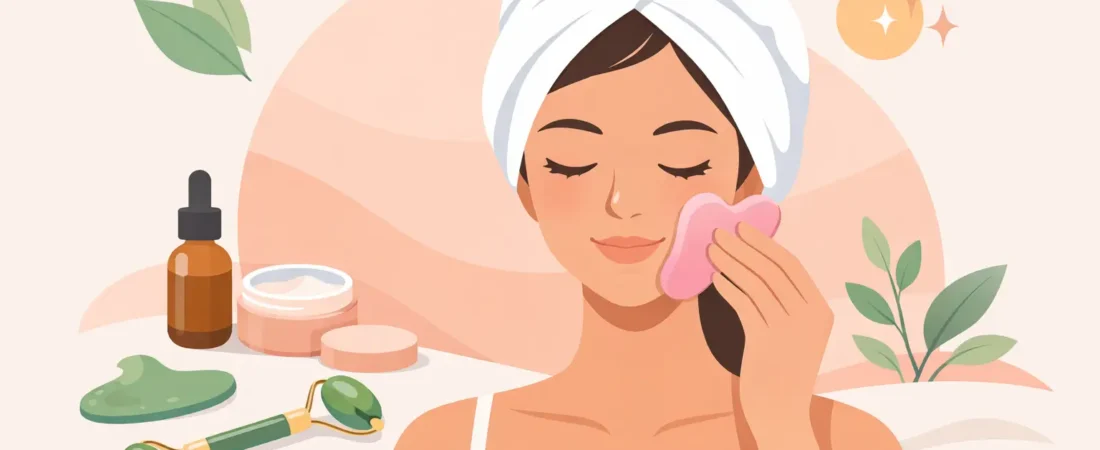
A gua sha ritual can be one of the loveliest ways to slow down at the end of a long day. Once you know how to use gua sha with light pressure, a little facial oil, and a few unhurried minutes, it becomes less about chasing a dramatic change and more about caring for yourself consistently. Think of it as a quiet finishing touch to your skincare routine – one that can leave your skin feeling comfortably nourished and your evening feeling a little more grounded.
The Real Problem
Gua sha goes wrong in two ways: too much pressure on bare skin, which can irritate it, and expecting the tool to reshape your face. Used gently with enough slip, it is a calming ritual that can make skin look temporarily refreshed and less puffy.
What Gua Sha Is and What It Can Do
Gua sha is a smooth, hand-held facial tool, often made from stone or stainless steel. Its curved edges are designed to glide across the face, neck, and jawline. In a beauty routine, it is usually used after applying a facial oil or another product that gives the skin enough slip.
The gentle motion can feel soothing, especially after time spent squinting at screens, carrying tension in your jaw, or simply moving through a busy day. Many people also enjoy the temporarily refreshed look that can come from a few minutes of mindful facial massage. Results vary from person to person, and the biggest benefit is often the ritual itself: a small, calming pause that helps you feel more put together.
You do not need an elaborate collection of tools or a 20-minute routine. One comfortable tool, clean hands, and a product that helps it glide are enough.
Before You Start Your Gua Sha Routine
Begin with clean skin. Apply your usual hydrating serum if you use one, then finish with a few drops of facial oil or a lightweight moisturizer that leaves a soft, slip-like finish. The tool should move easily across your skin. If it pulls, catches, or feels draggy, add a little more product rather than pressing harder.
A facial oil is a popular choice, but it is not the only option. If oils do not fit comfortably into your routine, a gentle moisturizer may work beautifully. The goal is simple: create a cushioned surface so the massage feels smooth and pleasant.
Take a moment to wash your gua sha tool with mild soap and warm water, then dry it fully. A clean tool matters, particularly when it is moving across freshly cleansed skin. You can use it at room temperature, or chill it briefly if you enjoy a cool, awakening feel. Cold is optional, not required.
 Related ReadFacial Massage Beginner Guide for a Calmer Routine
How to Use Gua Sha Step by Step
The most useful rule to remember is this: use far less pressure than you think you need. Your gua sha tool should skim the skin, not scrape it. Keep it nearly flat against your face, rather than holding it upright at a sharp angle.
Start at the neck
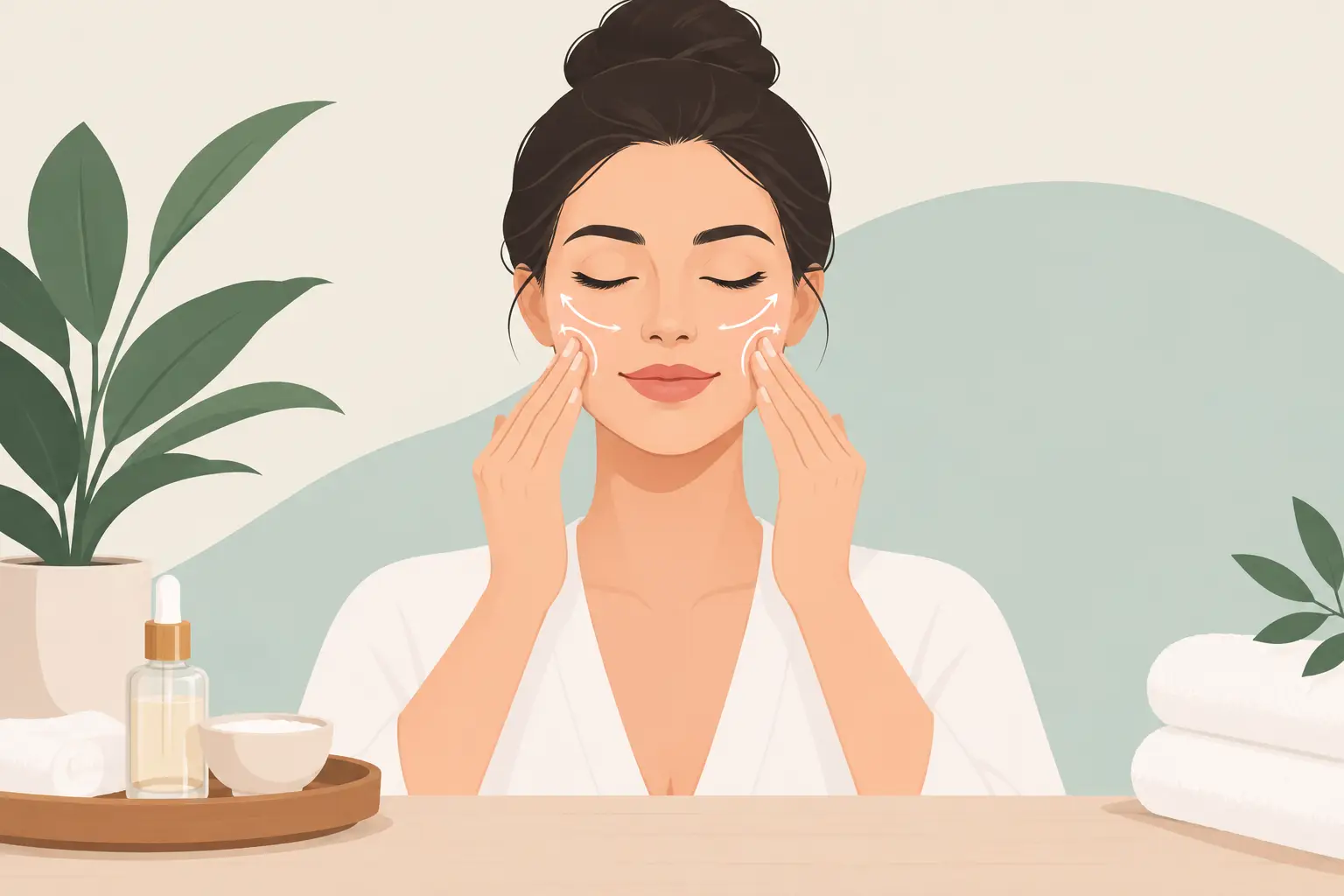
Begin at the side of your neck, just above the collarbone. Hold the tool flat and glide it upward toward the jaw using light, steady strokes. Repeat two or three times on each side.
This first step helps the routine feel connected rather than rushed. It also encourages you to slow down before moving to the face, where it can be tempting to press too firmly.
Move along the jawline
Place the curved notch of the tool near the center of your chin, where it can comfortably hug the jawline. Glide outward toward your ear in a slow motion. Keep your other hand lightly on the skin if it helps you feel more in control.
Repeat this movement a few times, then switch sides. If you tend to hold tension around your jaw, this can be an especially relaxing part of the ritual. Stay gentle. More pressure does not mean better results.
Sweep across the cheeks
Use the longer curved side of the tool, starting beside the nose and gliding outward across the cheek toward the ear. Follow the natural shape of your cheek rather than trying to force the tool into a particular path.
Repeat two or three slow strokes on each side. If your skin looks flushed, that is a sign to lighten your touch or take a break. A soft glide is all you need.
Treat the under-eye area with extra care
The skin around the eyes deserves the lightest touch of all. Use the smallest edge of your tool, beginning near the inner under-eye area and moving outward toward the temple. One or two feather-light passes per side is plenty.
Do not tug at the skin or use a sharp edge here. If the tool feels too large or awkward for this area, skip it and use your ring finger to gently tap in your eye cream instead. Your routine should always feel comfortable, not complicated.
Finish at the forehead
Starting at the center of the forehead, glide the tool outward toward the hairline. Then make a few light upward strokes from the brows toward the top of the forehead. This is a lovely place to finish because the motion can feel like a release after a full day of concentration.
When you are done, softly press any remaining facial oil or moisturizer into your skin with your hands. There is no need to rinse. Let the rest of your routine settle in, then clean and dry your tool before putting it away.
How Often Should You Use Gua Sha?
For most people, two to four times a week is a comfortable place to begin. A short daily ritual can also work if your skin enjoys it and you keep the pressure light. Consistency matters more than intensity, so choose a rhythm that fits naturally into your life.
Some mornings call for a quick two-minute glide after moisturizer. Other days, you may want a slower five-minute ritual before bed. Both count. The best routine is one that feels easy enough to return to, not another task waiting on your bathroom counter.
If your skin feels sensitive, uncomfortable, or more reactive than usual, take a few days off and return only when it feels settled. Avoid using a gua sha tool over broken skin, fresh irritation, or areas that feel tender. When in doubt, let comfort guide you.
Common Gua Sha Mistakes to Skip
The most common mistake is using the tool on dry skin. Without enough slip, even a beautiful tool can create unnecessary friction. Keep your facial oil or moisturizer nearby and add more whenever the glide starts to feel less smooth.
Another mistake is holding the tool at a steep angle. When it is nearly flat against the skin, the motion is softer and easier to control. You are not trying to dig into the face. Imagine gently smoothing silk, not working out a knot.
It is also easy to overdo it in hopes of faster results. A gua sha ritual is meant to be gentle, and more strokes are not always more helpful. Two or three slow passes in each area are usually enough for a simple daily routine.
Finally, do not feel pressured to copy every movement you see online. Face shapes, preferences, and routines differ. Use the paths that feel natural, skip the ones that do not, and let your own comfort set the pace.
Choosing a Gua Sha Tool You Will Actually Use
The material matters less than the shape, weight, and feel in your hand. A smooth tool with a few curved edges is usually the easiest choice for beginners. Stone tools can feel special and naturally cool, while stainless steel is durable, easy to clean, and often stays cooler for longer.
Look for polished edges with no rough spots. The tool should feel comfortable to hold and simple to clean. There is no need to search for the most expensive option. A thoughtfully chosen, easy-to-use tool is more likely to become part of your routine than one that feels precious or intimidating.
Keep it somewhere visible, perhaps beside your facial oil or evening moisturizer. Small visual reminders can turn a good intention into a gentle habit.
Gua sha is not about perfection or creating a new version of yourself. It is a few quiet minutes to soften your pace, nurture your skin and spirit, and step back into your day with a little more ease.
Your Gua Sha Checklist
- Clean your tool before each use
- Apply facial oil or moisturizer for slip
- Hold the tool almost flat against your skin
- Light pressure, upward and outward strokes
- 3–5 strokes per area
- Extra gentle around the eyes
- Skip active breakouts and irritated skin
Frequently Asked Questions
Should I use gua sha in the morning or at night?
Either works. Mornings suit a quick glide for a fresher look, and evenings suit a slower, relaxing ritual.
Does gua sha really reduce puffiness?
It can give a temporarily less puffy, refreshed look, especially in the morning.
Can gua sha cause bruising?
Too much pressure can. Use light strokes and enough slip, and stop if your skin turns very red.
Kollagen Intensiv — The One Treatment Step Worth Adding
Once your cleanser, moisturizer, and sunscreen feel steady, Kollagen Intensiv is the treatment step we suggest adding. It combines SYN-COLL and other peptides with a low dose of retinol, vitamin C and hyaluronic acid, so it can replace a separate retinol and moisturizer. Start every other night, wear SPF daily, and judge it after about 12 weeks. Not for use during pregnancy or breastfeeding. Read our honest review.
Affiliate link — we earn a commission at no extra cost to you. Statements not evaluated by the FDA. Individual results vary.
Eyelasticity — For Puffiness & Crepey Eyes
If the eye area is your main concern, Skinception’s Eyelasticity is a retinol-free peptide eye cream (Matrixyl, Haloxyl and Eyeliss) for puffiness, crow’s feet and crepey lids. Do you need an eye cream?
Get the Free 7-Day Glow-Up Checklist
One simple beauty and self-care habit per day: everything shower, body care, hair, nails, fragrance, and your Sunday reset ritual. Free PDF, instant access.
Veranoz Guides to Go Deeper
Affiliate disclosure: This post contains affiliate links. We earn a commission if you purchase through our links at no extra cost to you. Individual results vary. This content is informational and not medical advice.