

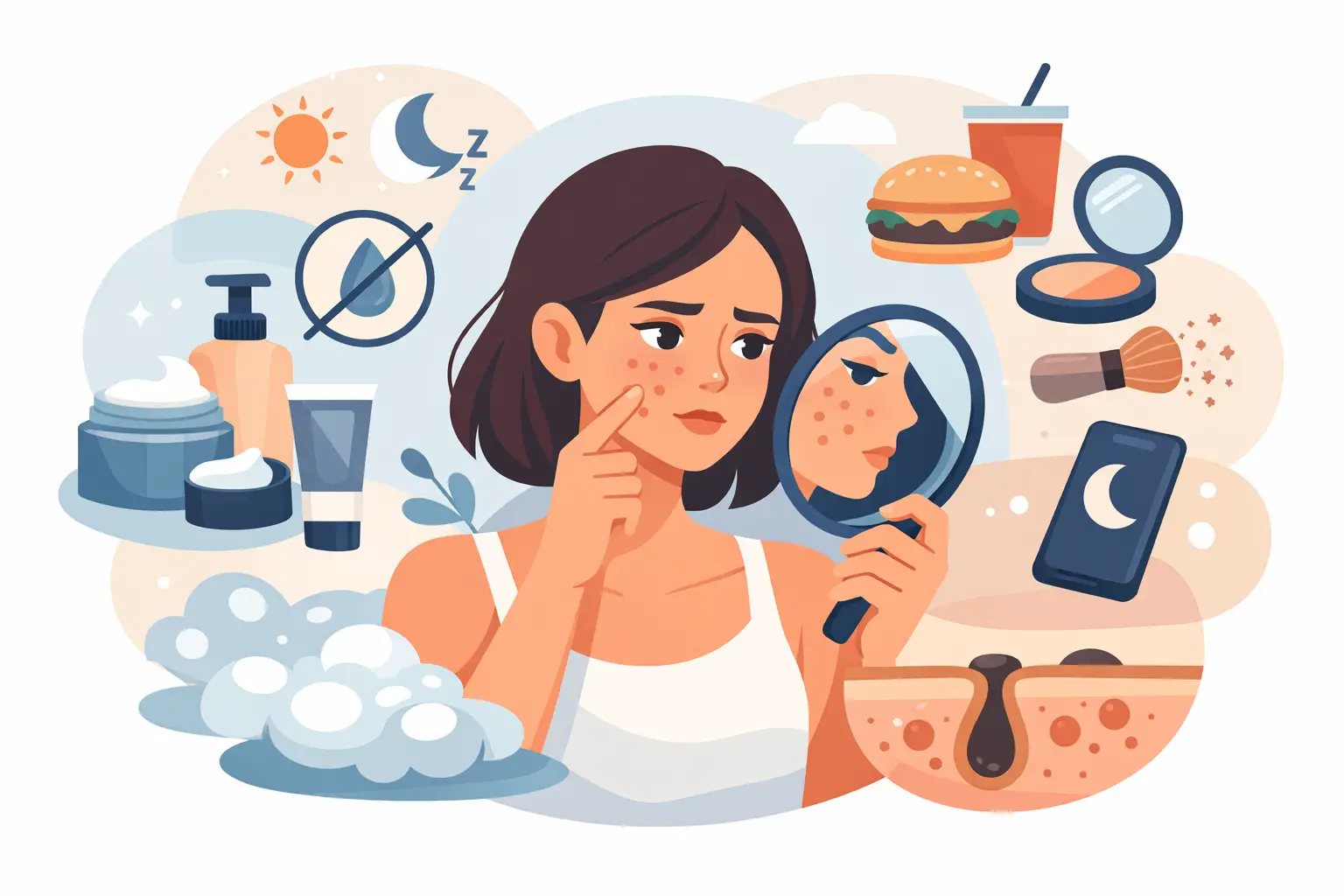
You finish a demanding week, look in the mirror, and notice a few unexpected spots just as you have plans. It can feel frustrating, especially when your routine has not changed much. So, can stress cause skin breakouts? For many people, stress can be one piece of the picture. It does not mean you have done anything wrong or that you need to overhaul your skincare shelf.
The Real Problem
Stress raises cortisol, which can increase oil and inflammation, so breakouts often show up during hard weeks. Then the urge to scrub, pick or try harsh new products makes things worse, and can leave marks that last longer than the breakout itself.
Stress can influence the body in ways that may leave skin looking less balanced, and the habits that come with a busy season can add to it. Think shorter sleep, less water, skipped meals, touching your face while working, or falling into bed without washing away the day. The most helpful response is usually not more products. It is a calm reset built around consistency.
Can Stress Cause Skin Breakouts?
Yes, stress may contribute to breakouts for some people. When you feel under pressure, your body releases stress-related signals, including cortisol. These signals can affect oil production and inflammation, which may make pores more likely to feel congested or skin more likely to react.
That said, skin is personal. A breakout can also coincide with your usual cycle, a new makeup product, warm weather, sweat, hair products, travel, or simply a disrupted routine. Stress is rarely the only explanation, and trying to identify one perfect cause can create even more pressure.
Instead, notice patterns with curiosity. If you tend to see more spots after late nights, deadline-heavy weeks, or periods when your usual self-care slips, that is useful information. It gives you an opportunity to support both your routine and your sense of calm.
Why Stressful Weeks Can Show Up on Skin
Stress does not stay neatly in your mind. It can change the small choices that shape how your skin feels each day. You may reach for richer comfort foods, drink more coffee than water, rest less deeply, or keep your hands near your face while you think. None of these habits make you “bad” at skincare. They are simply very human responses to a full schedule.
Your skin may also become more sensitive to routines that normally feel fine. A strong exfoliant, a new active formula, or frequent cleansing can feel like too much when skin already seems unsettled. This is why adding several new products at once is often a frustrating move. It becomes harder to tell what your skin actually enjoys.
There is also the emotional side. When a breakout appears, it is tempting to inspect it closely, pick at it, or apply every spot treatment you own. That urgency is understandable, but it can make a temporary concern feel bigger than it is. Gentle care tends to serve skin better than a panic-driven routine.
 Related Read10 Everyday Skincare Mistakes Causing Breakouts
Build a Gentle Reset Instead of a Complicated Routine
When your complexion feels out of rhythm, return to the essentials for a few days. A simple routine creates fewer variables and gives your skin a little breathing room.
Keep cleansing soft and consistent
Cleanse in the evening to remove makeup, sunscreen, surface oil, and the day’s buildup. In the morning, use a gentle cleanse if your skin prefers it, or simply rinse with lukewarm water if that feels better for you. Avoid scrubbing or using very hot water in an effort to make skin feel extra clean. That tight, squeaky feeling is not the goal.
Choose a cleanser that leaves your skin feeling comfortable rather than stripped. If you wear makeup or water-resistant sunscreen, taking an extra moment to cleanse thoroughly can be more useful than switching to a harsher formula.
Use a lightweight moisturizer
It is easy to think moisturizer should disappear from the routine when breakouts appear. But skin still needs support, particularly if you are using products that feel drying. A simple, lightweight moisturizer can help skin feel cushioned and comfortable without making your routine complicated.
The right texture depends on what you enjoy. Some people prefer a soft lotion, while others like a light gel-cream. What matters most is using it consistently and giving it time rather than judging it after one night.
Pause the urge to layer everything
If you have recently added multiple exfoliating products, masks, treatments, or new makeup, consider simplifying. You do not need to throw anything away. Just give your skin a quieter stretch of time with the basics, then reintroduce one item at a time if you choose.
This approach is less exciting than a dramatic reset, but it is kinder and easier to maintain. Skincare works best as a steady ritual, not a punishment for having skin.
Small Stress Habits That Support Your Routine
A calming routine does not need to take an hour. The goal is to create a few repeatable moments that help you feel more put together, even during a demanding week.
Start by protecting your evening cleanse. Let it be the point where work messages, errands, and tomorrow’s to-do list pause for a few minutes. Wash your face, apply moisturizer, and place your phone out of reach while you do it. This tiny boundary can make skincare feel like care rather than another task.
Sleep also matters, not because there is a perfect number of hours, but because regular rest supports how you feel overall. If a full night is not realistic right now, try a gentler wind-down: dim the lights, prepare your skincare before you are exhausted, and choose one quiet activity before bed.
During the day, a few practical details can help. Keep makeup brushes and pillowcases clean, pull hair away from your face when exercising or sleeping, and try not to rest your hands on your cheeks while scrolling or working. These are not rules to obsess over. They are simple supports that can make a difference over time.
What Not to Do When a Breakout Appears
The desire for a quick fix is strongest when you want to feel polished for an event or a busy day. Still, a few common reactions can leave skin feeling more irritated than before.
Avoid picking, squeezing, or repeatedly touching a spot. It can be difficult, especially when you notice texture, but giving skin space is usually the gentler choice. If you want a little extra care, keep your hands clean and stick with products you already know your skin tolerates well.
Try not to switch your entire routine overnight. A new cleanser, serum, exfoliant, mask, and spot product all at once may sound productive, but it can be hard to know what is helping. One thoughtful change is easier to assess than five rushed ones.
And resist making your skin a daily verdict on how well you are doing. Complexion changes happen. They do not cancel out the care you have given yourself or your natural confidence.
When to Get Personalized Guidance
If breakouts feel persistent, uncomfortable, or difficult to manage with a gentle routine, personalized guidance from a qualified skincare professional or dermatologist can be reassuring. They can help you understand your individual skin needs without guesswork.
For everyday fluctuations, give your routine a little time. Taking a simple photo once a week in similar lighting, rather than checking constantly, can help you notice changes more fairly. Skin rarely follows a perfectly straight line, and a few days of imbalance do not require a dramatic response.
The next time life feels especially full, let your routine become one small place where you can slow down. Cleanse gently, moisturize consistently, rest when you can, and remember that caring for your skin is also a quiet way to care for yourself.
Your Stress Breakout Checklist
- Keep your routine simple during stressful weeks
- Gentle cleanser twice a day, no scrubbing
- Lightweight, non-comedogenic moisturizer
- Spot-treat instead of treating your whole face
- Hands off: no picking or squeezing
- Protect your sleep and a few minutes of downtime
- See a dermatologist if breakouts are painful or keep coming back
Frequently Asked Questions
Can stress breakouts happen even with a good routine?
Yes. Stress can show up on skin even when your routine stays the same, which is why simplifying and staying consistent usually helps more than adding new products.
How long do stress breakouts last?
Often a week or two once the stressful period eases, though the marks they leave can last longer.
How do I fade marks left after stress breakouts?
Daily SPF, gentle exfoliation and brightening ingredients help over several weeks. Avoid picking so you do not create new marks.
Dermefface FX7 — For the Scars Breakouts Leave Behind
Calming a breakout is step one; the scars and texture it can leave are step two. Dermefface FX7 is a lightweight, silicone-based scar gel with hexapeptide-9, panthenol, allantoin and rosehip seed oil. Silicone gels are among the better-supported at-home options for improving how scars look. Apply it to the scarred area daily and give it at least 8–12 weeks; newer scars respond better than old, deep ones. See our honest review.
Affiliate link — we earn a commission at no extra cost to you. Statements not evaluated by the FDA. Individual results vary.
Flat Dark Marks Instead of Scars?
Flat brown or red marks are discoloration, not scars. They fade with daily SPF 30+ and brightening ingredients such as niacinamide, vitamin C and azelaic acid. Over 35 and also noticing fine lines? Kollagen Intensiv combines retinol and vitamin C derivatives in one cream (not for pregnancy).
Get the Free 7-Day Glow-Up Checklist
One simple beauty and self-care habit per day: everything shower, body care, hair, nails, fragrance, and your Sunday reset ritual. Free PDF, instant access.
Veranoz Guides to Go Deeper
Affiliate disclosure: This post contains affiliate links. We earn a commission if you purchase through our links at no extra cost to you. Individual results vary. This content is informational and not medical advice.