Latest posts

  • Low Sex Drive in Your 30s: The Real Causes Nobody Talks About

    Your 30s were supposed to be your sexual prime — and instead, for a lot of women, desire quietly thinned out, replaced by a to-do-list relationship with intimacy. ‘You’re just stressed’ is the standard dismissal, and it’s a fraction of the truth. The real drivers are specific and physiological: the hormonal birth control suppressing testosterone,

    Read more

  • How to Increase Your Libido Naturally After Having a Baby

    Somewhere between the newborn fog and the toddler years, many women quietly grieve a desire that simply switched off — and then blame themselves or their relationship for a change that is overwhelmingly physiological. Postpartum libido loss is the predictable result of crashed estrogen, prolactin from breastfeeding actively suppressing desire, depleted nutrients, fractured sleep, and

    Read more

  • How to Balance Your Hormones Naturally: The Complete Protocol for Women

    Hormones are the body’s group chat — and when the conversation breaks down, everything misfires at once: energy, weight, mood, sleep, skin, desire. Women are routinely handed one prescription per symptom while the upstream imbalance goes unaddressed. ‘Balancing hormones naturally’ has been buzzworded into mush, so here is the concrete version: the specific lifestyle inputs,

    Read more

  • Hormonal Acne in Adult Women: Why It’s on Your Jaw and How to Clear It

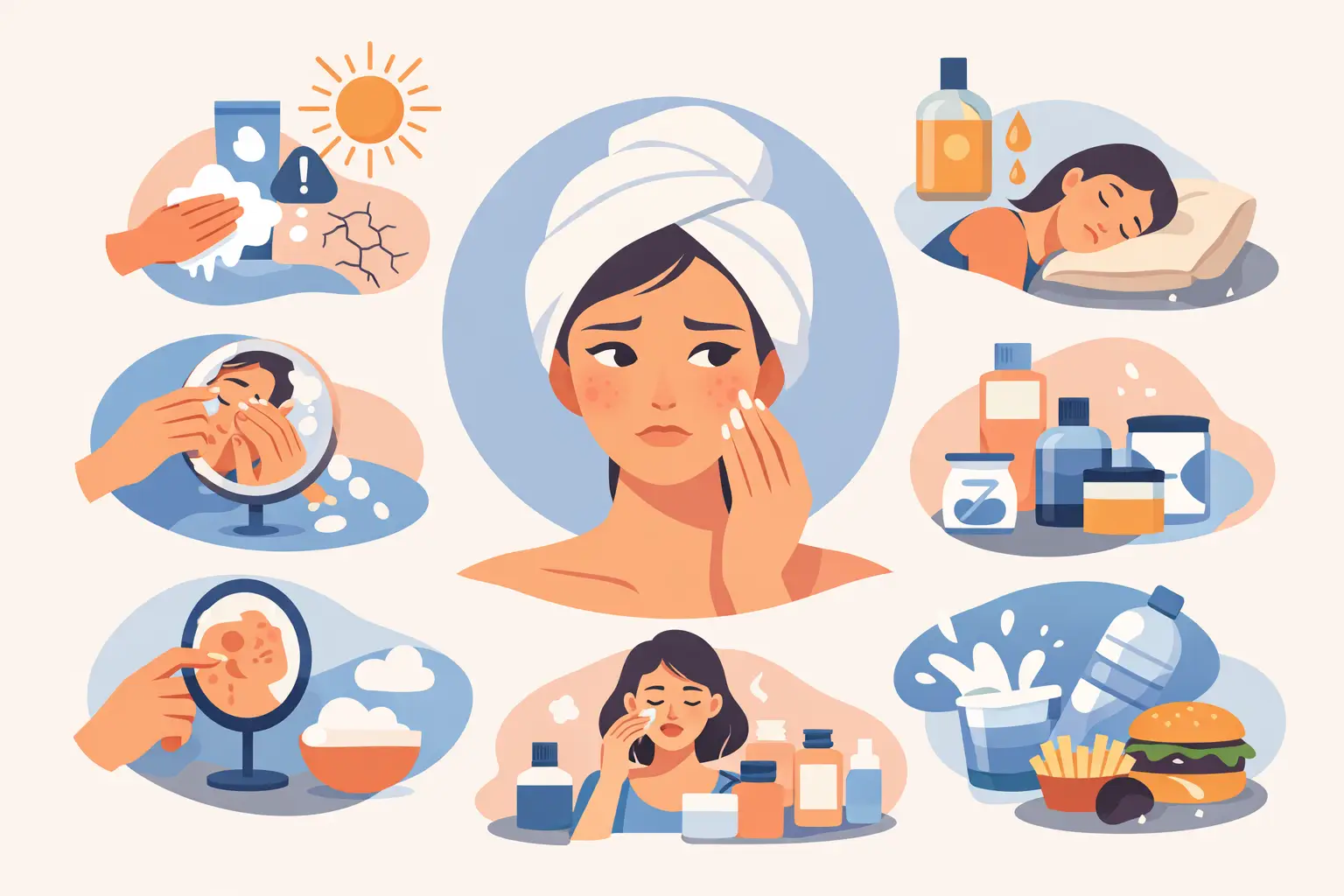
    You did acne already — and yet here it is at 32, 38, 44: deep, tender breakouts along the jawline and chin, arriving like clockwork before your period, ignoring every cleanser that worked in your teens. Adult hormonal acne is a different disease wearing the same name: androgen-driven oil production at the lower face, on

    Read more

  • Night Sweats and Hot Flashes: Natural Relief That Actually Works

    It arrives as a sudden internal furnace — heat blooming up the chest and face, sweat, sometimes a racing heart — and at night it soaks the sheets and shatters the deep sleep you need most. Vasomotor symptoms hit roughly 75% of women through the menopause transition, sometimes for years. The mechanism is precise: estrogen

    Read more

  • Why You Wake Up Tired Every Morning (Even After 8 Hours)

    Eight hours in bed, and you wake feeling like you ran a marathon in your sleep. The math says rested; the body says otherwise. Morning exhaustion despite adequate hours means the architecture of your sleep is broken — not enough deep slow-wave sleep, where physical restoration and growth hormone release happen, or a cortisol awakening

    Read more

  • The 2 PM Energy Crash: Why It Happens and How to End It for Good

    Every day at roughly the same hour, the wall: focus dissolves, eyelids weigh, and the vending machine or third coffee starts negotiating. The afternoon crash is so universal it’s treated as human nature — but its size is almost entirely manufactured by the morning that preceded it: caffeine timing, breakfast composition, the lunch spike, and

    Read more

  • Adrenal Fatigue in Women: The Symptoms, the Controversy, and What Actually Helps

    Doctors argue about the name — ‘adrenal fatigue’ isn’t an official diagnosis, while ‘HPA-axis dysfunction’ is increasingly studied — but the pattern women report is unmistakably real: exhausted on waking regardless of sleep, running on willpower and caffeine, a second wind at 10pm, crashes after stress, salt and sugar cravings, and a body that feels

    Read more

  • Insulin Resistance in Women: The Weight Loss Approach That Finally Works

    If your body stores everything and releases nothing — weight climbing on moderate eating, energy crashing after meals, hunger an hour after eating — insulin resistance may be running the show. It’s the metabolic state where cells stop responding to insulin, so the body pumps out more, and chronically high insulin is a one-way valve:

    Read more

  • How to Boost Your Metabolism After 40 (What Actually Moves the Needle)

    ‘Slow metabolism’ is treated like weather — something that happens to you. After 40 it’s actually an itemized bill: muscle mass declining 3-8% per decade (muscle is your engine), growth hormone down by half, estrogen shifting, movement quietly decreasing, and chronic dieting history suppressing the baseline. Every line item is addressable. Women who rebuild these

    Read more