

Disclosure: As an Amazon Associate, Veranoz earns from qualifying purchases. We may earn a commission if you buy through links in this post, at no extra cost to you.
If your skin suddenly stings with products it used to love, feels tight and rough, or looks red and flaky, your skin barrier is probably damaged. The fix is subtraction plus repair: pause actives (retinoids, acids, scrubs, vitamin C), switch to a gentle cleanser, and use a fragrance-free moisturizer with ceramides, cholesterol and fatty acids plus soothing ingredients like niacinamide, panthenol or colloidal oatmeal, with a mineral sunscreen by day. Most mildly damaged barriers feel much calmer within one to two weeks.
Free: the Skincare Label Decoder
Read any ingredient list in two minutes: the percentages that matter, front-of-box claims decoded and a compare-two-products worksheet.
Free. You will also get a few short emails with tips and offers. Unsubscribe anytime. Privacy policy.
The Real Problem
The barrier is the outer layer of skin that keeps water in and irritants out. Over time, skin makes fewer of its own lipids, so the barrier is more fragile, and it’s easy to overdo it with retinol, acids, scrubs or too many new products at once. The usual reaction is to add more products to “fix” it, which makes it worse. A damaged barrier needs fewer, gentler products for a couple of weeks.

Short Answer
Best overall: CeraVe Moisturizing Cream. Best for the face: La Roche-Posay Toleriane Double Repair Face Moisturizer. Best for very irritated patches: La Roche-Posay Cicaplast Baume B5+. Best cleanser: Vanicream Gentle Facial Cleanser. Best sunscreen while healing: a fragrance-free mineral SPF 30+. Pause: retinoids, acids, scrubs and vitamin C for about two weeks.

The Winter Dry Skin Rescue Plan
Winter shower rules, a face routine for very dry skin, mini-routines for hands, lips and heels, an ingredient cheat sheet and a 14-day rescue checklist.
Send me the free plan →In This Guide
Signs of a Damaged Skin Barrier
- Stinging or burning when you apply products that used to be fine
- Tightness, especially after cleansing
- Redness, flaking or rough patches
- Skin that feels both oily and dry, or dehydrated
- More breakouts or sensitivity than usual
- Itching
What Damages It
| Common cause | Fix |
|---|---|
| Too much retinol, too fast | Pause, then restart 2 nights a week with moisturizer |
| Over-exfoliating (acids, scrubs, peels) | Stop; exfoliate at most 1–2 times a week later |
| Harsh or foaming cleansers, hot water | Gentle cream cleanser, lukewarm water |
| Cold, wind, dry indoor air | Richer cream, humidifier, scarf outdoors |
| Too many new products at once | Go back to 3 basics; add one product at a time |
| Fragrance and essential oils | Switch to fragrance-free |
Ingredients That Repair It
| Type | Ingredients | Job |
|---|---|---|
| Barrier lipids | Ceramides, cholesterol, fatty acids | Rebuild the “mortar” between skin cells |
| Humectants | Glycerin, hyaluronic acid | Bring water back into the skin |
| Occlusives | Petrolatum, dimethicone, shea, zinc oxide | Lock moisture in and keep irritants out |
| Soothers | Niacinamide, panthenol, colloidal oatmeal, madecassoside | Calm redness and irritation |
Best Barrier Repair Products
CeraVe Moisturizing Cream
Three ceramides, cholesterol, hyaluronic acid and a touch of petrolatum, fragrance-free. Read our full CeraVe Moisturizing Cream review.
Check on Amazon →La Roche-Posay Toleriane Double Repair Face Moisturizer
A lightweight, fragrance-free face moisturizer with ceramide, niacinamide and glycerin. It’s comfortable under sunscreen and makeup.
Check on Amazon →La Roche-Posay Cicaplast Baume B5+
5% panthenol and madecassoside in a protective, fragrance-free balm. See our Cicaplast review.
Check on Amazon →Skinfix Barrier+ Triple Lipid-Peptide Face Cream
A ceramide, fatty acid and cholesterol cream with peptides. A step up in texture and feel.
Check on Amazon →Avène Cicalfate+ Restorative Protective Cream
A soothing, protective cream from a brand known for sensitive skin. Good for short “rescue” periods.
Check on Amazon →Vanicream Gentle Facial Cleanser
A minimal, fragrance-free cleanser that won’t strip. Or try a cream cleanser instead of a gel.
Check on Amazon →Fragrance-Free Mineral Sunscreen SPF 30+
Zinc oxide sunscreens tend to be gentler on irritated skin. Options like EltaMD UV Physical are popular. See our sunscreen guide.
Check on Amazon →Free: the Skincare Label Decoder
Read any ingredient list in two minutes: the percentages that matter, front-of-box claims decoded and a compare-two-products worksheet.
Free. You will also get a few short emails with tips and offers. Unsubscribe anytime. Privacy policy.
The 2-Week Barrier Reset
| When | Step |
|---|---|
| Morning | Rinse with lukewarm water (or gentle cleanser) → barrier moisturizer → mineral SPF 30+ |
| Evening | Gentle cleanser → barrier moisturizer → Cicaplast on irritated patches |
| Pause | Retinoids, AHAs/BHAs, scrubs, peels, L-ascorbic acid vitamin C, fragrance, new products |
| Habits | Lukewarm water, pat dry, no hot showers on the face, humidifier at night |
| Optional | Thin layer of petroleum jelly over moisturizer on very dry nights (see slugging for dry skin) |
How to Restart Your Actives
- Wait until skin hasn’t stung or flaked for at least a week.
- Restart one active at a time, at the lowest frequency (for example, retinol two nights a week).
- Buffer with moisturizer before or after, and keep a barrier cream in your routine.
- Add a second active only after two to three calm weeks.
- Retinoids aren’t recommended during pregnancy or breastfeeding.
Our retinol beginner routine has a slow-start schedule.
When to See a Dermatologist
- No improvement after two to three weeks of a gentle routine.
- Persistent redness, burning or rash, which could be rosacea, eczema or contact dermatitis.
- Oozing, crusting, swelling or signs of infection.
- A badly disrupted barrier may need a prescription treatment.
Barrier Repair Checklist
- Pause retinoids, acids, scrubs, vitamin C
- Gentle, fragrance-free cleanser
- Ceramide + cholesterol moisturizer twice a day
- Soothing balm on raw patches
- Mineral SPF 30+ every morning
- Lukewarm water only
- No new products for 2 weeks
- Restart actives slowly, one at a time
Frequently Asked Questions
How long does it take to repair a damaged skin barrier?
Mild damage often improves within one to two weeks of a gentle routine. More severe damage can take several weeks and may need a dermatologist.
What ingredients repair the skin barrier?
Ceramides, cholesterol and fatty acids rebuild it; glycerin and hyaluronic acid hydrate; petrolatum and dimethicone protect; and niacinamide, panthenol and colloidal oatmeal soothe.
Should I stop retinol if my barrier is damaged?
Yes, pause it until your skin is calm, then restart slowly a couple of nights a week with a moisturizer.
Can I wear makeup while repairing my barrier?
Yes, keep it simple and remove it gently with a cream cleanser or micellar water. Skip harsh makeup wipes.
Is niacinamide good for a damaged barrier?
Often yes, at moderate strengths in a moisturizer. Very high-strength niacinamide serums can sting some people while the barrier is raw.
Sources: American Academy of Dermatology, dermatologists’ tips to relieve dry skin; dermatologist guidance on barrier creams reported by NBC Select. Veranoz has not tested every product listed.
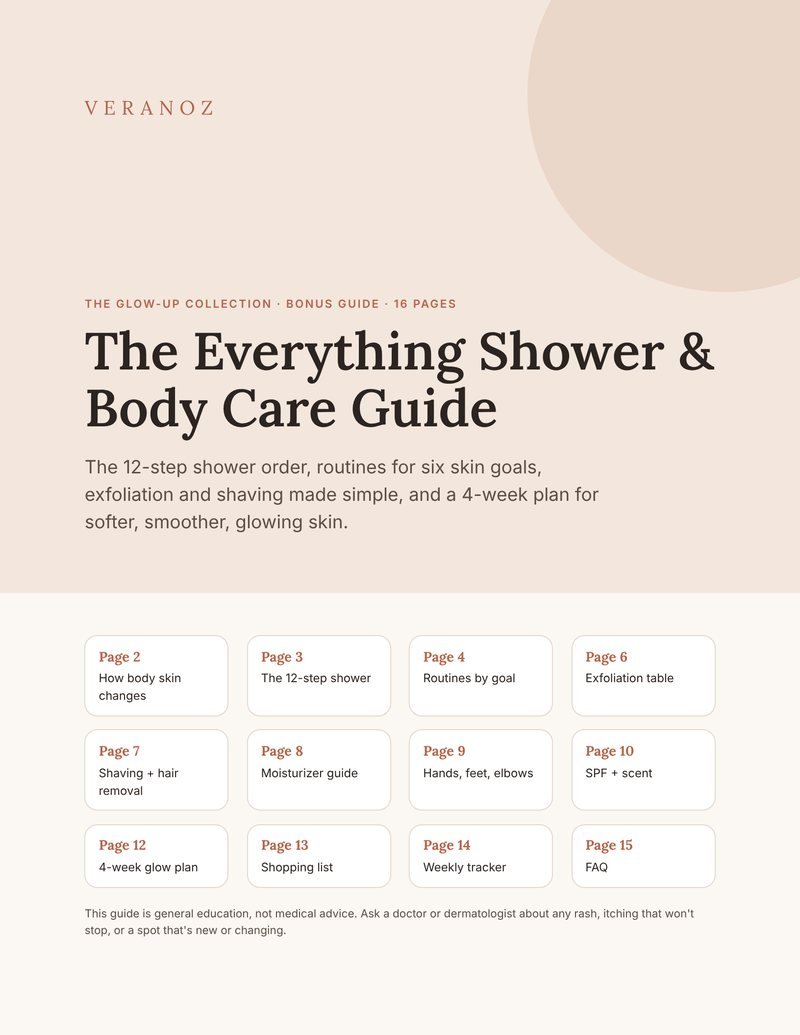
The Everything Shower & Body Care Guide
The 12-step shower order, routines for dry, crepey, bumpy or breakout-prone body skin, exfoliation and moisturizer guides, hands, feet and body SPF, and a 4-week body glow plan. 16 printable pages, instant access.
Get the Guide ($17) →Get the Free Self-Care Reset Kit
Daily, weekly and monthly self-care checklists, the everything shower order, a 3-hour at-home spa day plan and a 30-day reset tracker. Free printable, instant access.
The Veranoz 30-Day Glow-Up Planner
Routines only work when you actually keep them. The planner gives you daily planning pages, weekly resets and habit trackers so your skincare, body care and self-care steps become automatic instead of something you remember once in a while.
Veranoz Guides to Go Deeper
Some links on Veranoz are affiliate links; we may earn a commission at no extra cost to you. This content is informational and not medical advice.