

Disclosure: As an Amazon Associate, Veranoz earns from qualifying purchases. We may earn a commission if you buy through links in this post, at no extra cost to you.
A good bath oil makes a warm bath feel less drying and leaves a soft layer on your skin, which is lovely for dry, sensitive or winter-worn skin. Choose a simple, lightly scented or fragrance-free oil, keep the water warm rather than hot, soak for 10–15 minutes, and add the oil near the end so it coats your skin instead of floating away. Then still moisturize right after. A bath oil helps; it doesn’t replace your body cream.
Free: the Winter Dry Skin Rescue Plan
A printable 14-day plan for dry, tight winter skin: shower rules, a face routine, and fixes for hands, lips and heels.
Free. You will also get a few short emails with tips and offers. Unsubscribe anytime. Privacy policy.
The Real Problem
A long, hot bath is relaxing, but heat and long soaks pull oils out of the skin. That’s why you can step out of a “pampering” bath and feel tight and itchy an hour later. Bath oils reduce that effect, but only if you use them right. And many popular bath products, like bath bombs and heavily scented soaks, can irritate dry or sensitive skin.

Short Answer
Best everyday: Neutrogena Body Oil (works in the bath or on damp skin after). Best for relaxing: Kneipp or Weleda lavender bath products, if you’re not scent-sensitive. Best for itchy skin: Aveeno Soothing Bath Treatment (colloidal oatmeal). Budget: a few teaspoons of plain jojoba oil. Always: warm not hot, 10–15 minutes, careful getting out, moisturizer after.

The Winter Dry Skin Rescue Plan
Winter shower rules, a face routine for very dry skin, mini-routines for hands, lips and heels, an ingredient cheat sheet and a 14-day rescue checklist.
Send me the free plan →In This Guide
Do Bath Oils Actually Help Dry Skin?
They help comfort-wise: a thin film of oil can reduce the tight, stripped feeling after a bath and leaves skin feeling softer. But the evidence that bath additives improve dry skin conditions on their own is limited. A large UK trial in children with eczema (published in the BMJ in 2018) found that adding emollient bath additives didn’t improve eczema beyond regular leave-on moisturizers. The takeaway: enjoy a bath oil, but your after-bath moisturizer is what does the real work.
| Bath oil can | Bath oil can’t |
|---|---|
| Make a bath feel less drying | Replace your after-bath moisturizer |
| Leave skin feeling soft | Treat eczema or very dry skin on its own |
| Make a bath more relaxing | Undo the effect of very hot, long baths |
How to Use Bath Oil the Right Way
- Run a warm, not hot, bath. If your skin turns red, it’s too hot.
- Soak for 10–15 minutes. Longer soaks dry skin more.
- Add the oil in the last few minutes, or apply it to damp skin right before getting out, so it coats the skin.
- Use a small amount: usually a capful or a few teaspoons, following the label.
- Get out carefully, holding onto something; the tub will be slippery.
- Pat dry and moisturize within a few minutes. A cream holds moisture better than lotion.
- Wipe the tub with warm, soapy water afterward to prevent slips and buildup.
Best Bath Oils and Soaks
Neutrogena Body Oil (Light Sesame Formula)
A lightweight sesame oil formula that can be added to bath water or applied after the shower. It’s one of the most versatile options for dry skin.
Check on Amazon →Aveeno Soothing Bath Treatment
Colloidal oatmeal packets that turn bath water milky and soothing. A good choice for winter itch.
Check on Amazon →Kneipp Lavender Bath Oil
A classic herbal bath oil with lavender. Beautiful for a wind-down bath if your skin tolerates fragrance.
Check on Amazon →Weleda Lavender Relaxing Bath Milk
A bath milk with plant oils and lavender for a softer, creamier soak.
Check on Amazon →Pure Jojoba Oil
A few teaspoons of plain jojoba oil works as a simple, fragrance-free bath oil. It’s also a good after-bath body oil.
Check on Amazon →Free: the Winter Dry Skin Rescue Plan
A printable 14-day plan for dry, tight winter skin: shower rules, a face routine, and fixes for hands, lips and heels.
Free. You will also get a few short emails with tips and offers. Unsubscribe anytime. Privacy policy.
Safety Tips
- Slips: oil makes tubs very slippery. Use a bath mat and hold the grab bar or edge when getting out.
- Sensitive skin: choose fragrance-free oils; essential oils and fragrance can irritate.
- Allergies: check for nut oils (almond, for example) if you have a nut allergy.
- Infections: people prone to vaginal irritation or yeast infections may want to avoid scented bath products.
- Hot water and heart or blood pressure issues: keep baths warm, not hot, and ask your doctor if you have concerns.
What to Skip
- Bath bombs with strong fragrance and glitter if your skin is dry or sensitive.
- Bubble baths with high-foaming cleansers; they can be drying.
- Very hot, long baths, even with oil.
Want the full bath experience? Our Epsom salt bath guide and bath pillow picks round it out, and our bath routine for relaxation puts it all together.
Dry Skin Bath Checklist
- Warm, not hot, water
- 10–15 minutes
- Bath oil added near the end
- Fragrance-free if sensitive
- Careful getting out
- Pat dry
- Moisturize within minutes
- Wipe the tub afterward
Frequently Asked Questions
Do bath oils help dry skin?
They make baths less drying and leave skin softer, but they don’t replace a moisturizer. Apply a cream right after your bath for lasting hydration.
When should I add bath oil to the bath?
Near the end of your soak, or apply it to damp skin right before getting out, so more of it stays on your skin.
Can I use regular oils in the bath?
Yes. A few teaspoons of plain jojoba, sunflower or olive oil can work. Use a small amount, avoid nut oils if you have an allergy, and be careful of a slippery tub.
Are bath bombs bad for dry skin?
Many contain fragrance, dyes and other ingredients that can irritate dry or sensitive skin. A plain bath oil or oatmeal soak is gentler.
How often can I take a bath with bath oil?
A few times a week is fine for most people. Keep baths warm and short, and moisturize after.
Sources: American Academy of Dermatology, dermatologists’ tips to relieve dry skin; Santer M, et al. Emollient bath additives for childhood eczema (BATHE trial), BMJ 2018. Veranoz has not tested every product listed.
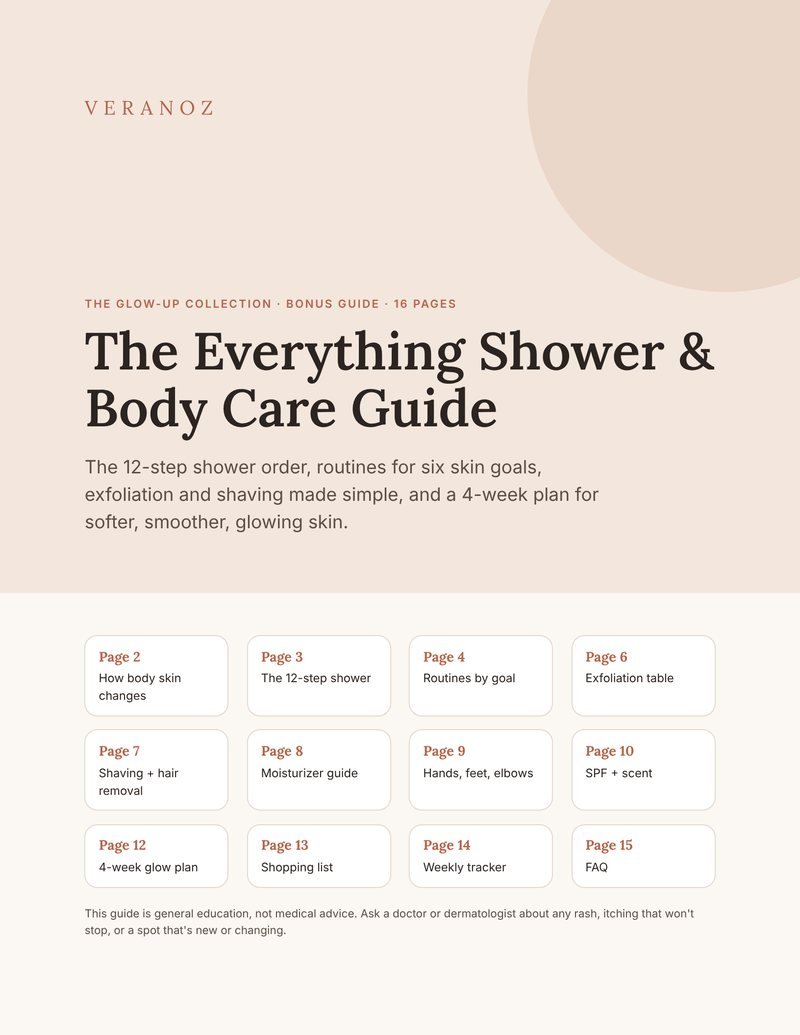
The Everything Shower & Body Care Guide
The 12-step shower order, routines for dry, crepey, bumpy or breakout-prone body skin, exfoliation and moisturizer guides, hands, feet and body SPF, and a 4-week body glow plan. 16 printable pages, instant access.
Get the Guide ($17) →Get the Free Self-Care Reset Kit
Daily, weekly and monthly self-care checklists, the everything shower order, a 3-hour at-home spa day plan and a 30-day reset tracker. Free printable, instant access.
The Veranoz 30-Day Glow-Up Planner
Routines only work when you actually keep them. The planner gives you daily planning pages, weekly resets and habit trackers so your skincare, body care and self-care steps become automatic instead of something you remember once in a while.
Veranoz Guides to Go Deeper
Some links on Veranoz are affiliate links; we may earn a commission at no extra cost to you. This content is informational and not medical advice.