

Disclosure: As an Amazon Associate, Veranoz earns from qualifying purchases. We may earn a commission if you buy through links in this post, at no extra cost to you. This article is educational and not medical advice.
Epsom salt baths feel wonderful, but most of the benefit comes from the warm water, not the salt. There’s little direct evidence that Epsom salt eases sore muscles better than a plain warm bath, that your skin absorbs meaningful magnesium from it, or that it “detoxes” anything. What a warm soak can do is relax tight muscles, help you unwind, and make it easier to fall asleep. If you enjoy Epsom salt, use 1–2 cups in a warm (not hot) bath for 10–15 minutes, and moisturize afterward.
Free: the Self-Care Reset Kit
Printable self-care checklists, an at-home spa day plan and a 30-day tracker to help the habit stick.
Free. You will also get a few short emails with tips and offers. Unsubscribe anytime. Privacy policy.
The Real Problem
Epsom salt is marketed for everything from detox to weight loss, so it’s easy to expect more than it delivers, or to soak too long in water that’s too hot. Long, hot soaks dry out skin, especially if it’s already dry, and can make you lightheaded. The good news: you can get the relaxing benefits without the hype, and protect your skin at the same time.
Short Answer
Real benefits: relaxation, easing muscle tension (mostly from warmth), a calming bedtime routine. Weak or no evidence: magnesium absorption through skin, “detox,” weight loss, healing injuries. How: 1–2 cups of Epsom salt, warm water, 10–15 minutes, moisturize after. Check with a doctor first if you have low blood pressure, skin flare-ups, wounds, diabetes-related foot issues, or are pregnant.

The Winter Dry Skin Rescue Plan
Winter shower rules, a face routine for very dry skin, mini-routines for hands, lips and heels, an ingredient cheat sheet and a 14-day rescue checklist.
Send me the free plan →In This Guide
What the Evidence Says
| Claim | What we know |
|---|---|
| Relaxation and better sleep | Warm baths before bed can help many people unwind and fall asleep. The warmth does most of the work. |
| Sore muscles | A warm soak can ease tension. There’s no good direct evidence that Epsom salt adds much beyond warm water. |
| Magnesium through the skin | Unclear and unproven. Researchers aren’t convinced meaningful amounts are absorbed. |
| “Detox” | Little to no evidence. Your liver and kidneys handle detoxification. |
| Weight loss | No evidence. |
| Psoriasis scale and itch | Some people report softer scale and less itch from salt soaks; evidence is limited. |
Bottom line: an Epsom salt bath is a pleasant ritual. Treat it as self-care, not a treatment.
How to Take an Epsom Salt Bath
- Fill a tub with warm water, comfortable to the touch, not hot.
- Add 1–2 cups of Epsom salt under running water so it dissolves.
- Soak for 10–15 minutes. Longer soaks dry skin and can make you lightheaded.
- Drink a glass of water before or after.
- Get out slowly, especially if you feel dizzy.
- Rinse if you have sensitive skin, then pat dry.
- Moisturize within a few minutes while skin is still damp.
How to Make It Better
- Add a bath oil near the end to reduce dryness. See our bath oils for dry skin.
- Support your neck with a bath pillow. See our bath pillow picks.
- Dim the lights, put your phone in another room, and play something calm.
- Time it for 60–90 minutes before bed so your body has time to cool down, which can help you feel sleepy.
- Follow with a rich body cream and cozy socks.
For a full ritual, try our bath routine for relaxation.
Related ReadSpa Gift Basket Ideas: An At-Home Spa in a BasketFree: the Self-Care Reset Kit
Printable self-care checklists, an at-home spa day plan and a 30-day tracker to help the habit stick.
Free. You will also get a few short emails with tips and offers. Unsubscribe anytime. Privacy policy.
Our Picks
Dr Teal’s Epsom Salt Soak
Widely available Epsom salt blends with lavender, eucalyptus and other scents.
Check on Amazon →Plain Epsom Salt (USP Grade)
Unscented magnesium sulfate with nothing added. Add your own fragrance-free bath oil if you like.
Check on Amazon →Bath Pillow
Supports your neck so you actually relax. Suction cups keep it in place.
Check on Amazon →Rich Body Cream for After
A fragrance-free cream like CeraVe Moisturizing Cream applied to damp skin locks in moisture after any bath.
Check on Amazon →Who Should Check With a Doctor First
- Low blood pressure, heart conditions or a history of fainting (warm water can lower blood pressure).
- Pregnancy: keep water warm, not hot, and keep soaks short; ask your provider.
- Eczema, psoriasis or other skin flare-ups, or very sensitive skin.
- Open wounds, burns or skin infections.
- Diabetes or neuropathy, especially for foot soaks.
- Trouble getting in and out of the tub safely.
Epsom Salt Bath Checklist
- Warm, not hot, water
- 1–2 cups Epsom salt, dissolved
- 10–15 minutes
- Glass of water
- Get out slowly
- Rinse if sensitive
- Moisturize on damp skin
- Bath 60–90 minutes before bed
Frequently Asked Questions
What are the real benefits of an Epsom salt bath?
Relaxation, easing muscle tension and a calming routine before bed, mostly from the warm water. Claims about detox and magnesium absorption aren’t well supported.
How much Epsom salt should I use?
1–2 cups in a standard bathtub of warm water, or about 1/2 cup for a foot soak.
How long should I soak?
10–15 minutes is enough. Longer soaks can dry out your skin.
Do Epsom salt baths dry out skin?
Long, hot soaks can. Keep it warm and short, add a bath oil, and moisturize right after.
Can I take an Epsom salt bath every day?
Most healthy people can, but a few times a week is plenty. Watch for dryness or irritation.
Sources: GoodRx Health, Epsom salt bath benefits; Healthline; American Academy of Dermatology, dermatologists’ tips to relieve dry skin.
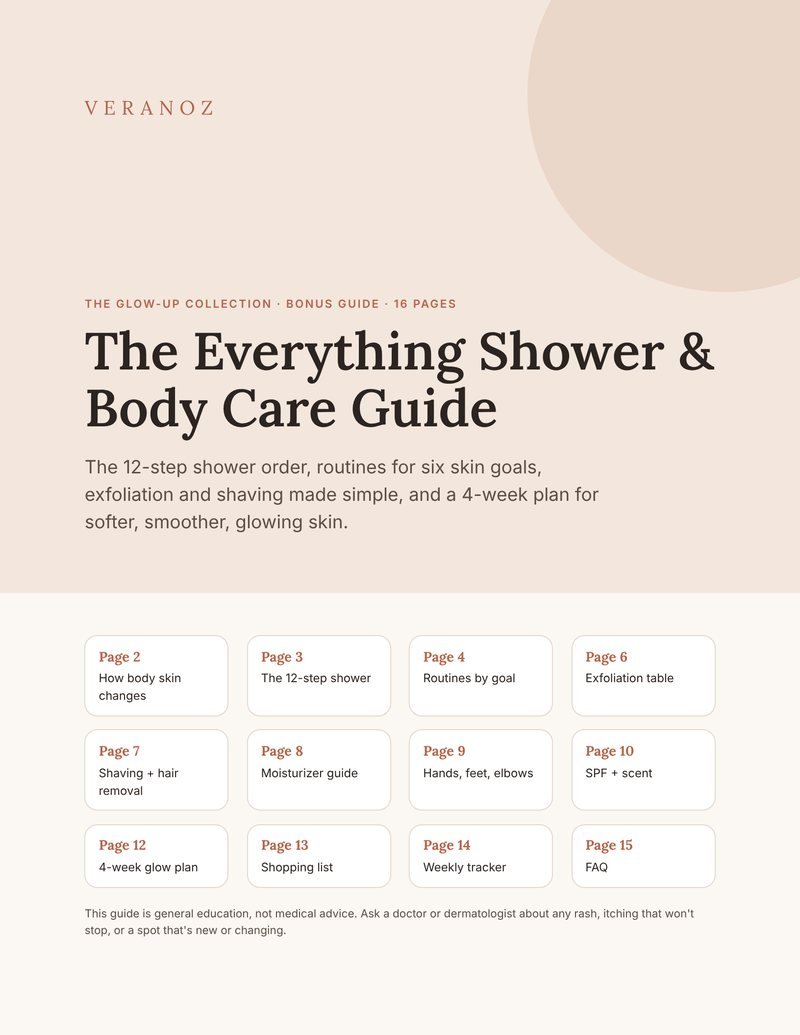
The Everything Shower & Body Care Guide
The 12-step shower order, routines for dry, crepey, bumpy or breakout-prone body skin, exfoliation and moisturizer guides, hands, feet and body SPF, and a 4-week body glow plan. 16 printable pages, instant access.
Get the Guide ($17) →Get the Free Self-Care Reset Kit
Daily, weekly and monthly self-care checklists, the everything shower order, a 3-hour at-home spa day plan and a 30-day reset tracker. Free printable, instant access.
The Veranoz 30-Day Glow-Up Planner
Routines only work when you actually keep them. The planner gives you daily planning pages, weekly resets and habit trackers so your skincare, body care and self-care steps become automatic instead of something you remember once in a while.
Veranoz Guides to Go Deeper
Some links on Veranoz are affiliate links; we may earn a commission at no extra cost to you. This content is informational and not medical advice.