
Disclosure: As an Amazon Associate, Veranoz earns from qualifying purchases. Some other links are affiliate links too. We may earn a commission if you buy through links in this post, at no extra cost to you.
Learning how to get clear skin as an adult comes down to a few unglamorous basics: one proven acne ingredient used every day, a gentle cleanser, a non-comedogenic moisturizer and sunscreen, and keeping your hands off your face. The honest catch is time. The American Academy of Dermatology (AAD) says you may see fewer breakouts within 4 to 8 weeks of using an over-the-counter treatment, and clearing can take about 16 weeks. So “fast” really means two things: the steps that calm a pimple in a day or two, and the steps that quietly prevent next month’s breakouts.
Free: the Skincare Layering Cheat Sheet
The morning and night order, what not to mix, and how long to wait between steps, on one printable page.
Free. You will also get a few short emails with tips and offers. Unsubscribe anytime. Privacy policy.
Below you’ll find why breakouts show up after 30 and 40, a realistic timeline, what helps quickest this week, how to choose between benzoyl peroxide, salicylic acid, adapalene (a retinoid to skip during pregnancy or breastfeeding) and azelaic acid, a simple clear skin routine, daily habits, and when to see a dermatologist.
The Real Problem
Adult acne is frustrating in a way teenage acne wasn’t. You may be dealing with breakouts along the jaw and chin at the same time as fine lines, dryness, or dark marks that hang around for months. The natural reaction is to throw everything at it: scrubs, three new actives, toothpaste, squeezing. That irritates skin, slows healing, and raises the risk of scars and dark spots. Clear skin after 30 usually comes from doing less, more consistently.
Short Answer: How to Get Clear Skin
This week: stop picking, put a hydrocolloid patch on open spots, and wash gently twice a day. Choose one treatment: benzoyl peroxide 2.5% for red pimples, salicylic acid for blackheads and whiteheads, adapalene for clogged pores and recurring breakouts (not during pregnancy or breastfeeding), or azelaic acid if you also have dark marks. Give it 6 to 8 weeks, applying a thin layer to the whole acne-prone area, with a non-comedogenic moisturizer and SPF 30 every morning. See a dermatologist for deep, painful or scarring acne, or if nothing has improved after a few months.
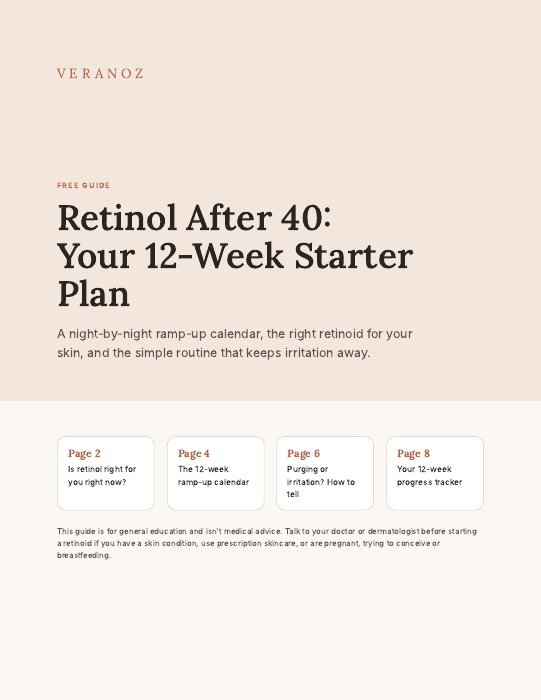
Retinol After 40: Your 12-Week Starter Plan
Which retinoid to pick, a night-by-night ramp-up calendar, purging vs irritation, and a printable tracker. Start retinol without the peeling.
Send me the free plan →In This Guide
- Why breakouts happen after 30 and 40
- How fast can you get clear skin? An honest timeline
- What helps clear skin fastest
- The best over-the-counter acne ingredients
- A simple clear skin routine (AM and PM)
- Clear skin products worth considering
- Clear skin tips: daily habits that help
- Treating acne on mature or sensitive skin
- When to see a dermatologist
- FAQ
Why Breakouts Happen After 30 and 40
Acne isn’t only a teenage problem. Plenty of women keep getting breakouts into their 30s, 40s and beyond, and some get acne for the first time as adults. The basic process is the same at any age: pores clog with oil and dead skin cells, inflammation follows, and you get blackheads, whiteheads, red bumps, or deeper, painful spots.
What changes in adulthood is the list of everyday things that tip skin over the edge:
- Pore-clogging products. Heavy creams, oily hair products and some makeup. Look for “non-comedogenic” or “oil-free.”
- Stress. Mayo Clinic lists stress as something that can make acne worse.
- Friction and sweat. Phones, straps and helmets pressing on skin, or sweat left on after a workout.
- Oily hair. The AAD notes oil from hair can cause forehead breakouts.
- Over-treating. Scrubbing, astringents and switching products every few days irritate skin.
If breakouts are sudden, severe, or don’t match these triggers, a dermatologist can look for other causes and talk you through prescription options.
How Fast Can You Get Clear Skin? An Honest Timeline
Here’s the part most “clear skin fast” articles skip: acne treatments work slowly. The AAD advises using one over-the-counter product, as directed, for 6 to 8 weeks before deciding whether it works, without adding or swapping other acne products in that time. Mayo Clinic says that even with most prescription acne medicines, you may not see results for four to eight weeks.
| Timeframe | What you can realistically expect | What to do |
|---|---|---|
| Tonight to 3 days | An open pimple looks flatter and less angry; less damage from picking | Hydrocolloid patch, hands off, gentle cleansing |
| Weeks 1 to 2 | Skin adjusting to a new treatment; some dryness or mild irritation is common | Thin layer only, moisturize, don’t add more products |
| Weeks 4 to 8 | Fewer new breakouts if the treatment suits your skin | Keep going every day, exactly as directed |
| Weeks 6 to 8 | Decision point | No change? Try a different ingredient or book a dermatologist |
| Around 16 weeks | Clearing for many people with mild acne | Keep using your treatment to prevent new breakouts |
| The months after | Leftover dark marks slowly fading | Daily sunscreen, patience, and targeted mark care |
So “fast” means doing the small things that stop a breakout getting worse right now, while your treatment does its slower work underneath.
What Helps Clear Skin Fastest
Stop Picking and Squeezing
This is the single quickest win, and it costs nothing. The AAD warns that picking, popping or squeezing acne makes it take longer to clear and increases your risk of scarring and dark spots. Mayo Clinic adds that touching or picking can trigger more acne or lead to infection.
Notice when you do it, often at a magnifying mirror or when stressed. Swap to a regular mirror, keep nails short, and patch any spot you’re tempted to touch.
Put a Pimple Patch on Open Spots
Hydrocolloid pimple patches are small stickers that, according to Cleveland Clinic, absorb fluid such as pus and oil from open pimples and cover the blemish to protect it from infection and further picking. They work best on spots that have come to a head or have already been opened, and don’t work as well on closed pimples.
Follow the package directions. Cleveland Clinic notes most patches need to be worn for a few hours, and many are designed to be worn overnight. What they can’t do is prevent new acne, so think of them as first aid, not a treatment plan.
Keep patches by the sink and by the bed. When a spot comes up, the patch goes on before your fingers do, which protects you from marks that outlast the pimple.
Treat the Whole Area, Not Just the Spot
The AAD recommends applying a thin layer of acne medication to the whole acne-prone area, not just visible spots. That treats current breakouts and helps prevent the ones forming under the surface. Breaking out along the jaw? Treat the whole jawline.
Wash Gently and Skip DIY Fixes
The AAD recommends washing gently up to twice a day and after sweating, with a mild, non-abrasive cleanser and your fingertips, not washcloths or sponges. Scrubbing harder doesn’t clear acne faster. Toothpaste is a classic overnight trick, but the AAD’s advice is to keep it for your teeth: it doesn’t treat acne and can irritate skin. Mayo Clinic adds that scrubs, astringents and masks tend to irritate skin too.
The Best Over-the-Counter Acne Ingredients
The AAD recommends choosing an acne product by its active ingredient, matched to the type of acne you have, then sticking with that one product. Many adults with mild acne (blackheads, whiteheads, or small pimples) can treat it effectively with over-the-counter products. Four ingredients do most of the work.
| Ingredient | Best for | How to start | Watch for |
|---|---|---|---|
| Benzoyl peroxide | Mild red pimples | A 2.5% product, as directed | Dryness and burning, more likely at higher strengths |
| Salicylic acid | Whiteheads and blackheads | Cleanser or leave-on product | Dryness; evidence is more limited than for other options |
| Adapalene (a retinoid) | Blackheads, whiteheads and pimples; breakouts that keep coming back | Thin layer at night, as directed | Dryness, sun sensitivity; skip if pregnant, trying to conceive or breastfeeding |
| Azelaic acid | Acne plus dark spots left behind | Thin layer, as directed | Redness and minor irritation |
Benzoyl Peroxide
Especially useful for mild, red pimples. The AAD suggests starting with a 2.5% product to limit dryness and burning; higher strengths aren’t automatically better. A wash is a gentle way to start because it rinses off.
Salicylic Acid
Salicylic acid unclogs pores and exfoliates, and the AAD says it works best on whiteheads and blackheads. Mayo Clinic notes that studies of its effectiveness are limited. It’s a reasonable first choice if your skin is mostly bumpy and congested rather than red.
Adapalene
Adapalene is a retinoid sold without a prescription. Mayo Clinic says it may be the best tolerated of the topical retinoids, and that topical retinoids increase sun sensitivity, so daily sunscreen is part of the deal. Expect some dryness at first. Retinoids aren’t recommended if you’re pregnant, trying to conceive or breastfeeding.
Azelaic Acid
Azelaic acid fights acne and can help fade the dark spots left after a breakout, according to the AAD. Mayo Clinic lists redness and minor irritation as side effects, and notes that prescription azelaic acid is one option during pregnancy and breastfeeding. Even so, the AAD advises anyone pregnant or trying to become pregnant to see a dermatologist before treating acne on their own.
Pick one of the four and give it a fair 6 to 8 weeks. Starting benzoyl peroxide, salicylic acid and adapalene on the same night is the fastest way to irritated, peeling skin, and you won’t know what helped. (Adapalene is off the list if you’re pregnant or breastfeeding.) A dermatologist can advise on combining treatments later.
A Simple Clear Skin Routine (AM and PM)
A good acne skincare routine is short. Choose your one active ingredient, then build gentle support around it: cleanse, treat, moisturize, protect.
| Step | Morning | Evening |
|---|---|---|
| 1. Cleanse | Mild, non-abrasive cleanser with fingertips (or a 2.5% benzoyl peroxide wash if that’s your treatment) | Remove makeup and sunscreen, then a mild cleanser |
| 2. Treat | Benzoyl peroxide or azelaic acid, if that’s your one active | Adapalene (not during pregnancy or breastfeeding), salicylic acid, or azelaic acid, if that’s your one active |
| 3. Moisturize | Non-comedogenic, oil-free moisturizer | Non-comedogenic moisturizer, slightly richer if skin feels dry |
| 4. Protect | Broad-spectrum, water-resistant SPF 30 or higher labeled non-comedogenic | None needed |
| 5. Spot care | Patch on an open spot if you’re home | Hydrocolloid patch on open spots overnight |
Use only one item in the “Treat” row for your first 6 to 8 weeks. Sunscreen matters because tanning can worsen acne and some treatments make skin more sun-sensitive; Mayo Clinic adds that sun can worsen lingering discoloration. Our guide to the best sunscreen for women over 40 can help you choose.
New to building a routine? Our best skincare routine for beginners walks through the basics step by step. If your skin stings with almost everything, start with our gentle skincare routine for sensitive skin and add your acne treatment slowly.
Free: the Skincare Layering Cheat Sheet
The morning and night order, what not to mix, and how long to wait between steps, on one printable page.
Free. You will also get a few short emails with tips and offers. Unsubscribe anytime. Privacy policy.
Clear Skin Products Worth Considering
Veranoz has not tested these products. They’re product types matching the AAD-recommended ingredients; the links show current options to compare. Follow the package directions.
Hydrocolloid Pimple Patches
The fastest, lowest-risk step in this guide. A patch absorbs fluid from an open spot and keeps your fingers off it while it heals. Look for plain hydrocolloid patches in a few sizes.
Check on Amazon →Benzoyl Peroxide 2.5% Gel or Wash
The AAD suggests starting at 2.5% to limit dryness and burning. Apply a thin layer over the whole breakout-prone area, not only the spots, and moisturize afterward.
Check on Amazon →Adapalene Gel 0.1%
An over-the-counter retinoid used at night. Expect some dryness in the first weeks, use a moisturizer, and wear sunscreen every morning since retinoids increase sun sensitivity.
Check on Amazon →Azelaic Acid
A useful choice when post-breakout spots bother you as much as the breakouts. Check the strength on the label and follow the directions.
Check on Amazon →ClearPores Deep Facial Wash (Skinception)
Skinception now sells ClearPores as two products: a Deep Facial Wash and a Facial Protection Gel. It’s an alternative to building your own routine. Check the ingredient list against your current products, and give it the same 6 to 8 weeks as any acne routine.
See ClearPores →Supporting basics: a gentle facial cleanser, a salicylic acid cleanser if that’s your chosen active, a non-comedogenic moisturizer, and an oil-free SPF 30 sunscreen.
Clear Skin Tips: Daily Habits That Help
Products do the heavy lifting, but these habits from the AAD and Mayo Clinic keep you from undoing their work:
- Stick with your treatment. The AAD notes that switching treatments too often can irritate skin, and results can take several weeks to a few months.
- Choose gentle, alcohol-free products. Water-based or non-comedogenic skin care and makeup are less likely to clog pores.
- Shampoo regularly. If your hair is oily, wash it more often and keep it off your face.
- Reduce friction. Notice where phones, straps or headbands press on your skin.
- Shower after hard workouts. Don’t let sweat and oil sit on your skin.
- Skip tanning beds. Tanning can worsen acne and raises skin cancer risk.
- Look after stress and sleep. Stress can make acne worse.
Treating Acne on Mature or Sensitive Skin
Breakouts and fine lines at the same time is one of the most common frustrations of adult acne. Skin that’s drier or more reactive than it was at 20 often can’t handle strong, drying teen products. A few adjustments help:
- Moisturize every time you treat. It helps your skin tolerate the treatment, so you keep using it.
- Don’t double up on retinoids. Adapalene is a retinoid. If you already use retinol for fine lines, ask a dermatologist which one to keep, and skip all retinoids during pregnancy, while trying to conceive, or while breastfeeding.
- Space out strong products. Mayo Clinic advises not applying tretinoin at the same time as benzoyl peroxide.
- Calm before you treat. If skin is red, stinging or peeling, pause the active for a few days. Our guide on how to calm irritated skin gently shows how.
- Take marks seriously. The AAD says dark spots after acne clears signal significant inflammation and are a reason to see a dermatologist.
If breakouts have left texture behind rather than flat marks, our acne scars treatment at home guide explains what can and can’t improve without a professional.
Clear Skin Routine Checklist
- Hands off: no picking, popping or squeezing
- Hydrocolloid patch on open spots
- Gentle cleanse twice a day and after sweating
- One active ingredient, thin layer over the whole area
- Non-comedogenic moisturizer, morning and night
- Broad-spectrum SPF 30 or higher every morning
- Oily hair washed and kept off your face
- Same routine for 6 to 8 weeks before judging
- No retinoids if pregnant, trying to conceive or breastfeeding
- Dermatologist booked if acne is deep, painful, scarring or not improving
When to See a Dermatologist
The AAD says it’s never the wrong time to see a dermatologist for adult acne. You don’t have to try everything at home first. Book an appointment if:
- You have large, deep or painful pimples, or acne that leaves scars. The AAD notes that store-bought products are unlikely to treat these effectively.
- You’ve used a treatment consistently for several weeks without results, or home care hasn’t cleared your skin within a few months.
- Dark spots appear after your acne clears.
- You’re pregnant or trying to become pregnant and want to treat acne.
- Your acne isn’t responding to self-care and over-the-counter treatment, which Mayo Clinic flags as a reason to see a doctor.
Mayo Clinic notes that early treatment lowers the risk of scarring. A dermatologist can discuss prescription options that aren’t available over the counter and build a plan around your skin and your health.
Frequently Asked Questions
How can I get clear skin fast?
Stop picking, patch open spots, wash gently twice a day, and start one acne ingredient over the whole area. Patches help within days; the treatment usually needs 4 to 8 weeks.
How long does it take to get clear skin?
The AAD says you may see fewer breakouts within 4 to 8 weeks of using an over-the-counter treatment, and clearing can take about 16 weeks. Use one product for 6 to 8 weeks before deciding if it works.
Why am I getting acne in my 30s and 40s?
Adult breakouts are common. Pore-clogging products, stress, friction from phones or straps, sweat, oily hair and over-treating can all play a part. If acne is sudden or severe, a dermatologist can look for other causes.
What is a good clear skin routine?
Morning: gentle cleanser, non-comedogenic moisturizer, SPF 30. Evening: remove makeup, gentle cleanser, your one acne treatment, moisturizer, and a patch on any open spot.
Can I use benzoyl peroxide and salicylic acid together?
The AAD recommends starting with one product for 6 to 8 weeks rather than combining. Using several drying ingredients at once raises the risk of irritation. A dermatologist can advise you if you need a combination.
Is adapalene good for adult acne?
Adapalene is an over-the-counter retinoid the AAD lists for blackheads, whiteheads and pimples. It can cause dryness and makes skin more sun-sensitive, so wear sunscreen daily. Don’t use it if you’re pregnant, trying to conceive or breastfeeding.
Do pimple patches actually work?
Hydrocolloid patches absorb fluid from open pimples and protect them from picking and infection. They work best on spots that have come to a head and don’t work as well on closed pimples. They don’t prevent new acne.
Should I pop a pimple to make it go away faster?
No. The AAD says popping or squeezing makes acne take longer to clear and raises the risk of scarring and dark spots. Cover it with a patch instead and let it heal.
When should I see a dermatologist for acne?
For deep, painful or scarring acne, dark spots after breakouts, no improvement after a few months of home care, or if you’re pregnant or trying to conceive.
Sources: American Academy of Dermatology, How to treat adult acne; American Academy of Dermatology, Acne: Tips for managing; Mayo Clinic, Acne: Diagnosis and treatment; Cleveland Clinic, How do pimple patches work? Veranoz has not tested the products listed. This guide is general information, not medical advice; see a dermatologist for deep, painful or scarring acne, and ask your doctor before treating acne during pregnancy or breastfeeding.
Get the Free Self-Care Reset Kit
Daily, weekly and monthly self-care checklists, the everything shower order, a 3-hour at-home spa day plan and a 30-day reset tracker. Free printable, instant access.
The Veranoz 30-Day Glow-Up Planner
Routines only work when you actually keep them. The planner gives you daily planning pages, weekly resets and habit trackers so your skincare, body care and self-care steps become automatic instead of something you remember once in a while.
Veranoz Guides to Go Deeper
Some links on Veranoz are affiliate links; we may earn a commission at no extra cost to you. This content is informational and not medical advice.