

Disclosure: As an Amazon Associate, Veranoz earns from qualifying purchases. We may earn a commission at no extra cost to you. Veranoz hasn’t run its own clinical test of the products listed; picks are based on ingredient lists, brand information and guidance from the American Academy of Dermatology (AAD) and the National Rosacea Society (NRS). See a dermatologist for rosacea diagnosis and treatment.
For rosacea-prone skin, cleansing is where many flares start. Hot water, foaming surfactants, washcloths, scrubs and fragranced washes can all leave your face red and tight within minutes. The National Rosacea Society puts it simply: gentle cleansing is extremely important for skin with rosacea. This guide covers which cleanser types work best for each skin type, the ingredients to avoid, exactly how to wash, and the gentle cleansers that rosacea-prone skin tends to tolerate best.
Free: the Calm Skin 14-Day Reset
A simple 4-product routine, a barrier checklist and a 14-day tracker for red, stinging skin. Not medical advice: see a dermatologist for persistent redness.
Free. You will also get a few short emails with tips and offers. Unsubscribe anytime. Privacy policy.
The Real Problem
A cleanser is on your face for less than a minute, so it’s easy to think it doesn’t matter. But a harsh cleanser strips the barrier twice a day, every day, and makes every product that follows sting more. When skin gets drier, a cleanser that used to feel fine can start causing redness and tightness.
Short Answer
Best type: a fragrance-free, non-soap cream, milk or low-foaming cleanser; micellar water if water itself bothers you. Avoid: alcohol, fragrance, menthol, camphor, sodium lauryl sulfate, glycolic, lactic and salicylic acid, witch hazel, peppermint and eucalyptus. How: lukewarm water, fingertips only, blot dry, wait until skin is fully dry before medication. Top picks: Vanicream Gentle Facial Cleanser, La Roche-Posay Toleriane Hydrating Gentle Cleanser, Cetaphil Gentle Skin Cleanser, Avène Tolérance Extremely Gentle Cleanser and Bioderma Sensibio H2O.
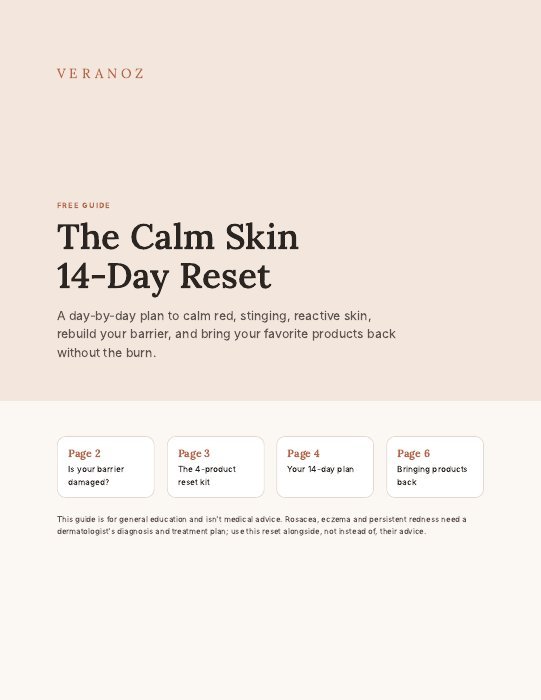
The Calm Skin 14-Day Reset
A day-by-day plan to calm red, stinging, reactive skin, with a 4-product reset kit and a daily symptom tracker.
Send me the free reset →After the reset: The Skincare Routine Builder has a full sensitive-skin blueprint and chapter, a gentle rotation calendar and a 4-week on-ramp for adding actives back without the sting. 28 pages, $24.
In This Guide
Why Cleansing Matters for Rosacea
Rosacea skin tends to have a weaker barrier, so it loses moisture faster and reacts to irritants more easily. Harsh surfactants strip the oils and lipids that hold the barrier together. Friction from washcloths or scrubbing dilates blood vessels and triggers flushing. Hot or cold water can do the same. The AAD advises cleansing gently twice a day with a mild, rosacea-friendly cleanser (not soap), using your fingertips, rinsing with lukewarm water and patting dry with a clean cotton towel.
| Cleansing habit | Effect on rosacea |
|---|---|
| Hot water | Triggers flushing |
| Washcloths, sponges, brushes | Friction causes redness and irritation |
| High-foaming, soap-based washes | Strip the barrier; tightness and stinging |
| Exfoliating cleansers | Irritate already sensitive skin |
| Rubbing dry with a towel | Friction and redness |
| Gentle, non-soap cleanser, lukewarm water, fingertips | Calmer, more comfortable skin |
Cleanser Types by Skin Type
The National Rosacea Society recommends choosing a cleanser by skin type and personal triggers. For most skin types, non-soap cleansers are the better choice. They contain less than 10% soap, rinse off easily, and have a pH closer to the skin’s natural pH.
| Skin type | Best cleanser type (NRS guidance) |
|---|---|
| Very dry | Creamy, low-foaming, non-soap cleanser that leaves a light moisturizing film |
| Dry to normal or combination | Cream or milk cleanser, low-foaming cleanser, sulfur cleanser, or micellar water |
| Oily | A mild cleanser, applied without scrubbing |
| Any type that reacts to water | A cream cleanser you wipe off with tissue, or micellar water |
Dry, rosacea-prone skin usually does best with a cream or milk cleanser. For a deeper look at textures, see cream cleanser vs gel cleanser and how to choose a cleanser.
Related ReadBest Moisturizers for Rosacea-Prone SkinIngredients to Avoid
| Ingredient | Why | Listed by |
|---|---|---|
| Fragrance | Common irritant | AAD, NRS |
| Alcohol | Drying, stinging | AAD, NRS |
| Menthol, camphor | Cooling but irritating | AAD (both); NRS (menthol) |
| Sodium lauryl sulfate | Harsh surfactant | AAD, NRS |
| Glycolic, lactic and salicylic acid (AHAs/BHAs) | Exfoliating, can sting | AAD, NRS |
| Witch hazel | Astringent | NRS |
| Peppermint and eucalyptus oil | Irritating essential oils | NRS |
| Urea | Can sting rosacea skin | AAD |
| Scrub particles | Friction and micro-irritation | AAD advises stopping exfoliation |
“Unscented” isn’t the same as fragrance-free; it can contain masking fragrance. Look for “fragrance-free” on the label.
Best Cleansers for Rosacea
Vanicream Gentle Facial Cleanser
A low-foaming gel cleanser free of fragrance, dyes, parabens and many common irritants.
Check on Amazon →La Roche-Posay Toleriane Hydrating Gentle Cleanser
A creamy, fragrance-free cleanser with ceramides, niacinamide and glycerin.
Check on Amazon →Cetaphil Gentle Skin Cleanser
A long-time dermatologist favorite that can be rinsed or tissued off.
Check on Amazon →Avène Tolérance Extremely Gentle Cleanser
A short-ingredient lotion cleanser designed to be wiped off without water.
Check on Amazon →Bioderma Sensibio H2O Micellar Water
A no-rinse micellar water for sensitive skin. Press with a cotton pad; don’t rub.
Check on Amazon →Check each label against the avoid list before buying. Formulas change.
Quick Comparison
| Cleanser | Type | Rinse needed? | Best skin type |
|---|---|---|---|
| Vanicream Gentle Facial | Low-foam gel | Yes | Very reactive, combination |
| La Roche-Posay Toleriane Hydrating | Cream | Yes | Dry, sensitive |
| Cetaphil Gentle Skin Cleanser | Lotion | Optional | Dry to normal |
| Avène Tolérance Extremely Gentle | Lotion | No | Hypersensitive |
| Bioderma Sensibio H2O | Micellar water | No | Water-sensitive, makeup removal |
Free: the Calm Skin 14-Day Reset
A simple 4-product routine, a barrier checklist and a 14-day tracker for red, stinging skin. Not medical advice: see a dermatologist for persistent redness.
Free. You will also get a few short emails with tips and offers. Unsubscribe anytime. Privacy policy.
How to Cleanse Without a Flare
- Use lukewarm water. Hot or cold water can trigger flushing (NRS).
- Use clean fingertips only. Skip washcloths, sponges and cleansing brushes (AAD, NRS).
- Massage gently for 20–30 seconds. No scrubbing.
- Rinse thoroughly so no residue is left behind.
- Blot dry with a soft, clean cotton towel. Don’t rub.
- Wait until your face is completely dry before applying medication. The NRS notes stinging is most common on damp skin.
- Wait 5–10 minutes after medication before moisturizer, sunscreen or makeup (NRS).
| Morning | Night | |
|---|---|---|
| Cleanse | Gentle cleanser, or just lukewarm water if dry | Gentle cleanser (micellar first if wearing makeup) |
| Treat | Medication if prescribed | Medication if prescribed |
| Moisturize | Rosacea-friendly moisturizer | Rosacea-friendly moisturizer |
| Protect | Mineral SPF 30+; see best sunscreens for rosacea | — |
Pro Tip
If your skin is very dry, you can skip cleanser in the morning and rinse with lukewarm water instead. Many dermatologists suggest this for dry, sensitive skin, saving the full cleanse for the evening, when you have sunscreen and makeup to remove. See how often to wash your face.
Removing Makeup and Sunscreen
Mineral sunscreen and long-wear makeup don’t always come off with a very gentle cleanser. Instead of scrubbing harder, use two gentle steps:
- Micellar water on a cotton pad: press it on for a few seconds, then wipe gently downward. Don’t rub back and forth.
- Follow with your cream or milk cleanser and lukewarm water.
Cleansing balms and oils can work for some rosacea-prone skin, but many contain fragrance or essential oils. If you try one, choose fragrance-free and patch test. See cleansing balm vs oil.
Mistakes to Avoid
- Using hot water, especially in the shower. Wash your face at the sink with lukewarm water if needed.
- Scrubbing with washcloths or brushes. Fingertips only.
- Using foaming “deep-cleansing” washes or exfoliating cleansers.
- Applying medication to damp skin. It stings more.
- Over-cleansing. Twice a day is the maximum; once may be enough if you’re dry.
- Using a toner or astringent afterward. The AAD advises against them for rosacea.
- Switching cleansers often. Give a gentle one 2–4 weeks.
Your Rosacea Cleansing Checklist
- Fragrance-free, non-soap cleanser
- No alcohol, SLS, menthol, camphor, acids or witch hazel
- Lukewarm water only
- Fingertips, no washcloth or brush
- Blot dry with a soft cotton towel
- Wait until skin is fully dry before medication
- 5–10 minutes before moisturizer, SPF or makeup
- Micellar water first if wearing makeup
Frequently Asked Questions
What kind of cleanser is best for rosacea?
A fragrance-free, non-soap cleanser: cream or milk for dry skin, low-foaming for combination skin, and micellar water if water bothers you.
Is Cetaphil good for rosacea?
Cetaphil Gentle Skin Cleanser is a long-time dermatologist favorite for sensitive skin and can be wiped off without water. Check the current label for your triggers.
Can I use a foaming cleanser with rosacea?
A low-foaming, sulfate-free cleanser can work for oily or combination skin. Avoid high-foaming, SLS-based washes.
Is micellar water good for rosacea?
Yes. The NRS notes it doesn’t need rinsing and suits sensitive skin. Press, don’t rub.
Should I wash my face twice a day with rosacea?
The AAD recommends gentle cleansing twice a day. If you’re very dry, a lukewarm-water rinse in the morning may be enough.
Are sulfur cleansers good for rosacea?
The NRS lists sulfur cleansers as an option for dry to normal or combination skin. Some people dislike the smell. Ask your dermatologist if one suits your type of rosacea.
Can I exfoliate with rosacea?
The AAD advises stopping exfoliation if you have rosacea. Ask your dermatologist about gentle alternatives such as azelaic acid.
Why does my face burn after washing?
Common causes are hot water, a harsh cleanser, rubbing, or applying products to damp skin. Switch to a gentle cleanser, lukewarm water and blotting.
Sources: American Academy of Dermatology, 7 rosacea skin care tips; National Rosacea Society, Facial cleansing for rosacea. Veranoz has not lab-tested every product listed. This article is informational and not medical advice.
Get the Free Self-Care Reset Kit
Daily, weekly and monthly self-care checklists, the everything shower order, a 3-hour at-home spa day plan and a 30-day reset tracker. Free printable, instant access.
The Veranoz 30-Day Glow-Up Planner
Routines only work when you actually keep them. The planner gives you daily planning pages, weekly resets and habit trackers so your skincare, body care and self-care steps become automatic instead of something you remember once in a while.
Veranoz Guides to Go Deeper
Some links on Veranoz are affiliate links; we may earn a commission at no extra cost to you. This content is informational and not medical advice.