

Disclosure: As an Amazon Associate, Veranoz earns from qualifying purchases. We may earn a commission if you buy through links in this post, at no extra cost to you.
The best cream for cracked heels contains urea (10–25%), lactic acid or salicylic acid, which soften and break down the thick, hard skin that splits. Apply it within five minutes of showering while your feet are still damp, then seal your heels with plain petroleum jelly and socks at bedtime. That’s the routine the American Academy of Dermatology recommends, and most mild-to-moderate cracked heels look much better in one to two weeks.
Free: the Winter Dry Skin Rescue Plan
A printable 14-day plan for dry, tight winter skin: shower rules, a face routine, and fixes for hands, lips and heels.
Free. You will also get a few short emails with tips and offers. Unsubscribe anytime. Privacy policy.
Below are the best heel creams by strength, the full routine, safe ways to deal with thick skin, and the warning signs that mean you should see a doctor, especially if you have diabetes.
The Real Problem
Heels crack because the skin there is thick and dry, and it carries your full weight every step. When thick skin dries out it loses flexibility, so the pressure of walking splits it, especially in open-backed shoes. Regular body lotion is too light to soften it. You need ingredients that dissolve the hardened layer and a heavy seal to keep moisture in.

Short Answer
Mild dryness: O’Keeffe’s Healthy Feet or Eucerin Advanced Repair Foot Cream. Thick, cracked heels: a 25% urea balm like Flexitol Heel Balm. Rough calluses: CeraVe Renewing SA Foot Cream or AmLactin Foot Repair. Every night: petroleum jelly and cotton socks. Painful cracks: a liquid bandage during the day.

The Winter Dry Skin Rescue Plan
Winter shower rules, a face routine for dry skin over 40, mini-routines for hands, lips and heels, an ingredient cheat sheet and a 14-day rescue checklist.
Send me the free plan →In This Guide
Which Ingredient for Which Heels
| Your heels | Best ingredient | How it helps | Note |
|---|---|---|---|
| Dry, slightly rough | Urea 10%, glycerin | Hydrates and softens | Gentle enough for daily use |
| Thick, yellowish, cracked | Urea 20–25% | Breaks down hardened skin | May sting open cracks |
| Calluses and rough patches | Lactic acid or salicylic acid | Exfoliates dead skin chemically | Use SPF if feet are exposed to sun |
| Deep, painful cracks | Petrolatum + liquid bandage | Protects so cracks can close | See a doctor if bleeding or infected |
Dermatologists specifically recommend heel creams with 10–25% urea, an alpha hydroxy acid or salicylic acid.
Best Creams for Cracked Heels
Flexitol Heel Balm (25% Urea)
A rich balm with a high urea strength that softens hard, split heels. Use it once or twice a day; most people notice softer skin within days.
Check on Amazon →Eucerin Advanced Repair Foot Cream
A fragrance-free foot cream with urea and ceramides that’s gentle enough for every day. It’s a good place to start for mild cracking.
Check on Amazon →O’Keeffe’s Healthy Feet Foot Cream
A concentrated foot cream that’s a long-time favorite for rough heels. A jar lasts a long time.
Check on Amazon →CeraVe Renewing SA Foot Cream
Salicylic acid exfoliates, and ceramides and hyaluronic acid repair. It’s a smart pick when heels are more rough and callused than split.
Check on Amazon →AmLactin Foot Repair Cream
A lactic acid foot cream that smooths rough skin. It can tingle at first.
Check on Amazon →Vaseline Original Healing Jelly
Plain petroleum jelly at bedtime, under socks, is what dermatologists recommend to lock moisture in overnight. Apply it over your heel cream once it has absorbed.
Check on Amazon →The Dermatologist Routine
- Keep showers short and lukewarm (about 5–10 minutes). Long, hot soaks dry skin out.
- Wash feet with a gentle, fragrance-free cleanser.
- Pat dry and apply heel cream within 5 minutes, while skin is still slightly damp.
- Reapply whenever heels feel dry during the day.
- At bedtime, apply petroleum jelly over the heels and put on cotton socks.
- For painful cracks, apply a liquid bandage during the day to protect them while they heal.
- Wear closed-heel shoes that fit well, not flip-flops or worn-out shoes.
Removing Thick Skin Safely
A urea or acid cream does most of the work on its own. If you want to remove some thick, dry skin by hand:
- Use a pumice stone or a foot file gently on callused areas that aren’t cracked, a few times a week.
- Stop before skin feels sore or looks pink. Over-filing makes skin grow back thicker.
- Never cut calluses with razors, blades or “cheese grater” tools.
- If you have diabetes or poor circulation, don’t file or cut at home; ask your doctor or a podiatrist.
Thinking about foot peel masks? Read our honest foot peel mask review first.
Free: the Winter Dry Skin Rescue Plan
A printable 14-day plan for dry, tight winter skin: shower rules, a face routine, and fixes for hands, lips and heels.
Free. You will also get a few short emails with tips and offers. Unsubscribe anytime. Privacy policy.
Helpful Extras
Liquid Bandage (New-Skin)
Dermatologists suggest a liquid bandage over cracks to reduce pain, speed healing and keep germs out. It stings for a moment when applied.
Check on Amazon →Cotton Socks or Gel Heel Sleeves
Breathable cotton socks keep petroleum jelly on your heels and off your sheets. Gel heel sleeves are another option for overnight use.
Check on Amazon →Pumice Stone or Foot File
A simple tool for light, regular smoothing, not for aggressive removal.
Check on Amazon →Keep Them From Cracking Again
- Moisturize heels every day, even after they heal.
- Wear supportive, closed-back shoes most of the time.
- Keep a humidifier running in winter. See our humidifier guide.
- Do a quick weekly foot check: dryness, calluses, cuts.
- Build heel care into a weekly reset. Our weekly body care reset checklist includes it.
When to See a Doctor
- Cracks that are deep, bleeding, or don’t improve after two weeks of home care.
- Signs of infection: redness spreading, warmth, swelling, pus or increasing pain.
- You have diabetes, neuropathy or poor circulation. Any heel crack is worth a professional look, since cracks can lead to infections and ulcers.
- Itchy, peeling skin between the toes or on the soles (possible athlete’s foot), or thick, scaly patches (possible eczema or psoriasis).
Cracked Heels Checklist
- Short, lukewarm showers
- Gentle, fragrance-free cleanser
- Urea, lactic or salicylic acid cream within 5 minutes
- Petroleum jelly + socks every night
- Liquid bandage on painful cracks
- Closed-heel shoes that fit
- Gentle filing only, never cutting
- Doctor if diabetic or no better in 2 weeks
Frequently Asked Questions
What is the best cream for cracked heels?
A cream with 10–25% urea, lactic acid or salicylic acid. For very thick, cracked heels, a 25% urea balm like Flexitol works well. For daily maintenance, Eucerin Advanced Repair Foot Cream or O’Keeffe’s Healthy Feet are good options.
How long does it take to heal cracked heels?
Mild cracking usually improves within a week of daily urea cream and nightly petroleum jelly. Deeper cracks can take two weeks or longer.
Is Vaseline good for cracked heels?
Yes. Dermatologists recommend petroleum jelly at bedtime, under socks, to lock in moisture. Use it over a urea or acid heel cream for the best results.
Should I soak my feet before applying cream?
A short soak or shower helps, but keep it to about 5–10 minutes in lukewarm water, then apply cream while skin is still damp. Long soaks can dry skin out.
Why do my heels crack even when I moisturize?
Regular lotion may be too light, open-backed shoes add pressure, or there may be an underlying condition like athlete’s foot, eczema, psoriasis, thyroid problems or diabetes. If a urea cream doesn’t help within two weeks, see a doctor.
Sources: American Academy of Dermatology, How to care for dry, cracked heels and skin care for people with diabetes. Product details from manufacturer listings. Veranoz has not tested every product listed.
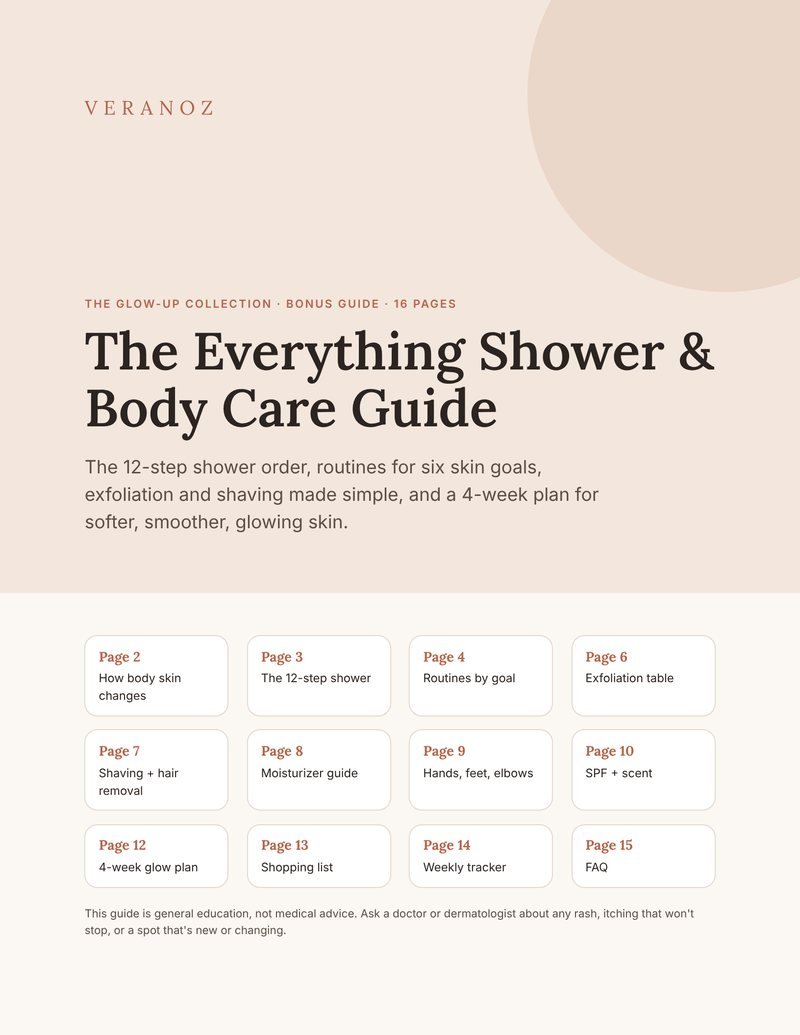
The Everything Shower & Body Care Guide
The 12-step shower order, routines for dry, crepey, bumpy or breakout-prone body skin, exfoliation and moisturizer guides, hands, feet and body SPF, and a 4-week body glow plan. 16 printable pages, instant access.
Get the Guide ($17) →Get the Free Self-Care Reset Kit
Daily, weekly and monthly self-care checklists, the everything shower order, a 3-hour at-home spa day plan and a 30-day reset tracker. Free printable, instant access.
The Veranoz 30-Day Glow-Up Planner
Routines only work when you actually keep them. The planner gives you daily planning pages, weekly resets and habit trackers so your skincare, body care and self-care steps become automatic instead of something you remember once in a while.
Veranoz Guides to Go Deeper
Some links on Veranoz are affiliate links; we may earn a commission at no extra cost to you. This content is informational and not medical advice.