Dark Spots & Scars
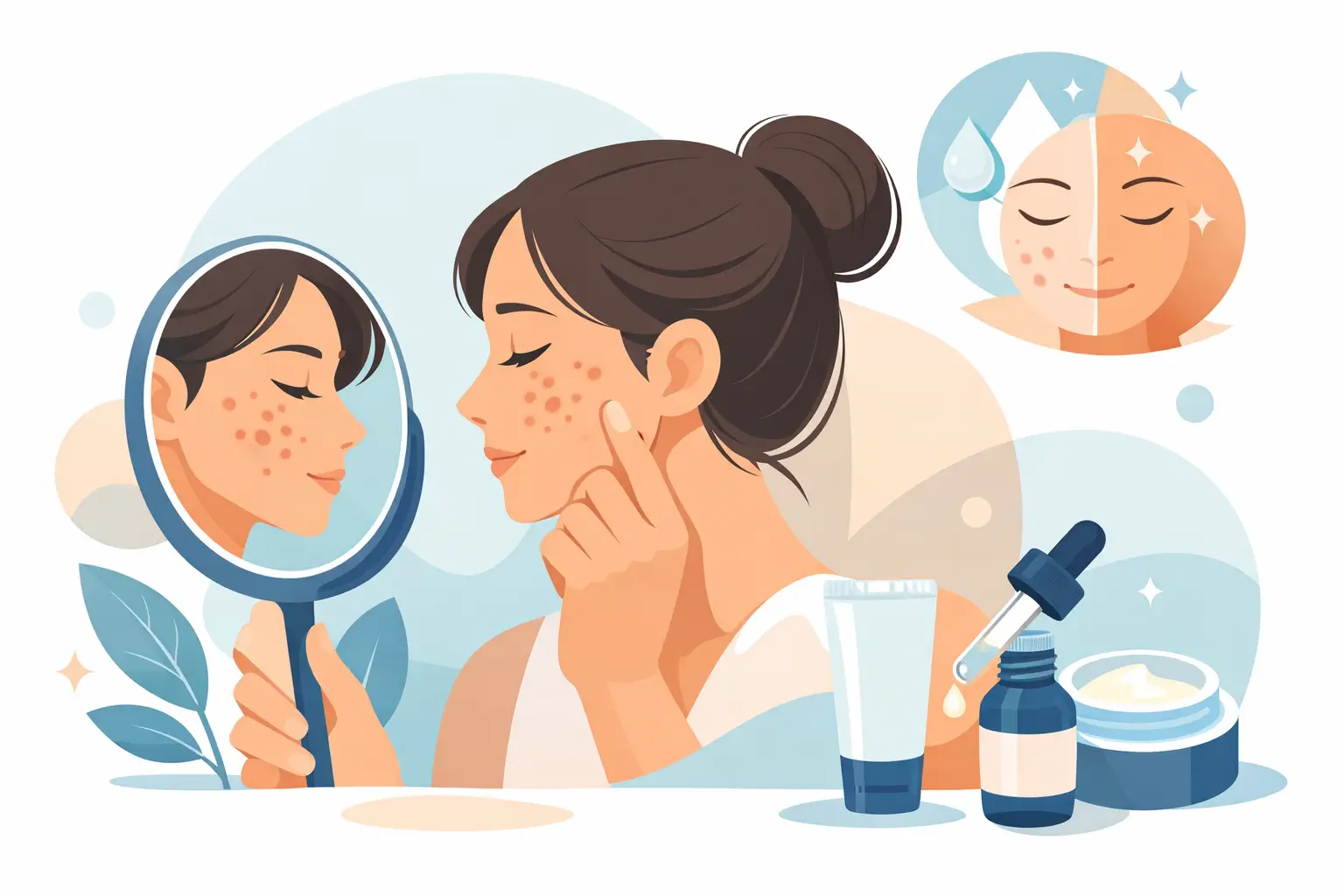
How to fade dark spots, melasma, post-acne marks and old scars on the face and body: what works, how long it takes, and which treatments are worth trying.
Best Dark Spot Treatments That Actually Work (By Ingredient, Spot Type and Budget)

The best dark spot treatments ranked by evidence: sunscreen, niacinamide, azelaic acid, tranexamic acid, vitamin C, retinoids and more, matched to sun spots, post-acne marks and melasma. Plus in-office options, what’s safe for deeper skin tones, a fading routine and realistic timelines.
Dermefface FX7 Review: Ingredients, Realistic Results, and How It Compares to Cheaper Scar Gels
An honest Dermefface FX7 review: the full ingredient list, which scars it can and can’t help, how to use it, realistic timelines, price and the 67-day guarantee, and how it compares with silicone sheets, budget silicone gels, Mederma and Bio-Oil.
How to Fade Dark Spots Naturally: 7 Steps That Work (Plus the Home Remedies to Skip)

How to fade dark spots naturally at home: 7 dermatologist-informed steps, the natural ingredients with real evidence (licorice, niacinamide, azelaic acid, vitamin C, arbutin, green tea, aloe), the DIY remedies that make spots worse, a morning and night routine, and realistic timelines.
How to Fade Post Acne Marks Gently

Learn how to fade post acne marks with a simple, gentle routine that supports brighter, more even-looking skin without overdoing it.
Scar Tissue Massage: How to Do It Right (Technique, Timing, and Results)
Every serious scar protocol — surgical aftercare, burn units, physical therapy — includes massage, and almost nobody outside those settings is taught how to do it. Done correctly, scar massage softens firmness, releases tethering to deeper tissue, flattens raised areas, improves color, and multiplies the absorption of anything applied with it. Done wrong — too…
Chickenpox Scars and Small Pitted Scars: What Improves Them at Home
The small round divots — from childhood chickenpox, an old picked breakout, a healed piercing — are the scars everyone assumes are permanent furniture. They’re depressed scars: spots where infection or inflammation destroyed a plug of collagen and the skin healed short of refilling it. Full erasure of a deep pit is clinic territory, honestly…
Bacne Scars: How to Clear the Dark Marks and Texture on Your Back
Back breakouts play by harsher rules: the skin is thicker, the sebaceous glands bigger, the inflammation deeper — so when bacne heals, it leaves darker marks and rougher texture than the face ever would, in a place you can barely see or reach. Backless dresses, swimsuits, gym tanks all become calculations. The protocol below is…
Raised Scars: How to Flatten and Soften Them at Home
Some scars don’t just mark the skin — they stand up from it. Raised, firm, sometimes itchy or tight, hypertrophic scars are healing that overshot: the repair process produced too much collagen and stacked it high. They’re most common on the chest, shoulders, back, and over joints where skin tension runs high. The clinical playbook…
Ingrown Hair Scars and Dark Spots: How to Clear the Marks for Good
The ingrown heals in a week; its souvenir stays for a year. Bikini line, underarms, legs, jaw — every ingrown hair is a small inflammatory event that stamps a dark mark and sometimes a tiny raised scar into the skin. Treat the marks without fixing the hair-removal technique and you’re bailing a leaking boat. Fix…
How to Fade Old Scars — Even Years Later (What Still Works)
There’s a myth that scars have an expiration date for treatment — that after a year or two, what you see is final. Tissue biology disagrees. Scar collagen is never static; remodeling enzymes keep working inside a scar for decades, just glacially. Mature scars respond more slowly than fresh ones, but they absolutely respond —…