

Disclosure: As an Amazon Associate, Veranoz earns from qualifying purchases. We may earn a commission if you buy through links in this post, at no extra cost to you. This article is educational and not medical advice.
Itchy skin is a common, under-discussed part of perimenopause and menopause. As estrogen falls, skin holds less water, makes fewer of its own moisturizing lipids, gets thinner and becomes more sensitive, so it dries out and itches more easily, especially in winter and at night. The fix for most women is a gentle routine: short lukewarm showers, a mild cleanser instead of soap, a fragrance-free cream with ceramides, glycerin or colloidal oatmeal right after bathing, and an anti-itch lotion for flare-ups. If itch persists despite that, it’s worth a doctor’s visit, because thyroid, iron and other issues can cause itching too.
Free: the Winter Dry Skin Rescue Plan
A printable 14-day plan for dry, tight winter skin: shower rules, a face routine, and fixes for hands, lips and heels.
Free. You will also get a few short emails with tips and offers. Unsubscribe anytime. Privacy policy.
The Real Problem
Many women don’t connect new, persistent itchiness with menopause, so they keep using the same soaps and lotions that always worked. But menopausal skin has changed: it loses water faster, its pH shifts, and it reacts to things it used to tolerate. Scratching then damages the barrier further, which makes the itch worse. That’s why a routine built for drier, more sensitive skin makes such a difference.

Short Answer
Switch to a mild, fragrance-free cleanser, keep showers short and lukewarm, and apply a rich, fragrance-free cream within minutes of bathing (CeraVe Moisturizing Cream, Aveeno Eczema Therapy or Vanicream). Use a pramoxine lotion on itchy spots, keep bedroom air humid and cool, and wear soft cotton. See a doctor if the itch lasts more than two weeks, keeps you up, or comes with a rash.

The Winter Dry Skin Rescue Plan
Winter shower rules, a face routine for very dry skin, mini-routines for hands, lips and heels, an ingredient cheat sheet and a 14-day rescue checklist.
Send me the free plan →In This Guide
Why Menopause Makes Skin Itchy
| What changes | What it does to skin |
|---|---|
| Lower estrogen | Skin holds less water and loses collagen, so it gets drier and thinner |
| Fewer skin lipids (ceramides) and less oil | A weaker barrier that lets water out and irritants in |
| Change in skin pH | Skin becomes more sensitive and reactive |
| Hot flashes and night sweats | Heat and sweat trigger itch and irritation |
| Slower healing | Scratch marks and irritation take longer to calm down |
The American Academy of Dermatology notes that in menopause, skin loses some of its ability to hold water and can become quite dry, and that it may also become more sensitive.
The “Crawling Skin” Sensation
Some women describe a tingling, prickling or “bugs crawling” feeling under the skin during perimenopause. This is called formication, and it’s linked to hormonal changes affecting the nerves and skin. It’s real and usually harmless, but it can be distressing. The same gentle routine helps, and if it’s constant or severe, talk to your doctor about treatment options, including whether menopause treatment is right for you.
Common Triggers That Make It Worse
- Hot showers and baths. Heat strips oils and flushes skin.
- Regular bar soap and deodorant soaps. Too drying for dry, sensitive skin.
- Fragrance in body wash, lotion and laundry detergent.
- Wool, synthetic and scratchy fabrics, especially at night.
- Dry indoor air from heating.
- Sweat from hot flashes, left to dry on the skin.
- Home exfoliation and scrubs. Thinner skin is easier to damage.
A Daily Routine That Calms the Itch
In the shower
- Keep it to 5–10 minutes, lukewarm, not hot.
- Use a mild, fragrance-free cleanser only where you need it (underarms, groin, feet).
- Skip loofahs and scrubs; use your hands or a soft cloth.
Right after
- Pat skin almost dry.
- Within a few minutes, apply a rich, fragrance-free cream all over, while skin is still damp.
- Use extra on shins, arms, back and anywhere that itches most.
During the day
- Reapply moisturizer to dry, itchy spots.
- Use a pramoxine anti-itch lotion when an itch flares instead of scratching.
- After a hot flash, rinse or wipe sweat off and moisturize.
Free: the Winter Dry Skin Rescue Plan
A printable 14-day plan for dry, tight winter skin: shower rules, a face routine, and fixes for hands, lips and heels.
Free. You will also get a few short emails with tips and offers. Unsubscribe anytime. Privacy policy.
Products That Help
CeraVe Moisturizing Cream
Fragrance-free with ceramides and hyaluronic acid, which help menopausal skin hold water. The big tub is ideal for daily all-over use.
Check on Amazon →Aveeno Eczema Therapy Daily Moisturizing Cream
Colloidal oatmeal soothes itchy skin and protects it. It’s a good daily cream for women whose main complaint is itch.
Check on Amazon →CeraVe Itch Relief Moisturizing Lotion
Pramoxine 1% for fast itch relief, plus ceramides. Keep it by the bed for night itch.
Check on Amazon →Vanicream Moisturizing Cream
Free of common irritants such as dyes, fragrance and lanolin. A safe choice for newly sensitive skin.
Check on Amazon →CeraVe Hydrating Body Wash
A gentle, fragrance-free body wash with ceramides, in line with dermatologists’ advice to use a mild cleanser instead of soap.
Check on Amazon →For more options and how to use them, see our guide to the best lotions for itchy, dry skin.
Night-Time Itch
Itch often feels worse at night, when skin is warmer, there are fewer distractions, and night sweats add heat and moisture.
- Keep the bedroom cool and use a humidifier to hold humidity around 30–50%. See our humidifier guide.
- Wear breathable cotton or moisture-wicking pajamas, and use cotton sheets.
- Moisturize again before bed and keep an anti-itch lotion on the nightstand.
- Keep nails short to limit damage if you scratch in your sleep.
Moisture-Wicking Pajamas
Lightweight, breathable pajamas pull sweat away from the skin, which can help both night sweats and the itch that follows.
Check on Amazon →Other Causes to Rule Out
Menopause isn’t the only reason for new, persistent itch. See your doctor or a dermatologist if:
- The itch lasts more than two weeks despite a good routine, or keeps coming back.
- It affects your whole body, or disrupts sleep.
- There’s a rash, hives, blisters or scaly patches (possible eczema, psoriasis or an allergy).
- You also have fatigue, weight change, or feel unusually cold or hot (thyroid problems can cause itch).
- You’ve started a new medication.
- A new or changing spot itches.
Doctors may check thyroid function, iron levels and other blood tests, because conditions such as iron deficiency, thyroid, liver or kidney problems can all cause itching.
Menopause Itch Checklist
- Lukewarm, 5–10 minute showers
- Mild, fragrance-free cleanser, not soap
- Rich, fragrance-free cream within minutes of bathing
- Pramoxine lotion for flare-ups
- Fragrance-free laundry detergent
- Cotton clothes and sheets
- Cool, humidified bedroom
- No home scrubs or peels
- Doctor if it lasts 2+ weeks
Frequently Asked Questions
Can menopause cause itchy skin?
Yes. Falling estrogen reduces the skin’s ability to hold water and its natural lipids, so skin becomes drier, thinner and more sensitive, which often leads to itching.
Where does menopause itching usually happen?
Often on the arms, legs, back, chest and face, but it can be anywhere. Areas that are already dry, like shins, tend to itch most.
What lotion is best for menopause itching?
A fragrance-free cream with ceramides, glycerin or colloidal oatmeal for daily use, and a pramoxine lotion for flare-ups.
Does hormone therapy help itchy skin?
Some women find their skin dryness improves with menopause treatment, but it isn’t right for everyone. Talk to your doctor about the benefits and risks for you.
When should I worry about itching during menopause?
If it lasts more than two weeks, keeps you up at night, comes with a rash, or you have other symptoms like fatigue or weight change. A doctor can check for other causes.
Sources: American Academy of Dermatology, Caring for your skin in menopause and How to relieve itchy skin; Healthline, menopause and itching.
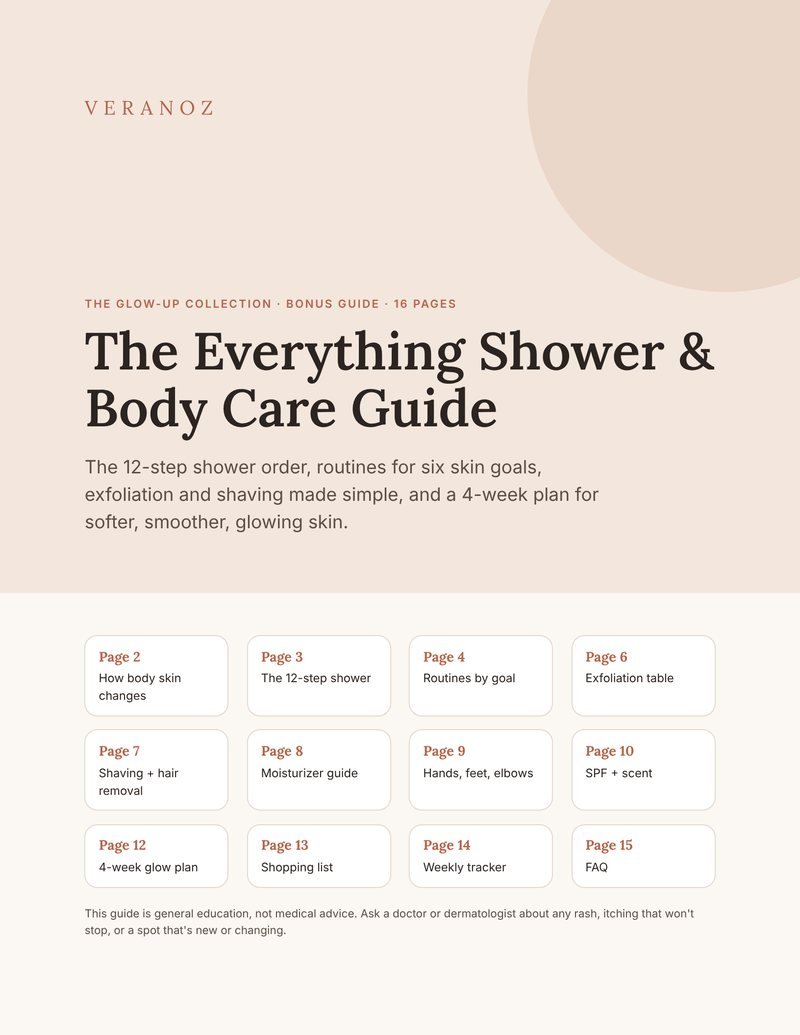
The Everything Shower & Body Care Guide
The 12-step shower order, routines for dry, crepey, bumpy or breakout-prone body skin, exfoliation and moisturizer guides, hands, feet and body SPF, and a 4-week body glow plan. 16 printable pages, instant access.
Get the Guide ($17) →Get the Free Self-Care Reset Kit
Daily, weekly and monthly self-care checklists, the everything shower order, a 3-hour at-home spa day plan and a 30-day reset tracker. Free printable, instant access.
The Veranoz 30-Day Glow-Up Planner
Routines only work when you actually keep them. The planner gives you daily planning pages, weekly resets and habit trackers so your skincare, body care and self-care steps become automatic instead of something you remember once in a while.
Veranoz Guides to Go Deeper
Some links on Veranoz are affiliate links; we may earn a commission at no extra cost to you. This content is informational and not medical advice.