
Disclosure: Some links in this post are affiliate links. If you buy through them, Veranoz may earn a commission at no extra cost to you. As an Amazon Associate, Veranoz earns from qualifying purchases.
Your sunscreen only helps when it is the one you are happy to apply generously and wear again tomorrow. That is why the mineral versus chemical sunscreen question is less about finding one universally perfect formula and more about choosing a texture, finish, and routine you can truly keep up with.
Free: the Skincare Layering Cheat Sheet
The morning and night order, what not to mix, and how long to wait between steps, on one printable page.
Free. You will also get a few short emails with tips and offers. Unsubscribe anytime. Privacy policy.
Both types can be wonderful daily options when they offer broad-spectrum protection and an SPF of 30 or higher. The best choice may change with the season, your makeup routine, how much time you spend outdoors, and simply what feels comfortable on your skin.
Mineral Versus Chemical Sunscreen at a Glance
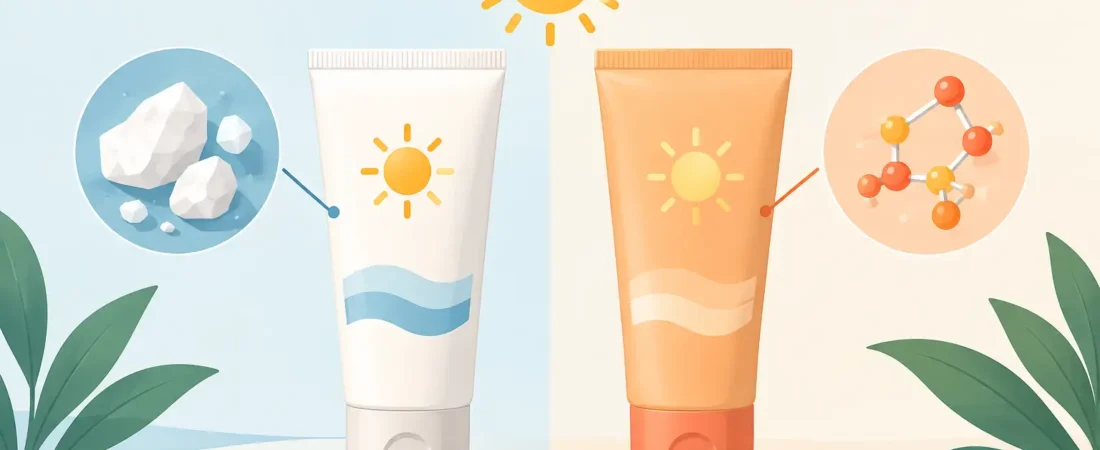
Mineral sunscreen uses mineral-based UV filters, most commonly zinc oxide and titanium dioxide. You may also see it called physical sunscreen. These filters sit on the skin’s surface and help protect it from UVA and UVB rays.
Chemical sunscreen uses organic UV filters that absorb UV energy and convert it into a small amount of heat. Common examples include avobenzone, octocrylene, homosalate, and octisalate. The word “chemical” can sound alarming, but it does not mean a formula is automatically harsh or unsafe. It simply describes the kind of UV filters used.
Both mineral and chemical formulas are tested and regulated as sunscreens. Rather than letting the category name decide for you, pay attention to broad-spectrum coverage, SPF, how the product feels, and whether it fits naturally into your morning routine.
Related: How to apply sunscreen the right way
Why Daily Sunscreen Belongs in a Gentle Routine
Sunscreen is one of the simplest ways to care for the look and feel of your skin over time. Sun exposure can contribute to skin looking less even, hydrated, and refreshed, especially when sunscreen is treated as an occasional beach-day product instead of a regular habit.
A daily SPF does not have to make your routine feel fussy. Think of it as the final skincare step in the morning, after moisturizer and before makeup. On makeup-free days, it can be the small finishing touch that helps you feel cared for before heading out the door.
The key is not perfection. A formula you apply consistently is more useful than an elegant bottle that stays untouched in a bathroom drawer.
Veranoz pick
If you lean toward mineral filters, see La Roche-Posay Anthelios Mineral Tinted SPF 50 on Amazon. Whichever type you choose, pick broad-spectrum SPF 30 or higher.
The Case for Mineral Sunscreen
Mineral sunscreen is often loved for its straightforward ingredient list and gentle feel. Zinc oxide, in particular, provides broad-spectrum coverage on its own, meaning it helps protect against both UVA and UVB rays. Titanium dioxide is also a useful protective filter, though it is commonly paired with zinc oxide for broader coverage.
Many people reach for mineral formulas when they prefer a minimal-feeling routine or want to avoid the sting that some sunscreen formulas can cause around the eyes. Mineral sunscreen also starts working as soon as it is applied, although the practical habit is the same for every SPF: apply it evenly before going outside.
The trade-off is finish. Some mineral sunscreens can leave a white cast, feel thicker than a lightweight lotion, or be harder to blend. This does not mean mineral sunscreen cannot look beautiful. Tinted mineral formulas, sheer fluid textures, and newer cream formulas can be much easier to wear than older versions.
If you enjoy a soft, satin complexion or wear little makeup, a tinted mineral sunscreen may feel like an especially lovely everyday option. It can give a light, even-looking finish while simplifying your routine by combining sun protection with a hint of coverage.
Who may enjoy mineral formulas
Mineral sunscreen can be a good starting point if you like a more creamy texture, prefer a tinted base for daytime, or have found that previous sunscreens felt uncomfortable around your eyes. It may also suit you if you want a formula that layers well over a simple moisturizer and under a light complexion product.
Still, comfort is personal. One mineral sunscreen may feel dry or chalky, while another melts in beautifully. The formula matters just as much as the category.
Free: the Skincare Layering Cheat Sheet
The morning and night order, what not to mix, and how long to wait between steps, on one printable page.
Free. You will also get a few short emails with tips and offers. Unsubscribe anytime. Privacy policy.
The Case for Chemical Sunscreen
Chemical sunscreens are often chosen for their invisible finish and lightweight feel. They can be easy to spread, especially over the face, neck, and chest, and many disappear into the skin without leaving a visible cast. For those who wear makeup, this can make them especially convenient beneath foundation, skin tint, or concealer.
These formulas are also available in many textures: weightless fluids, hydrating lotions, glow-boosting creams, and clear gels. If sunscreen has felt sticky, heavy, or difficult to reapply in the past, a carefully chosen chemical formula may make the habit feel much easier.
The trade-off is that certain formulas may feel irritating or sting if they migrate into the eyes. Fragrance, alcohol, and other supporting ingredients can also affect how a product feels, so it is not always the UV filters alone that make a sunscreen less comfortable for someone.
Chemical sunscreen is generally most practical when you want an undetectable finish, prefer a lighter texture, or need a product that disappears easily across a range of skin tones. There is no need to choose it out of pressure, though. It is simply another useful option in the sunscreen aisle.
How to Choose the Right Daily SPF
Start by looking for “broad spectrum” on the label. This means the sunscreen protects from both UVA and UVB rays. Then choose SPF 30 or higher for everyday use. Higher SPFs can offer added protection, but they are not a substitute for applying enough product or reapplying when you are outdoors.
For your face and neck, use about two finger lengths of sunscreen as a simple guide, or roughly one-quarter teaspoon for the face alone. Apply it as the last step of your morning skincare routine. Give it a minute or two to settle before makeup, especially if your formula has a dewy finish.
When you are spending time outside, reapply about every two hours, and sooner after swimming, sweating, or towel drying. A sun hat, sunglasses, and time in the shade can also make a thoughtful addition to your outdoor routine.
Your day-to-day preferences can guide the final choice:
- Choose a mineral formula if you enjoy a creamy or tinted finish, want a simpler-feeling filter choice, or prefer a sunscreen that tends to be comfortable around the eyes.
- Choose a chemical formula if you want a clear, lightweight finish that layers easily under makeup and feels barely there.
- Consider a hybrid formula if you want benefits from both. Many modern sunscreens combine mineral and chemical filters to create a more wearable texture and finish.
- Choose the formula you will apply generously. This is the choice that matters most.
A Few Small Details That Make a Big Difference
Do not judge a sunscreen by its first 30 seconds on the skin. Give it a few mornings to see how it wears with your moisturizer, makeup, and usual schedule. A formula that pills may simply not pair well with another product underneath it, while a sunscreen that feels shiny at first may settle into a comfortable glow after a few minutes.
If you are trying a new formula, a small test application can help you notice whether it feels comfortable before you rely on it for a full day out. And if your sunscreen sits near a sunny window or lives in a hot car, replace it with one stored in a cooler, dry place. Heat can affect product quality over time.
It can also help to keep two options: a refined everyday facial sunscreen you enjoy applying and a larger body sunscreen for arms, legs, and other exposed areas. This makes your routine feel more realistic, not more complicated.
The most confidence-boosting sunscreen routine is not the one with the trendiest label. It is the calm, repeatable habit that fits your life, feels good on your skin, and lets you step into the day feeling comfortably cared for.