

Disclosure: As an Amazon Associate, Veranoz earns from qualifying purchases. We may earn a commission if you buy through links in this post, at no extra cost to you.
Collagen supplements for skin may offer small improvements in hydration and elasticity, but the evidence is weaker than the marketing suggests. Pooled trial results look positive, yet the benefits shrink or disappear when researchers look only at higher-quality or independently funded studies, and there’s no solid evidence that collagen reduces wrinkles.
Free: the 12-Week Retinol Starter Plan
Which retinoid to pick, a night-by-night 12-week ramp-up calendar, how to tell purging from irritation and a printable progress tracker.
Free. You will also get a few short emails with tips and offers. Unsubscribe anytime. Privacy policy.
Below is an honest summary of what the research actually says, why so many studies are hard to trust, the possible side effects, who should check with a doctor first, and how collagen compares with topical steps that have stronger evidence, like sunscreen and retinoids. If you still want to try collagen, there’s a simple table for choosing a better-quality product.
The Real Problem
After 40, many women notice skin that looks thinner, drier and less bouncy, and collagen powders promise to fix it from the inside. The ads are everywhere, the before-and-after photos are convincing, and a daily scoop feels easy. But supplements aren’t reviewed for safety or effectiveness before they’re sold, many studies are funded by the companies selling collagen, and the money spent on powders often comes out of the budget for the products that do more, like a daily sunscreen.

Short Answer
Do collagen supplements work? Possibly a little, for hydration and elasticity, based mostly on short, industry-funded trials. Wrinkles? No robust evidence. Safe? Generally well tolerated, with mild digestive side effects in some people, but quality varies and no product is FDA-approved to treat anything. Stronger options: daily broad-spectrum sunscreen, a retinoid at night (not during pregnancy or breastfeeding), and not smoking. If you try collagen: choose hydrolyzed collagen peptides with an NSF or USP seal, check the source for allergies, and give it about three months before judging.
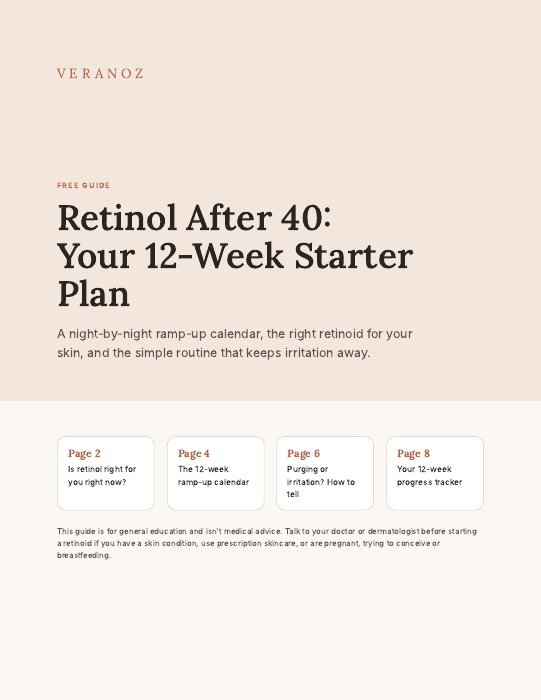
Retinol After 40: Your 12-Week Starter Plan
Which retinoid to pick, a night-by-night ramp-up calendar, purging vs irritation, and a printable tracker. Start retinol without the peeling.
Send me the free plan →In This Guide
What Collagen Supplements Are
Collagen is the most abundant protein in your body. It gives structure to skin, bones, muscles, tendons and ligaments, and your natural production starts to decline as early as your 20s. Sun exposure and smoking speed up that loss.
Most supplements contain collagen peptides, also called hydrolyzed collagen: collagen that has been broken into smaller pieces so it’s easier to digest and absorb. They’re sold as powders, capsules, gummies and drinks, usually made from cows (bovine), pigs (porcine) or fish (marine). Some products add vitamin C, biotin or zinc. Plant-based “vegan collagen” products also exist, but Cleveland Clinic notes they haven’t been well studied.
One thing to understand up front: your body doesn’t move swallowed collagen straight into your skin. Like any protein, it’s digested in your gut. Cleveland Clinic dermatologists point out that most of it is absorbed there and little intact collagen reaches the bloodstream.
Does Collagen Work? What the Research Says
There are now more than 20 randomized controlled trials of oral collagen for skin, and several meta-analyses that pool their results. They don’t all agree, and that disagreement is the most honest answer to “does collagen work.”
| Review | What it looked at | What it found | Important caveats |
|---|---|---|---|
| Myung and Park, American Journal of Medicine, 2025 | 23 randomized trials, 1,474 participants | Pooled results showed better hydration, elasticity and wrinkles. But trials without industry funding showed no benefit, and higher-quality trials showed no significant effect on any outcome. | Authors concluded there is currently no clinical evidence to support collagen for preventing or treating skin aging. Industry groups disputed how some studies were classified. |
| Batool et al., Journal of Cosmetic Dermatology, 2026 | Updated meta-analysis of randomized trials of oral collagen peptides | Modest improvements in hydration and elasticity, and less water loss through the skin. No robust evidence that collagen reduces wrinkles or increases skin density. | Large differences between products, doses and measurements; likely publication bias; mostly short studies. Length of use mattered more than dose. |
| Expert summaries (Harvard T.H. Chan School of Public Health, Cleveland Clinic) | Overall body of research | Some trials report improved elasticity and hydration; results vary and supplements are not a cure for aging skin. | Most research is funded by industry or involves authors with industry ties, which makes true effectiveness hard to judge. |
Put simply: if you average every trial together, collagen looks helpful for skin hydration and elasticity. If you only trust the most rigorous or independent trials, the effect gets much smaller or disappears. Wrinkle reduction, the claim most products lead with, is the weakest part of the evidence.
“Clinically studied” on a label doesn’t mean the product you’re holding has been proven to work. Ask who funded the study, how many people took part and how long it lasted.
Why the Evidence Is Hard to Trust
Industry Funding
Harvard’s Nutrition Source notes that most or all collagen research is funded wholly or partly by related industries, or written by authors with industry ties. Industry-funded research isn’t automatically wrong, and supplement trade groups argue that funding alone doesn’t compromise good methods. But the 2025 meta-analysis found that the positive results came from industry-backed trials, while independently funded trials showed no benefit. That pattern is worth taking seriously.
Small, Short Studies
Many trials are small and last only a few months. The 2026 meta-analysis called for longer studies of at least 24 weeks, with standardized products and outcome measures, before firm conclusions can be drawn.
“Collagen” Means Many Different Products
Trials have used different sources, molecular sizes, blends and doses. A result for one specific peptide doesn’t automatically apply to the powder on the store shelf.
No FDA Review Before Sale
In the U.S., the FDA doesn’t review supplements for safety or effectiveness before they’re sold. Collagen supplements are not FDA-approved to treat wrinkles, sagging or any skin condition. Cleveland Clinic dermatologists add that the supplement industry has a history of inaccurate labeling and contamination, and Harvard notes concerns about heavy metals in some collagen products.
Collagen Benefits: Claims vs Evidence
- Skin hydration: the most consistent finding across trials, though the size of the effect is modest and depends on which studies you trust.
- Skin elasticity: also reported in many trials, with the same caveats about quality and funding.
- Wrinkles: not supported by robust evidence in the most recent analyses.
- Hair and nails: widely claimed, but Cleveland Clinic dermatologists say research doesn’t necessarily back these up.
- Joints: some trials report less joint pain and better mobility, including in people with osteoarthritis. That’s outside the scope of this skin guide, but it’s one reason some people take collagen anyway.
If you’re hoping to firm up skin on the face, neck or body, collagen is at best a small helper, not the main event. Our guides to how to improve skin elasticity and firmer-looking skin cover the habits and ingredients that do more.
Side Effects and Who Should Check With a Doctor
Collagen is generally well tolerated at typical doses, and research hasn’t shown serious side effects. That’s not the same as being risk-free, and long-term safety data are limited.
Possible Side Effects
- Mild digestive symptoms, such as bloating or a feeling of fullness, especially when you first start
- Diarrhea, headache or lightheadedness in some people
- Allergic reactions, since collagen comes from animal tissue and labels don’t always name every byproduct
- Exposure to contaminants such as heavy metals in poorly made products
Check With Your Doctor First If You:
- Have kidney disease. Collagen is a protein, and protein intake often needs to be planned with your care team when kidneys aren’t working well.
- Have a fish, shellfish, beef or pork allergy. Marine collagen may not be appropriate if you’re allergic to fish. Read labels carefully for the exact source and any shared-facility warnings.
- Are pregnant, trying to conceive or breastfeeding. There’s little research on collagen supplements in pregnancy. Ask your OB, midwife or pediatrician before starting.
- Take medications or have a chronic health condition. Cleveland Clinic advises talking with a healthcare provider before starting any supplement.
- Have dietary or religious restrictions. Bovine, porcine and marine sources aren’t interchangeable; check the label.
Stop taking it and talk to your doctor if you notice hives, swelling, itching or ongoing stomach upset.
Free: the 12-Week Retinol Starter Plan
Which retinoid to pick, a night-by-night 12-week ramp-up calendar, how to tell purging from irritation and a printable progress tracker.
Free. You will also get a few short emails with tips and offers. Unsubscribe anytime. Privacy policy.
Collagen vs Topical Skincare: What Has Stronger Evidence?
If your goal is skin that looks firmer, smoother and more even, the steps with the strongest support aren’t supplements. They’re the basics dermatologists have recommended for years.
| Option | Strength of evidence | What it does | Notes |
|---|---|---|---|
| Daily broad-spectrum sunscreen | Strong | Protects existing collagen from sun damage | Plus hats, shade and protective clothing outdoors |
| Retinoids (tretinoin, retinol) | Strong for prescription retinoids | Shown effective in studies and practice for signs of aging | Use at night; not during pregnancy, trying to conceive or breastfeeding |
| Topical vitamin C | Some | Antioxidant that may help protect against UV and smoke | Best in the morning, under sunscreen |
| Not smoking | Well established | Avoids damage to collagen | Includes secondhand smoke |
| In-office procedures (e.g. microneedling) | Varies by treatment | Stimulates collagen | Done by a board-certified dermatologist |
| Oral collagen supplements | Mixed | May modestly improve hydration and elasticity | No robust effect on wrinkles |
| Collagen creams | Weak | Moisturize the surface | Collagen molecules are too large to penetrate skin |
Sunscreen First
Harvard and Cleveland Clinic experts both put sun protection at the top of the list for protecting collagen. A broad-spectrum sunscreen every morning, on your face, neck, chest and the backs of your hands, will likely do more for your skin than any powder. See our picks for the best sunscreen for women over 40.
Retinoids at Night
Cleveland Clinic dermatologists point to vitamin A-based topicals such as tretinoin as having shown effectiveness in studies and in practice. Over-the-counter retinol is a gentler starting point. Start two or three nights a week, build up slowly, and use sunscreen daily. Retinoids aren’t recommended during pregnancy, while trying to conceive or while breastfeeding. Our retinol after 40 beginner routine walks you through the first weeks.
Vitamin C in the Morning
Topical vitamins C and E are antioxidants that may help protect skin from UV rays and smoke. A vitamin C serum under sunscreen is an easy morning step. For more on what earns a place in a mature skin routine, read our guide to the best ingredients for mature skin.
The Everyday Habits
Harvard’s Nutrition Source recommends a balanced diet with enough protein, fruits and vegetables, 7 to 9 hours of sleep, not smoking, managing stress and regular exercise. It also warns that relying on supplements can make it easier to neglect these habits.
Related ReadBest Anti Aging Skincare Routine for Youthful SkinHow to Choose a Collagen Supplement
If you’ve weighed the evidence and still want to try collagen, these checks help you pick a better-quality product and avoid wasting money.
| What to check | What to look for | Why it matters |
|---|---|---|
| Type | Hydrolyzed collagen or collagen peptides (skin products often list type I and III) | This is the form used in most trials and is easier to digest |
| Source | Bovine, porcine or marine, clearly labeled | Matters for allergies and dietary needs; “vegan collagen” is not well studied |
| Dose | A serving in the 2.5 to 15 gram range | The range Cleveland Clinic describes as generally safe; trials found length of use mattered more than dose |
| Third-party testing | NSF Certified for Sport or USP Verified seal | The FDA doesn’t test supplements; an independent seal checks what’s in the bottle |
| Ingredient list | Short and unflavored, or with clearly listed add-ins like vitamin C | Fewer extras means fewer surprises; check gummies and drinks for added sweeteners |
| Claims | Modest language | Be wary of promises to erase wrinkles or “reverse aging” |
| Time frame | Plan for about three months | Trials ran for weeks to months; dermatologists suggest results, if any, may take three to six months |
Powder vs Capsules vs Gummies
Collagen powder is the easiest way to reach the doses used in trials, because it mixes into coffee, smoothies or oatmeal. Capsules are convenient, but check how many capsules make one serving. Gummies and drinks vary widely, so compare grams of collagen per serving and check for added sugar.
How to Take It
Follow the dose on the label, take it at whatever time of day you’ll remember, and be consistent. Take a photo of your skin in the same light before you start and again after three months. If you can’t see a difference, that money may be better spent on sunscreen or a retinoid.
Don’t skip your sunscreen because you’re “working on collagen from the inside.” UV exposure breaks down collagen, and no supplement makes up for skipping sun protection.
Products Worth Considering
Veranoz hasn’t tested these products. They’re product types matched to the evidence above, so compare labels and seals before you buy.
Broad-Spectrum Sunscreen SPF 30+
The step dermatologists recommend most for protecting skin from sun-related aging. Choose one you like enough to use every morning.
Check on Amazon →Hydrolyzed Collagen Peptides Powder
Look for unflavored bovine collagen peptides with an NSF Certified for Sport or USP Verified seal, and a clearly listed serving size.
Check on Amazon →Marine Collagen Peptides
Made from fish. Check the label for the exact source, the serving size and an independent testing seal.
Check on Amazon →Beginner Retinol Serum
Start with a low-strength retinol two or three nights a week, follow with moisturizer and wear sunscreen every day.
Check on Amazon →Kollagen Intensiv Anti-Aging Serum
This is a topical serum from Skinception, not a supplement you swallow. It’s peptide-based rather than a “collagen cream,” and it works alongside sunscreen, not instead of it. Read our Kollagen Intensiv review to see what’s in it and who should skip it.
See Kollagen Intensiv →For more topical options and how to fit them into one routine, see our guide to collagen skincare products.
Collagen Supplement Checklist
- Sunscreen every morning comes first
- A retinoid at night if it suits you (not in pregnancy or breastfeeding)
- Doctor’s OK if you have kidney disease, allergies, are pregnant or take medications
- Hydrolyzed collagen peptides, clearly labeled source
- NSF Certified for Sport or USP Verified seal
- Serving in the 2.5 to 15 gram range
- Before photo, then reassess at three months
- Stop if you get hives, swelling or ongoing stomach upset
Frequently Asked Questions
Do collagen supplements actually work for skin?
The evidence is mixed. Pooled trials suggest modest improvements in hydration and elasticity, but higher-quality and independently funded trials show little or no benefit, and there’s no robust evidence for fewer wrinkles.
How long does it take for collagen to work?
Trials have run from a few weeks to several months, and dermatologists suggest any results may take three to six months. Reassess after about three months of consistent use.
What is the best collagen for skin?
Hydrolyzed collagen peptides from a clearly labeled source, with an NSF Certified for Sport or USP Verified seal. No single brand has been proven better than others.
Is collagen powder better than capsules?
Powder makes it easier to reach the doses used in studies. Capsules work too, but check how many make one serving. With gummies, compare grams of collagen per serving.
What are the side effects of collagen supplements?
Most people tolerate them well. Some get bloating, fullness, diarrhea, headache or lightheadedness. Allergic reactions are possible depending on the animal source.
Who should not take collagen?
Check with your doctor first if you have kidney disease, a fish, shellfish, beef or pork allergy, are pregnant or breastfeeding, or take medications.
Are collagen supplements FDA approved?
No. The FDA doesn’t review supplements for safety or effectiveness before they’re sold, and collagen isn’t approved to treat any skin condition. That’s why third-party testing seals matter.
Does collagen help with wrinkles?
Not reliably. Recent meta-analyses found no robust evidence that oral collagen reduces wrinkles. Sunscreen and retinoids have stronger evidence for fine lines.
Do collagen creams work?
Collagen molecules are too large to pass through the skin’s outer layers, so collagen creams mainly act as moisturizers. Sunscreen, retinoids and vitamin C are better-supported topical choices.
Sources: Myung SK, Park Y, Effects of collagen supplements on skin aging: a systematic review and meta-analysis of randomized controlled trials, American Journal of Medicine, 2025, as reported by NutraIngredients, Industry pushes back on meta-analysis concluding collagen supplements show no benefit for skin aging; Batool A, et al., Journal of Cosmetic Dermatology, 2026, as reported by Dermatology Times, Oral collagen improves skin hydration and elasticity, but benefits for wrinkles remain unproven; Harvard T.H. Chan School of Public Health, The Nutrition Source: Collagen; Cleveland Clinic, What are collagen peptides? And do they work?; Cleveland Clinic, Should you add collagen supplements to your skin care routine? Veranoz has not tested every product listed. This guide is general information, not medical advice; talk to your doctor before starting any supplement.
Get the Free Self-Care Reset Kit
Daily, weekly and monthly self-care checklists, the everything shower order, a 3-hour at-home spa day plan and a 30-day reset tracker. Free printable, instant access.
The Veranoz 30-Day Glow-Up Planner
Routines only work when you actually keep them. The planner gives you daily planning pages, weekly resets and habit trackers so your skincare, body care and self-care steps become automatic instead of something you remember once in a while.
Veranoz Guides to Go Deeper
Some links on Veranoz are affiliate links; we may earn a commission at no extra cost to you. This content is informational and not medical advice.