
Disclosure: As an Amazon Associate, Veranoz earns from qualifying purchases. We may earn a commission if you buy through links in this post, at no extra cost to you.
The best hair care routine is simple: shampoo your scalp (not your lengths) as often as your scalp needs, condition after every single wash, detangle gently with a wide-tooth comb, blot instead of rubbing, and keep heat low with a protectant. Add one reset a week or two, such as a mask, a clarifying wash or a dandruff shampoo if you flake, and protect your hair from sun, chlorine and tight styles. That five-step base works for almost every hair type; you only change how often you wash and how much conditioner you use.
Free: the Fuller-Looking Hair Cheat Sheet
The right cut for your hair type, a 5-minute volume blowout, a weekly routine that stops breakage and a 90-day tracker.
Free. You will also get a few short emails with tips and offers. Unsubscribe anytime. Privacy policy.
Below you’ll find what actually changes in hair over time, a step-by-step wash day, how often to wash for your hair type, a weekly schedule you can copy, styling and heat rules, a gentle hair care routine for thinning hair, product types worth having, and the habits dermatologists say quietly damage hair.
The Real Problem
Most hair routines online were built for thick, young hair: daily washing, 100 brush strokes, hot tools on high and a shelf of masks and oils. Over time that same routine can leave hair flatter, drier and more fragile. Strands tend to get finer, gray hairs feel coarser and more wiry, and many women notice more hair in the brush. The fix usually isn’t more products. It’s fewer, better-matched steps and a lot less friction.
Short Answer
Every wash: gentle shampoo on the scalp only, conditioner on the ends (fine hair) or full length (dry, curly or coarse hair), wide-tooth comb, blot dry. Every styling session: heat protectant and the lowest heat that works. Weekly: a mask or leave-in for dry ends. Every 2 to 4 weeks: a clarifying wash if products build up. Thinning or shedding? Go gentler still, skip tight styles and see a board-certified dermatologist early.
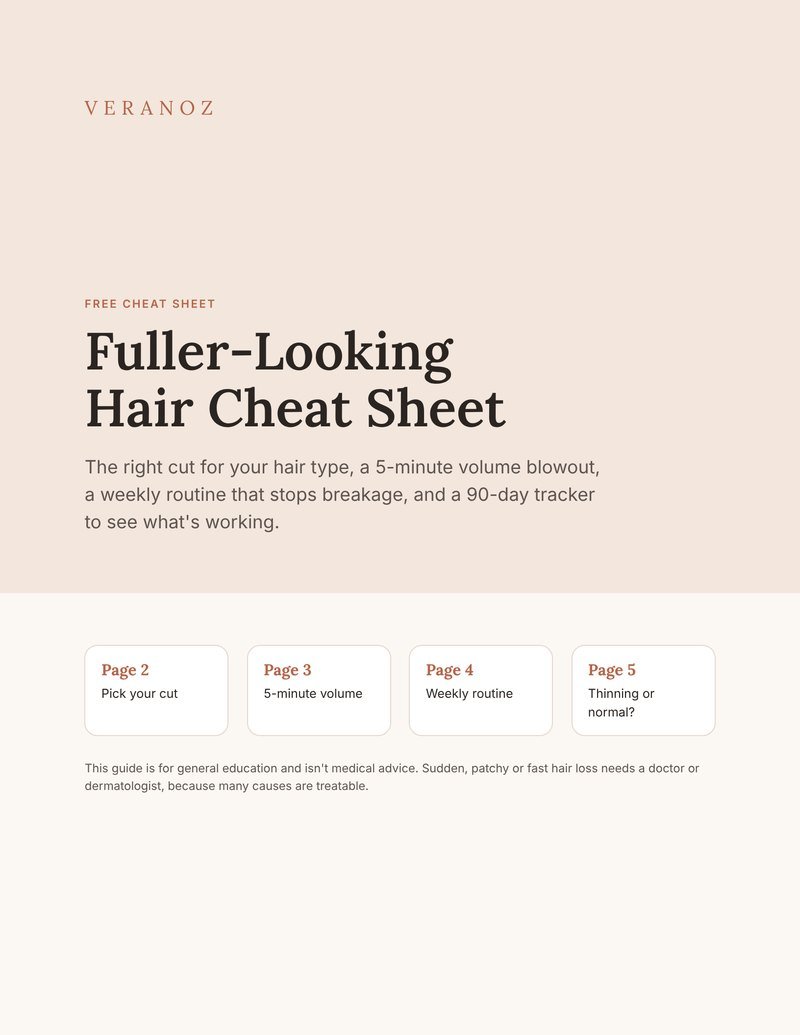
Fuller-Looking Hair Cheat Sheet
The right cut for your hair type, a 5-minute volume blowout, a weekly routine that stops breakage, and a 90-day tracker.
Send me the free cheat sheet →In This Guide
- What changes in your hair over time
- The 5-step hair care routine
- Wash day, step by step
- How often to wash your hair
- Hair care routine by hair type
- Weekly and monthly resets
- Styling and heat without the damage
- Hair care routine for thinning hair
- Sun, swimming and sleep
- A sample weekly schedule
- Products worth having
- Hair care tips: habits to drop
- FAQ
What Changes in Your Hair Over Time
Hair doesn’t change overnight, but over the years most women notice at least one of these shifts. Knowing which ones apply to you makes it much easier to choose products and habits.
- Finer strands. MedlinePlus (from the U.S. National Library of Medicine) explains that hair strands get smaller and lose pigment with age, and that the “thick, coarse hair of a young adult eventually becomes thin, fine, light-colored hair.” Finer hair is easier to weigh down and easier to break.
- Slower growth and less density. The same source notes that the rate of hair growth slows, and that many women develop a pattern of thinning where hair becomes less dense and the scalp shows more.
- Gray hair. Follicles make less melanin, so new hair grows in gray or white. When graying starts is largely genetic. Gray strands can look and feel drier and more wiry, and they pick up yellow tones from heat, sun and hard water.
- A different scalp. Some women find their scalp gets drier and itchier; others still have an oily scalp with dry ends. Your routine should follow your scalp, not a fixed number of washes.
- Years of wear. Color, highlights, heat and sun add up. A review of hair cosmetics in the International Journal of Trichology describes how repeated wetting, rough drying, friction, sunlight and chemical treatments weaken the outer cuticle and inner cortex, leading to breakage and split ends.
The good news: almost all of those changes respond to the same thing, which is gentler handling plus the right amount of conditioning.
The 5-Step Hair Care Routine
This is the base routine. Everything else in this guide is a variation on it.
| Step | What to do | How often | Why it matters |
|---|---|---|---|
| 1. Cleanse the scalp | Gentle shampoo massaged into the scalp with fingertips; let the rinse run through the lengths | Daily to every 2 to 3 weeks, depending on oil and texture | Removes oil and buildup without drying the lengths |
| 2. Condition | Conditioner on the ends (fine or straight hair) or full length (dry, curly, coarse hair) | After every shampoo | Reduces friction, frizz and static; protects the cuticle |
| 3. Detangle gently | Wide-tooth comb, start at the ends and work up | Every wash | Wet hair is fragile; tugging causes breakage |
| 4. Dry with less friction | Wrap or blot with a towel or cotton T-shirt; air-dry when you can | Every wash | Rubbing roughs up the cuticle and causes frizz |
| 5. Style and protect | Heat protectant, low or medium heat, loose styles, a hat in strong sun | Every styling session | Heat, UV and tension are the biggest daily stressors |
If you change only one thing, start conditioning after every wash. The American Academy of Dermatology (AAD) lists skipping conditioner as one of the everyday habits that damage hair, and conditioner is the step that does the most for frizz, tangles and shine.
Wash Day, Step by Step
Most frizz and breakage starts in the shower, because hair is at its weakest when wet. Here’s how to wash so your hair comes out softer, not rougher.
- Detangle before you get wet (optional for long or curly hair). A few passes with a wide-tooth comb or your fingers prevents knots from tightening in the shower.
- Use warm, not hot, water. Very hot water can leave the scalp and lengths feeling dry.
- Shampoo the scalp only. The AAD recommends applying shampoo to your scalp instead of the entire length of your hair. Work a small amount in with your fingertips (not nails) for 30 to 60 seconds. When you rinse, let the suds flow through the lengths. That’s enough to clean them.
- Shampoo twice only if needed. If you use a lot of dry shampoo or styling products, a second, smaller wash helps. Otherwise once is plenty.
- Squeeze out excess water, then condition. Conditioner spreads better on hair that isn’t dripping. Fine hair: mid-lengths to ends. Dry, curly or coarse hair: root to tip.
- Comb conditioner through. The AAD suggests combing thick, curly hair in the shower with conditioner still in. For straight hair, it’s often easier to wait until hair is partly dry.
- Rinse well. Leftover conditioner on the scalp can make roots look flat and greasy by the next morning.
- Wrap and blot. Wrap hair in a soft towel or old cotton T-shirt to absorb water. Don’t rub.
- Add a leave-in on damp hair if your ends feel dry, then a heat protectant if you’ll blow-dry.
How Often Should You Wash Your Hair?
There’s no single right number. The AAD’s guidance is to shampoo based on how oily your scalp is and your hair texture: straight hair with an oily scalp may need daily washing, while dry, textured, curly or thick hair can be shampooed when needed, at least every two to three weeks. If you see flakes, you may not be washing often enough or not using the right conditioner or scalp product.
| Your hair and scalp | Typical wash rhythm | Notes |
|---|---|---|
| Fine, straight, oily scalp | Daily or every other day | Light conditioner on ends only; skip heavy oils |
| Fine or medium, normal scalp | Every 2 to 3 days | Dry shampoo at the roots on day 2 if needed |
| Thick or wavy | Every 3 to 4 days | Conditioner on full length; a mask weekly |
| Curly or coily | Every 1 to 2 weeks (at least every 2 to 3 weeks) | Condition and detangle in the shower; co-wash between if you like |
| Gray or color-treated | Every 2 to 4 days | Color-safe, gentle shampoo; fewer washes help color last |
| Thinning or fragile | As often as your scalp needs | Clean scalp, gentle shampoo, moisturizing conditioner every time |
A simple test: if your scalp feels comfortable and your roots still have movement, you probably don’t need to wash yet. If roots look limp, your scalp itches or styling stops cooperating, it’s wash day.
Hair Care Routine by Hair Type
Use the core routine above, then tweak it for your hair type.
Fine or flat hair
- Lightweight “volumizing” shampoo and a light conditioner on the ends only.
- Skip heavy masks and oils on the roots; use them only on the bottom few inches.
- Blow-dry roots first, lifting with a round brush or your fingers, then let the ends air-dry.
- A light mousse or root spray on damp roots gives lift without weight.
Thick, coarse or wiry gray hair
- Moisturizing shampoo and a richer conditioner on the full length.
- A leave-in conditioner or light cream on damp hair to tame wiry gray strands.
- A weekly mask. Leave it on for the time on the label, then rinse well.
Curly or coily hair
- Wash less often, condition generously, and detangle only when hair is wet and slippery with conditioner.
- If you use a dandruff shampoo, the AAD suggests applying it only to the scalp, since its ingredients can dry out curly hair.
- Use a diffuser on low heat or air-dry; scrunch with a T-shirt instead of a terry towel.
Color-treated or highlighted hair
- Color-safe, moisturizing shampoo; wash in cooler water.
- The AAD recommends stretching color touch-ups to every 8 to 10 weeks or longer, getting only one chemical service at a time, and waiting two weeks between a perm or relaxer and color.
- A leave-in conditioner and a hat in strong sun help color last.
Oily scalp, dry ends
- Shampoo more often, but only at the scalp.
- Conditioner from the ears down; a drop of hair oil on the very ends.
- Clarify every two weeks if products and oil build up.
Weekly and Monthly Resets
Even a gentle routine leaves some buildup from dry shampoo, styling products, oil and hard-water minerals. A small reset keeps hair light without turning your routine upside down.
| Reset | When | How |
|---|---|---|
| Hair mask or deep conditioner | Weekly for dry, gray, curly or colored hair; every 2 weeks for fine hair | After shampoo, on the lengths; leave on as directed, rinse well |
| Clarifying shampoo | Every 2 to 4 weeks, or when hair feels coated | One wash, then a generous conditioner; plan it before, not after, a color gloss |
| Dandruff shampoo | Only if you flake: about twice a week for fine or oily hair, once a week for coarse or curly hair | Lather on the scalp and leave on as the label says (some need 5 to 10 minutes) |
| Wash brushes and combs | Every 1 to 2 weeks | Remove hair, soak in warm water with a little shampoo, rinse and air-dry |
| Trim | Every 8 to 12 weeks (more often for short cuts) | Removes split ends before they travel up the strand |
For flaking, the AAD suggests looking for a dandruff shampoo with zinc pyrithione, salicylic acid, sulfur, selenium sulfide, ketoconazole or coal tar, and alternating between active ingredients if one stops working. If flakes don’t improve, or the scalp is very red or itchy, see a board-certified dermatologist; it could be seborrheic dermatitis, psoriasis or another scalp condition that needs a stronger treatment.
Related ReadWeekly Beauty Reset Routine: 7 Steps to Reclaim Your GlowStyling and Heat Without the Damage
You don’t have to give up your blow-dryer, but heat is where most daily damage happens. The AAD’s advice for frequent heat styling is to air-dry when possible, use the lowest heat setting, limit how long a curling iron or hot comb touches your hair, and use those tools about once a week or less.
- Always use a heat protectant on damp hair before blow-drying and on dry hair before irons.
- Rough-dry first. Let hair air-dry or rough-dry with your fingers on low until it’s mostly dry, then use a brush only for the last part. Less time under heat is the goal.
- Low or medium settings. The AAD recommends low or medium heat; on fine and gray hair, high heat is more likely to cause breakage and yellowing.
- One pass, not five. Going over the same section again and again with a flat iron adds damage without adding smoothness.
- Style once, refresh after. A good blowout plus dry shampoo and a quick touch-up can last two or three days, which means less total heat.
- Loose styles. The AAD warns that hair pulled back tightly in ponytails, buns or braids can damage hair; wear it loosely and use covered elastics.
- Skip long-lasting styling products that need hard scrubbing to remove; choose a style that doesn’t need them.
A microfiber towel or turban can cut your blow-dry time noticeably. The AAD suggests drying hair in a microfiber towel as one way to reduce heat time if your hair is thinning.
Free: the Fuller-Looking Hair Cheat Sheet
The right cut for your hair type, a 5-minute volume blowout, a weekly routine that stops breakage and a 90-day tracker.
Free. You will also get a few short emails with tips and offers. Unsubscribe anytime. Privacy policy.
Hair Care Routine for Thinning Hair
If your part looks wider or your ponytail feels smaller, a gentle hair care routine for thinning hair can make the hair you have look fuller and help prevent extra breakage. It won’t regrow hair by itself, so the first step is the most important one.
- See a board-certified dermatologist early. The AAD says the most reliable route to treatment is finding the cause, and that starting sooner generally leads to better results. Thinning has many possible causes, and some are very treatable.
- Know what’s normal. According to the AAD, shedding about 50 to 100 hairs a day is typical. Shedding well above that after an illness, high fever, surgery or a stressful period is often temporary and tends to settle within six to nine months. Hair that stops growing back is different and needs a diagnosis.
- Use a gentle shampoo and a moisturizing conditioner after every wash, plus a leave-in conditioner or detangler, as the AAD recommends for managing hair loss.
- Comb gently and only as much as needed. Don’t tug, twist or pull on your hair.
- Air-dry when you can, use the lowest blow-dryer setting, and save curling irons, flat irons and hot combs for special occasions.
- Skip tight styles such as tight buns, ponytails and braids.
- Avoid hot-oil treatments, which the AAD says can heat and further damage fragile hair.
- Leave chemical services to a salon. The AAD advises stopping at-home coloring, perming and relaxing if your hair is thinning.
- Eat enough protein and iron-rich foods, and be cautious with hair supplements. The AAD notes they aren’t FDA-regulated for safety or effectiveness, and too much selenium, vitamin A or vitamin E has been linked to hair loss. Ask your doctor about a blood test before adding anything.
- Protect your scalp from the sun. The AAD suggests a broad-spectrum, water-resistant SPF 30+ on the scalp if your hair is thinning; powder or spray formulas are easiest to apply on a part.
Styling helps too: a volumizing mousse at the roots, blow-drying roots in the opposite direction to your part, and a cut with soft, minimal layers can all make hair look denser. If you want a full plan for fuller-looking hair, our Fuller Hair Playbook walks through it week by week.
Sun, Swimming and Sleep
Sun
UV light weakens the hair surface and fades color. The AAD suggests a leave-in conditioner with zinc oxide or a wide-brimmed hat in the sun, especially for color-treated hair. A hat also protects your part, which burns more easily than you’d think.
Related ReadBest Daily Face SunscreenSwimming
For swimmers, the AAD recommends wearing a swim cap, rinsing hair right after you swim, then washing with a swimmers’ shampoo and following with a deep conditioner. Wetting hair with clean water before you get in also means it soaks up less pool water.
Sleep
- Never sleep with soaking-wet hair; it tangles and stretches.
- Loosely braid or tie long hair with a soft scrunchie.
- A smooth satin or silk pillowcase reduces friction and morning frizz.
- Curly hair: a loose “pineapple” on top of the head protects curl shape.
A Sample Weekly Hair Care Schedule
Here’s what a realistic week looks like for medium-density hair that’s washed every two to three days. Shift the wash days to match your scalp.
| Day | Routine |
|---|---|
| Monday | Wash day: shampoo scalp, condition, wide-tooth comb, blot, leave-in, heat protectant, low-heat blow-dry |
| Tuesday | No wash: loose style, a little dry shampoo at the roots if needed |
| Wednesday | Wash day, plus a hair mask on the lengths |
| Thursday | No wash: refresh the front with a mist of water and a quick brush-through |
| Friday | Wash day; air-dry if you can |
| Saturday | Rest day: loose braid, hat if you’re outdoors |
| Sunday | Reset: clarify (every 2 to 4 weeks), condition generously, wash brushes and combs |
Products Worth Having
You don’t need a full shelf. These product types cover almost every routine; pick the ones that match your hair.
Gentle Moisturizing Shampoo
A mild shampoo cleans the scalp without leaving lengths rough. Color-safe formulas help highlights and gray toning last longer.
Check on Amazon →Lightweight Daily Conditioner
The single most important step in the routine. Light formulas soften the ends without flattening the roots.
Check on Amazon →Leave-In Conditioner or Detangler
A spray leave-in makes combing easier and reduces breakage. The AAD recommends a leave-in or detangler after washing if your hair is thinning.
Check on Amazon →Wide-Tooth Comb
Detangling wet hair with a wide-tooth comb instead of a brush is one of the simplest ways to cut breakage.
Check on Amazon →Microfiber Hair Towel
Absorbs water quickly with less friction than a terry towel, so you spend less time under heat.
Check on Amazon →Heat Protectant Spray
Apply on damp hair before blow-drying and on dry hair before a flat iron or curling iron.
Check on Amazon →Clarifying Shampoo
Once every two to four weeks resets hair that feels heavy or dull. Always follow with conditioner.
Check on Amazon →Satin or Silk Pillowcase
A smoother surface means less overnight friction on fragile, fine or curly hair.
Check on Amazon →Hair Care Tips: Habits to Drop
The AAD lists several everyday habits that damage hair. Most of them are easy to swap:
| Habit | Swap it for |
|---|---|
| Scrubbing shampoo through the full length | Shampoo the scalp; let the rinse clean the lengths |
| Skipping conditioner | Conditioner after every shampoo |
| Rubbing hair with a towel | Wrap in a towel, then air-dry or blot |
| Brushing soaking-wet hair | Wide-tooth comb; straight hair partly dry first, curly hair while damp with conditioner |
| Daily high heat | Air-dry, lowest setting, irons about once a week or less |
| Tight ponytails and buns | Loose styles and covered elastics |
| Coloring, perming and relaxing back to back | One chemical service at a time; touch-ups every 8 to 10 weeks or longer |
| “100 strokes a day” | The AAD calls this a myth; brush only to style, and gently |
Two more hair care tips that make a visible difference: use less product than you think (especially oils and serums, which flatten fine hair fast), and get regular trims, because split ends travel up the strand and make hair look thinner at the bottom.
Related ReadHow to Build a Beauty Routine That SticksHair Care Routine Checklist
- Shampoo on the scalp only, as often as your scalp needs
- Conditioner after every wash: ends for fine hair, full length for dry or curly hair
- Detangle with a wide-tooth comb, starting at the ends
- Wrap or blot, never rub
- Heat protectant every time; low or medium heat
- Loose styles and covered elastics
- Mask weekly (dry, gray, curly) or every 2 weeks (fine)
- Clarify every 2 to 4 weeks if products build up
- Hat or scalp SPF in strong sun; swim cap and rinse after pools
- Trim every 8 to 12 weeks
- Thinning or shedding? Book a board-certified dermatologist
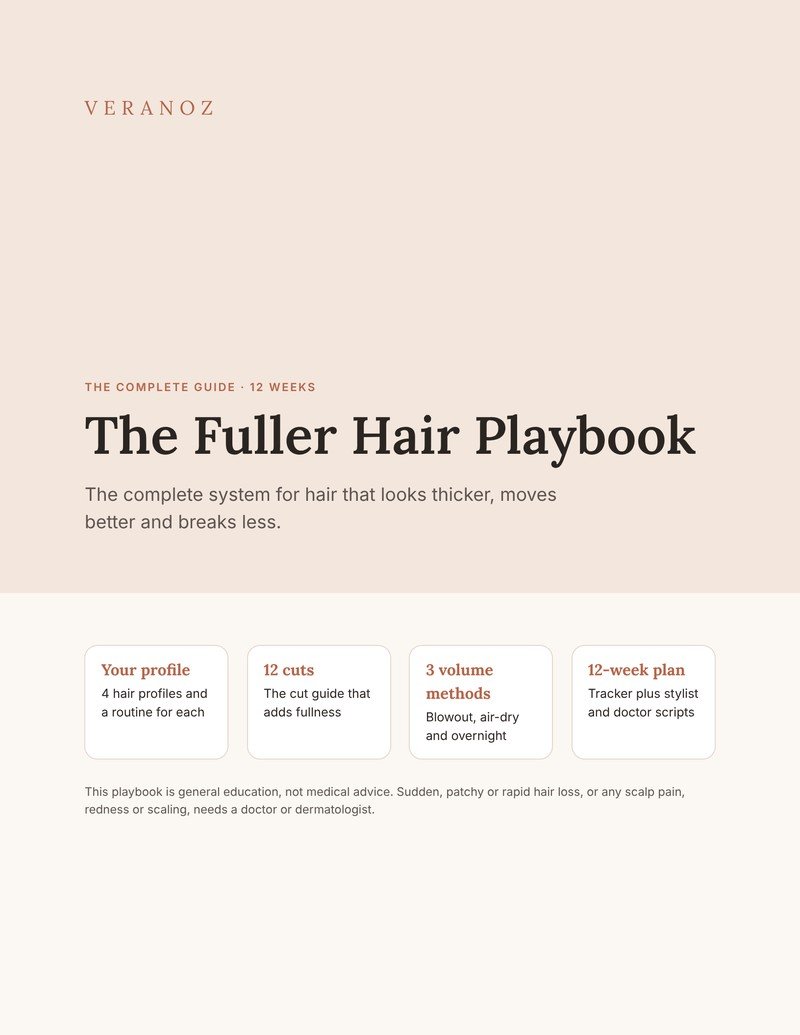
The Fuller Hair Playbook
Your hair profile, 12 cuts that add fullness, three volume methods, camouflage and color tricks, a weekly anti-breakage routine, scripts for your stylist and doctor, and a 12-week tracker. Instant access.
See the Playbook ($19) →Frequently Asked Questions
What is a good hair care routine for fine or thinning hair?
Shampoo the scalp as often as it needs, condition after every wash, detangle gently with a wide-tooth comb, blot instead of rubbing, and use a heat protectant with low heat. Add a weekly mask for dry ends and a clarifying wash every few weeks if products build up.
How often should I wash fine or thinning hair?
It depends on your scalp and texture. Fine hair with an oily scalp may need daily washing; dry, thick or curly hair can go longer, but the AAD suggests at least every two to three weeks. Wash when your scalp feels oily or itchy or your roots look flat.
Should I put conditioner on my scalp?
Usually not. For fine or straight hair, apply it to the ends only. For dry or curly hair, the AAD suggests the entire length. Either way, rinse thoroughly so the scalp doesn’t feel coated.
What is the best hair care routine for thinning hair?
See a board-certified dermatologist to find the cause, then keep your routine gentle: mild shampoo, moisturizing conditioner after every wash, a leave-in or detangler, air-drying or low heat, no tight styles, and no hot-oil treatments or at-home chemical services.
How much hair shedding is normal?
According to the AAD, losing about 50 to 100 hairs a day is typical. If you’re shedding much more than that, or your part is widening, talk to a dermatologist.
Do I really need a heat protectant?
If you blow-dry or use irons, yes. The AAD recommends a heat-protectant product along with low or medium heat settings, and limiting curling and flat irons.
Is brushing my hair 100 times a day good for it?
No. The AAD calls it a myth. Brush or comb only to style, gently, and remove tangles with a wide-tooth comb and conditioner.
Sources: American Academy of Dermatology, Tips for healthy hair; American Academy of Dermatology, Hair care habits that can damage your hair; American Academy of Dermatology, Hair loss: Tips for managing; American Academy of Dermatology, Hair shedding vs. hair loss; American Academy of Dermatology, How to treat dandruff; MedlinePlus (NIH), Aging changes in hair and nails; Gavazzoni Dias MF, Hair cosmetics: an overview, International Journal of Trichology (2015). Veranoz has not tested every product listed. This guide is general information; see a board-certified dermatologist for hair loss, shedding or scalp symptoms.
Get the Free Self-Care Reset Kit
Daily, weekly and monthly self-care checklists, the everything shower order, a 3-hour at-home spa day plan and a 30-day reset tracker. Free printable, instant access.
The Veranoz 30-Day Glow-Up Planner
Routines only work when you actually keep them. The planner gives you daily planning pages, weekly resets and habit trackers so your skincare, body care and self-care steps become automatic instead of something you remember once in a while.
Veranoz Guides to Go Deeper
Some links on Veranoz are affiliate links; we may earn a commission at no extra cost to you. This content is informational and not medical advice.