
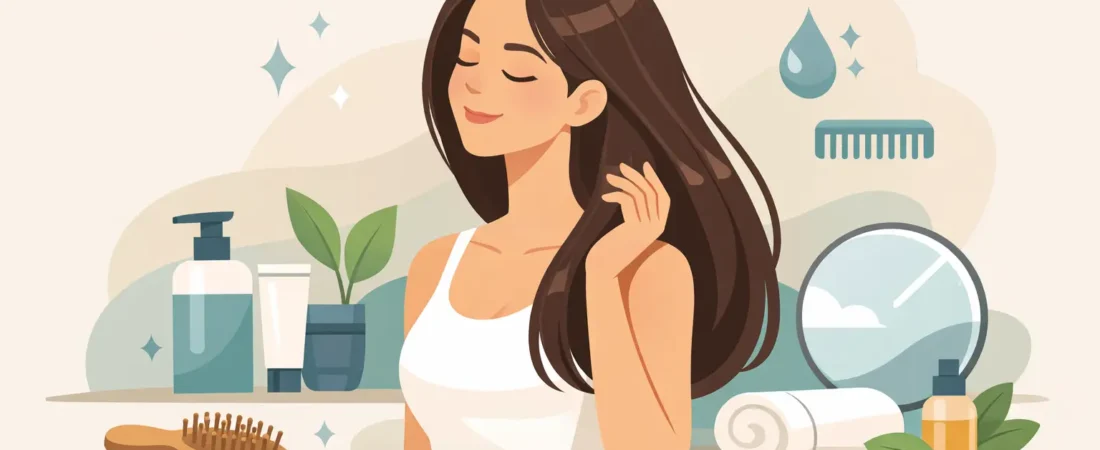
Some hair routines look impressive on paper and feel impossible by Wednesday. If you want a healthy looking hair routine that actually fits real life, the goal is not to do more. It is to do a few helpful things consistently, with less friction and less guesswork.
Beautiful hair habits tend to be simple. Hair usually looks its best when it is handled gently, washed on a rhythm that makes sense for your scalp, and protected from the small daily stress that adds up over time. That means your routine does not need ten products or a perfect blowout. It needs balance.
What a healthy looking hair routine really means
A healthy looking hair routine is less about chasing perfection and more about creating conditions that help hair appear smooth, soft, and cared for. For most people, that comes down to three things – a comfortable scalp, lengths that stay hydrated without feeling heavy, and styling habits that do not leave hair looking tired by the end of the week.
This is where many routines get off track. Someone with fine hair may use rich products that flatten everything. Someone with dry ends may shampoo too aggressively and wonder why their hair never feels polished. Someone with waves or curls may brush at the wrong moment and create puffiness instead of definition. The best routine depends on your texture, oil level, and how often you style, but the foundation stays surprisingly steady.
Start with your scalp, not just your strands
When hair looks flat, dull, or harder to style, the scalp is often part of the story. A clean, comfortable scalp helps roots feel fresher and gives the rest of your routine a better starting point.
That does not mean washing as often as possible. Washing too frequently can leave some hair feeling stripped, while stretching wash days too long can leave other hair looking weighed down. A good middle ground is to notice how your scalp feels and how your roots look. If your scalp feels comfortable and your hair still has movement, you probably do not need to wash yet. If roots look limp and styling is no longer cooperating, it may be time.
Shampoo should clean without making your lengths feel rough. Focus it on the scalp and roots, where oil and buildup collect most. Let the suds rinse through the rest of the hair instead of scrubbing every inch. That one shift often makes a noticeable difference in softness.
If your hair gets oily quickly
Choose lightweight products and avoid piling conditioner onto the roots. You may also do better with more frequent washing using a gentle shampoo than with waiting too long and needing a stronger reset.
If your ends feel dry
Use shampoo mainly at the scalp and be generous with conditioner from mid-length to ends. You may need fewer wash days and a little more leave-in moisture after each wash.
Make wash day gentler
A lot of frizz and roughness starts on wash day. Not because your products are wrong, but because hair is most delicate when wet.
Start with warm water, not hot. Hot water can leave both scalp and lengths feeling drier than necessary. After shampooing, smooth conditioner through the mid-lengths and ends with your fingers or a wide-tooth comb. This helps with detangling while reducing tugging.
When you get out of the shower, skip rough towel drying. Press or blot the hair gently with a soft towel or cotton T-shirt instead. Rubbing creates friction, and friction can leave the cuticle looking less smooth. If your hair tends to frizz easily, this small habit matters more than it seems.
Condition based on your hair, not the label alone
Conditioner is where a lot of routines either become too heavy or not supportive enough. The right amount depends on how your hair behaves, not just what the bottle promises.
Fine or easily weighed-down hair often prefers lighter formulas and smaller amounts. Thicker, longer, or drier-feeling hair usually needs a bit more slip and softness. You do not need to coat every strand from root to tip unless your hair specifically loves that. Most people get the best result by focusing on the mid-lengths and ends.
If your hair still feels rough even after conditioning, a weekly mask can help, but more is not always better. Some masks leave hair beautifully soft. Others can be too rich if your hair is fine. If your hair feels limp after a treatment, use less next time or space it out more.
Your healthy looking hair routine should protect against daily stress
The little things matter. Tight hairstyles, frequent high heat, rough brushing, and constant touching can slowly make hair look less glossy and more worn.
Brushing is a good example. Hair should be detangled, but there is a difference between gently working through knots and pulling a brush through too quickly. Start from the ends and move upward in sections. If your hair is textured, you may prefer detangling when it is damp with conditioner or leave-in product rather than when it is dry.
Sleep habits also shape how your hair looks. If you wake up with tangles, frizz, or flattened sections, try loosely tying long hair back or switching to a smoother pillowcase. The goal is not to create a complicated bedtime ritual. It is simply to reduce overnight friction.
Heat styling can fit into a simple routine
You do not have to give up heat styling to support healthier-looking hair. It just helps to use it more intentionally.
If you blow-dry, start with a heat protectant and remove excess moisture first so you spend less time under heat. If you use a curling iron or flat iron, choose the lowest setting that still gives you the result you want. Very high heat every day can make hair look less soft over time, especially on the ends.
There is also an it-depends factor here. Some people prefer to style once after wash day and then maintain that look for several days. Others restyle small sections each morning. The first approach may reduce total heat exposure, but only if the original styling is not overly intense. The second can work too if you keep temperatures moderate and avoid repeatedly going over the same pieces.
The best styling products are the ones you will actually use
A simple routine works best when each product has a job. You might use a leave-in conditioner for softness, a lightweight oil or serum for shine, or a styling cream to keep hair looking smoother. You probably do not need all of them at once.
If your hair looks limp by afternoon, scale back. If it feels dry and puffy, you may need a little more support. The right amount is usually less than you think, especially with oils and serums. Start small, then add only if needed.
This is where a calm, edited approach helps. Veranoz is built around routines that feel easy to follow, and hair care benefits from that same mindset. Fewer steps, done well, often create a better result than a crowded shelf.
A weekly reset can keep your routine feeling fresh
Even a very gentle routine can lead to some buildup from dry shampoo, styling products, and everyday life. A weekly or occasional reset helps hair feel lighter and look cleaner without turning your routine upside down.
For some people, this means using a clarifying shampoo from time to time. For others, it simply means being more thorough on wash day and making sure products are fully rinsed out. If your hair suddenly feels dull, heavy, or harder to style, buildup could be the reason.
After a reset, follow with conditioner or a hydrating mask so the hair feels balanced, not stripped. That contrast matters. Clean hair tends to look best when it still feels soft.
Build a routine you can keep
If you are trying to create a healthy looking hair routine, consistency will do more for you than intensity. A routine you can keep on busy mornings and tired evenings is the one most likely to show results.
That might mean washing two or three times a week, using conditioner every wash day, applying one leave-in product, and being a little gentler with heat. Or it might mean washing more often because your scalp feels better that way, then keeping the rest of your routine very light. Neither approach is more correct. The better routine is the one that leaves your hair looking cared for and your life feeling manageable.
Pay attention to what your hair does, not just what someone else recommends. If a product makes your hair softer, easier to style, and more comfortable to wear, that is useful information. If something sounds good but never fits your routine, it is okay to let it go.
Healthy-looking hair is often the result of small, steady care. A gentler wash day, a better conditioner match, less friction, and a little protection from heat can quietly change how your hair looks and feels. Start simple, give it a little time, and let your routine become something that supports you instead of asking too much from you.

Dermefface FX7 — Scar & Mark Reduction
Targets the skin’s renewal cycle to fade scars, stretch marks, and textured marks with twice-daily use.
Affiliate link — we earn a commission at no extra cost to you.
Get the Free 7-Day Glow-Up Checklist
One simple beauty and self-care habit per day — everything shower, body care, hair, nails, fragrance, and your Sunday reset.
Affiliate disclosure: Some links are affiliate links. We earn a commission at no extra cost to you. We only recommend products we believe in.