

Disclosure: As an Amazon Associate, Veranoz earns from qualifying purchases. We may earn a commission if you buy through links in this post, at no extra cost to you.
Vaseline is 100% petroleum jelly. Aquaphor is about 40% petrolatum plus mineral oil, lanolin alcohol, panthenol, glycerin and bisabolol. That makes Vaseline the stronger seal and the safer pick if you’re allergic to lanolin, while Aquaphor feels a little lighter, spreads more easily and adds soothing ingredients. Both protect dry, cracked skin and both work for slugging. For most people, the choice comes down to texture, lanolin, and where you’re using it.
Free: the Winter Dry Skin Rescue Plan
A printable 14-day plan for dry, tight winter skin: shower rules, a face routine, and fixes for hands, lips and heels.
Free. You will also get a few short emails with tips and offers. Unsubscribe anytime. Privacy policy.
Below: a side-by-side comparison, which one to use for each job, how to use them properly, and lanolin-free alternatives.
The Real Problem
Ointments are the most effective thing for very dry, cracked skin, but people often use them the wrong way. They put them on bone-dry skin and wonder why nothing improves. Or they pick the one with an ingredient their skin doesn’t like. Occlusives don’t add water; they trap the water that’s already there. Applied to damp skin or over a moisturizer, either one works far better.
Short Answer
Choose Vaseline if you want the strongest, simplest seal, have a lanolin allergy, or are sealing in moisture overnight (slugging, cracked heels). Choose Aquaphor if you want a slightly lighter, more spreadable texture with soothing extras for chapped lips, raw noses, and irritated patches. If lanolin is a problem but you like Aquaphor’s feel, try CeraVe Healing Ointment.

The Winter Dry Skin Rescue Plan
Winter shower rules, a face routine for dry skin over 40, mini-routines for hands, lips and heels, an ingredient cheat sheet and a 14-day rescue checklist.
Send me the free plan →In This Guide
Side-by-Side Comparison
| Vaseline Original Healing Jelly | Aquaphor Healing Ointment | |
|---|---|---|
| Main ingredient | White petrolatum (100%) | Petrolatum (about 41%) |
| Other ingredients | None | Mineral oil, ceresin, lanolin alcohol, panthenol, glycerin, bisabolol |
| Texture | Thick, heavier, very greasy | Slightly lighter, spreads more easily |
| Seal (occlusion) | Strongest | Strong |
| Lanolin | No | Yes (lanolin alcohol) |
| Fragrance | None | None |
| Best for | Slugging, heels, lanolin allergy, protecting skin from wind | Chapped lips, raw noses, cracked knuckles, irritated patches |
| Price | Usually cheaper per ounce | Usually a little more |
What’s Actually in Each
Vaseline
Pure white petrolatum, refined for skin use. Petrolatum is one of the most effective occlusives available: it sits on top of the skin and dramatically slows water loss. It doesn’t contain anything that “treats” the skin; its job is to protect it so the skin can heal itself. The American Academy of Dermatology recommends petroleum jelly for keeping minor wounds moist while they heal and for very dry skin.
Aquaphor
Aquaphor Healing Ointment combines petrolatum with mineral oil and ceresin for a smoother texture, plus:
- Lanolin alcohol: a moisturizing ingredient derived from sheep’s wool. Most people tolerate it, but it’s a known allergen for some.
- Panthenol (vitamin B5): a soothing humectant.
- Glycerin: draws water into the skin.
- Bisabolol: a calming ingredient from chamomile.
The result is a slightly less heavy, more “semi-permeable” ointment that many people find nicer on lips and the face.
Related ReadBest Creams for Very Dry, Cracked HandsWhich to Use for What
| Use | Better pick | Why |
|---|---|---|
| Cracked hands overnight | Either | Both heal cracks under cotton gloves; Vaseline seals slightly more |
| Cracked heels | Vaseline | Heaviest seal; use over a urea foot cream under socks |
| Chapped lips | Aquaphor | Smoother texture and soothing extras |
| Raw nose during a cold | Aquaphor | Panthenol and bisabolol soothe irritated skin |
| Slugging (face) | Either | Vaseline for very dry skin; Aquaphor if you want it lighter |
| Minor cuts and scrapes | Either | Keeping a clean wound moist helps it heal |
| Lanolin allergy or sensitivity | Vaseline | No lanolin |
| Cold, windy days | Vaseline | A thin layer on cheeks and lips shields from wind |
| Around the eyes (dry eyelids) | Vaseline | Simplest ingredient list; use a tiny amount |
Vaseline Original Healing Jelly
The simplest, cheapest, most effective occlusive. A tub lasts for months.
Check on Amazon →Aquaphor Healing Ointment
A softer ointment with soothing extras. The tube is handy for bags; the tub is better value for nightly hand and foot care.
Check on Amazon →How to Use an Ointment the Right Way
- Start with damp skin or a moisturizer. Ointments trap water; they don’t add it. Apply within a minute of washing, or over a hydrating cream.
- Use a thin layer on the face, a thick one on hands and feet. A pea-sized amount covers the face for slugging.
- Cover it overnight. Cotton gloves for hands and socks for feet keep the ointment working and off your sheets.
- Don’t seal in actives. Skip slugging over retinol or exfoliating acids, which can increase irritation.
- Keep it clean. Use a clean finger or spatula in tubs, especially if you use it on cuts.
Thinking about slugging your face? Read our guide to slugging over 40 first.
Free: the Winter Dry Skin Rescue Plan
A printable 14-day plan for dry, tight winter skin: shower rules, a face routine, and fixes for hands, lips and heels.
Free. You will also get a few short emails with tips and offers. Unsubscribe anytime. Privacy policy.
On the Face: Acne-Prone and Mature Skin
- Dry, mature skin: a thin layer of either at night can make a big difference in winter, especially over a ceramide moisturizer.
- Acne-prone or oily skin: petrolatum itself is generally considered non-comedogenic, but heavy occlusives can trap oil and sweat. If you break out easily, use a lighter repair balm or keep ointment to dry patches only.
- Rosacea or sensitive skin: both are fragrance-free and usually well tolerated; patch test Aquaphor if you’ve reacted to wool products before.
Lanolin-Free and Luxe Alternatives
CeraVe Healing Ointment
A petrolatum ointment with ceramides and hyaluronic acid and no lanolin. It’s a good middle ground.
Check on Amazon →La Roche-Posay Cicaplast Baume B5
A cream-balm with panthenol and shea. It’s easier to wear in the daytime than ointment, and it’s fragrance-free.
Check on Amazon →Ointment Checklist
- Lanolin allergy? Choose Vaseline or CeraVe
- Apply to damp skin or over moisturizer
- Thin on the face, thick on hands and feet
- Gloves or socks overnight
- Don’t seal over retinol or acids
- Acne-prone? Dry patches only
- Clean fingers or a spatula for tubs
Frequently Asked Questions
Is Aquaphor better than Vaseline?
Not overall. Vaseline is a stronger seal and has no lanolin. Aquaphor is a bit lighter and adds soothing ingredients. Choose based on where you’re using it and whether lanolin bothers you.
Can I use Aquaphor or Vaseline on my face?
Yes, a thin layer at night over a moisturizer works well for dry skin. If you’re acne-prone, keep it to dry patches or choose a lighter balm.
Which is better for chapped lips?
Both work. Many people prefer Aquaphor’s smoother texture and soothing extras. If your lips react, switch to plain Vaseline.
Which is better for slugging?
Either. Vaseline gives the heaviest seal for very dry skin; Aquaphor feels slightly lighter. Always apply over a moisturizer, not on dry skin, and not over retinol.
Can I use them on cuts and scrapes?
Yes. Dermatologists recommend keeping a clean minor wound covered with petroleum jelly and a bandage so it stays moist while it heals. See a doctor for deep, dirty or infected wounds.
Sources: American Academy of Dermatology on caring for wounds and relieving dry skin; manufacturer ingredient lists; dermatologist comparisons reported by TODAY (2025). Veranoz has not lab-tested these products.
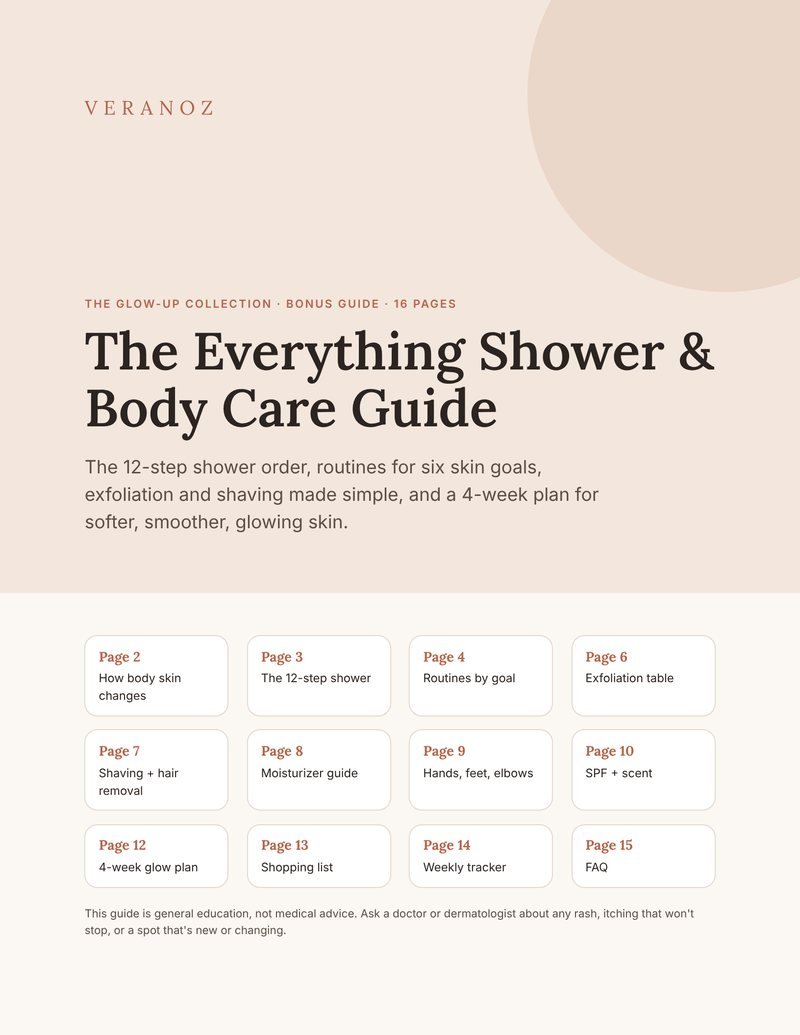
The Everything Shower & Body Care Guide
The 12-step shower order, routines for dry, crepey, bumpy or breakout-prone body skin, exfoliation and moisturizer guides, hands, feet and body SPF, and a 4-week body glow plan. 16 printable pages, instant access.
Get the Guide ($17) →Get the Free Self-Care Reset Kit
Daily, weekly and monthly self-care checklists, the everything shower order, a 3-hour at-home spa day plan and a 30-day reset tracker. Free printable, instant access.
The Veranoz 30-Day Glow-Up Planner
Routines only work when you actually keep them. The planner gives you daily planning pages, weekly resets and habit trackers so your skincare, body care and self-care steps become automatic instead of something you remember once in a while.
Veranoz Guides to Go Deeper
Some links on Veranoz are affiliate links; we may earn a commission at no extra cost to you. This content is informational and not medical advice.