

Disclosure: As an Amazon Associate, Veranoz earns from qualifying purchases. We may earn a commission if you buy through links in this post, at no extra cost to you.
Yes, slugging can help mature skin, especially if it’s dry, tight or flaky, or if winter and menopause have left your barrier irritated. Slugging means putting a thin layer of petroleum jelly over your moisturizer at night to stop water from escaping. You’ll usually wake up with softer, plumper-looking skin, and fine lines caused by dryness look less noticeable. It doesn’t build collagen or lift sagging skin, and it’s not a good idea over retinol or acids, or if you break out easily.
Free: the Winter Dry Skin Rescue Plan
A printable 14-day plan for dry, tight winter skin: shower rules, a face routine, and fixes for hands, lips and heels.
Free. You will also get a few short emails with tips and offers. Unsubscribe anytime. Privacy policy.
Here’s who slugging suits after 40, exactly how to do it, how often, how to fit it around retinol, and which products to use.
The Real Problem
After 40, and especially after menopause, skin makes less of its own oil and loses water faster. That’s why a moisturizer that worked in your 30s can feel like it disappears by morning. Slugging works because it adds a seal on top. But it’s easy to get wrong: slug over bare dry skin and nothing improves, slug over retinol and you can end up red and stinging, slug acne-prone skin and you may get clogged pores.
Short Answer
Slugging is worth trying if your skin is dry or mature and not acne-prone. Cleanse, apply a hydrating serum and a ceramide moisturizer to slightly damp skin, then press on a pea-sized amount of Vaseline or Aquaphor. Start 2–3 nights a week, on your non-retinol nights. Skip it if you’re acne-prone, or keep it to dry patches only.

The Winter Dry Skin Rescue Plan
Winter shower rules, a face routine for dry skin over 40, mini-routines for hands, lips and heels, an ingredient cheat sheet and a 14-day rescue checklist.
Send me the free plan →In This Guide
What Slugging Does (and Doesn’t Do)
| Slugging can | Slugging can’t |
|---|---|
| Cut overnight water loss so skin wakes up softer | Build collagen or reverse wrinkles |
| Make dryness lines look less visible | Lift sagging skin |
| Calm a barrier irritated by cold, wind or over-exfoliating | Fade dark spots |
| Soothe flaky patches around the nose and mouth | Replace sunscreen, retinoids or moisturizer |
Petrolatum is one of the most effective occlusives available. It works as a seal: it keeps in the water that your moisturizer and skin already hold. That’s why the step underneath matters so much.
Who Should and Shouldn’t Slug
| Good candidate | Proceed carefully | Skip it |
|---|---|---|
| Dry or very dry skin | Combination skin (slug dry areas only) | Acne-prone or very oily skin |
| Menopausal skin that feels tight | Rosacea (patch test first) | Active breakouts or folliculitis |
| Winter-irritated or over-exfoliated skin | Prone to milia (try a lighter balm) | Over retinoids or exfoliating acids |
| Retinol users on their “off” nights | Very hot, humid climates | Allergy to an ingredient (for example lanolin in Aquaphor) |
How to Slug, Step by Step
- Cleanse gently with a cream or gel cleanser. Pat skin so it’s still slightly damp.
- Hydrate. Apply a hydrating serum (hyaluronic acid or glycerin) to the damp skin.
- Moisturize with a ceramide cream. This is the moisture you’re going to seal in.
- Seal. Warm a pea-sized amount of petroleum jelly between your fingertips and press (don’t rub) it over your face. A thin, even layer is enough. Use less around the eyes.
- Protect your pillowcase. Use an old pillowcase or lay a clean towel over it.
- In the morning, cleanse gently, then moisturize and apply sunscreen as usual.
New to building a night routine? Our skincare routine for your 50s shows where each step fits.
Slugging and Retinol: A Weekly Plan
Don’t slug directly over retinol, retinal, tretinoin or exfoliating acids. Sealing them in can increase penetration and irritation. Instead, alternate nights.
| Night | Routine |
|---|---|
| Monday | Retinol, then moisturizer (no slugging) |
| Tuesday | Hydrating serum + moisturizer + slug |
| Wednesday | Retinol, then moisturizer |
| Thursday | Hydrating serum + moisturizer + slug |
| Friday | Retinol, then moisturizer |
| Saturday | Moisturizer only (or slug if very dry) |
| Sunday | Hydrating serum + moisturizer + slug |
On retinol nights, you can still seal just the corners of your nose and mouth, where retinol tends to sting, with a tiny dab of ointment applied before the retinol. Retinoids aren’t recommended during pregnancy or breastfeeding. Starting retinol? See our retinol after 40 beginner routine.
Related ReadAquaphor vs Vaseline: Which to Use for WhatFree: the Winter Dry Skin Rescue Plan
A printable 14-day plan for dry, tight winter skin: shower rules, a face routine, and fixes for hands, lips and heels.
Free. You will also get a few short emails with tips and offers. Unsubscribe anytime. Privacy policy.
Best Products for Slugging
Vaseline Original Healing Jelly
Pure petrolatum, no fragrance, nothing extra. It’s the simplest and cheapest option, and the heaviest seal.
Check on Amazon →Aquaphor Healing Ointment
Petrolatum plus panthenol, glycerin and bisabolol. Many people find it more comfortable on the face than Vaseline.
Check on Amazon →CeraVe Healing Ointment
A petrolatum ointment with ceramides and hyaluronic acid. It’s a good in-between choice.
Check on Amazon →La Roche-Posay Cicaplast Baume B5 (Lighter Option)
Not a true ointment, but a rich balm that seals more than a regular cream with less greasiness.
Check on Amazon →What to Use Underneath
CeraVe Moisturizing Cream or Vanicream Moisturizing Cream
Fragrance-free, barrier-supporting creams. These are the moisture you’re sealing in. For more choices, see our guide to the best moisturizer for women over 40.
See CeraVe →See Vanicream →Common Slugging Mistakes
- Slugging bare, dry skin. Always seal over damp skin plus moisturizer.
- Using too much. A pea-sized amount for the whole face is plenty.
- Slugging over retinol or acids. Alternate nights instead.
- Slugging every night when you’re breakout-prone. Spot-slug dry areas only.
- Dirty pillowcases and hands. Change pillowcases often and use clean fingers.
- Skipping the morning cleanse. Gently remove the layer before sunscreen and makeup.
Barrier still feeling raw after a week or two? Our guide to repairing your skin barrier covers what else to pause.
Slugging Checklist
- Dry or mature skin, not acne-prone
- Cleanse, leave skin slightly damp
- Hydrating serum, then ceramide cream
- Pea-sized ointment, pressed on
- 2–3 nights a week to start
- Never over retinol or acids
- Old pillowcase or towel
- Gentle cleanse and SPF in the morning
Frequently Asked Questions
Is slugging good for skin over 40?
It can be, especially for dry, mature or menopausal skin. It reduces overnight water loss so skin looks softer and dryness lines are less visible. It doesn’t build collagen, so pair it with sunscreen and a retinoid on other nights for anti-aging.
How often should I slug?
Start with 2–3 nights a week. Very dry skin can work up to most nights in winter, as long as you’re not breaking out.
Can slugging cause breakouts or milia?
It can in people prone to acne or milia, because heavy occlusives can trap oil and debris. If that’s you, spot-slug only dry areas or use a lighter repair balm.
Can I slug over retinol?
No. Sealing retinoids or exfoliating acids under an occlusive can increase irritation. Alternate retinol nights with slugging nights.
Vaseline or Aquaphor for slugging?
Either works. Vaseline is pure petrolatum and best for sensitive or lanolin-allergic skin; Aquaphor feels a bit lighter and adds soothing ingredients.
Sources: American Academy of Dermatology, dermatologists’ tips to relieve dry skin; Piedmont Healthcare on slugging; dermatologist advice on slugging for mature skin reported by AOL. Veranoz has not lab-tested these products.
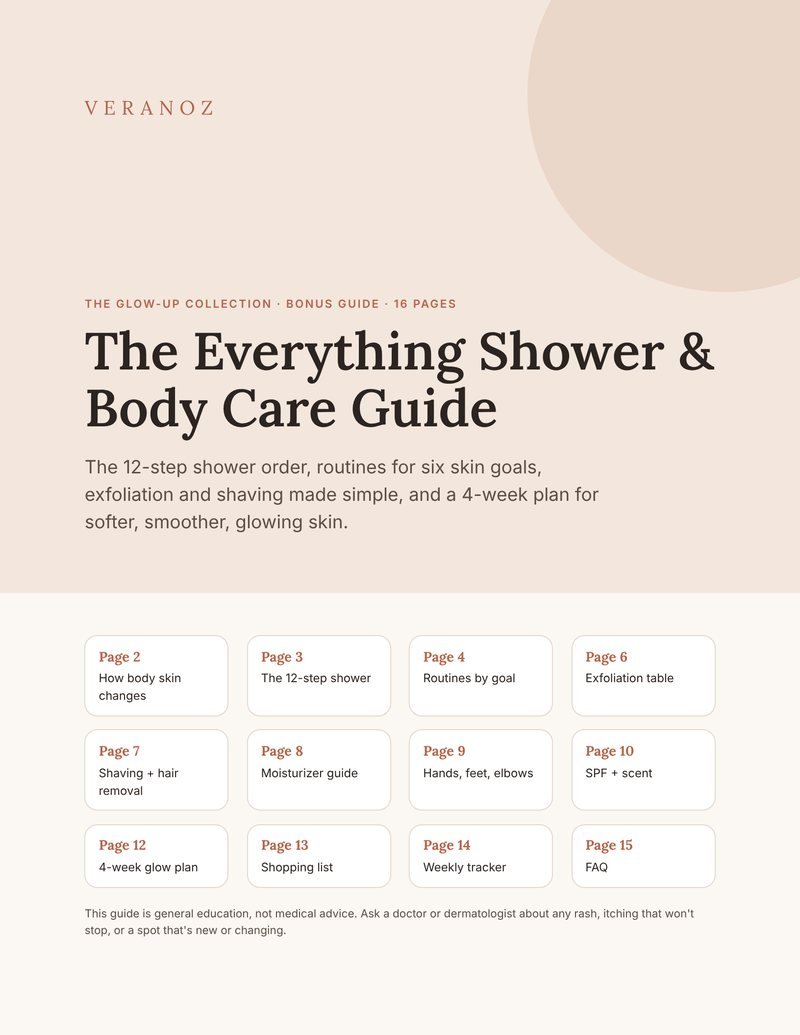
The Everything Shower & Body Care Guide
The 12-step shower order, routines for dry, crepey, bumpy or breakout-prone body skin, exfoliation and moisturizer guides, hands, feet and body SPF, and a 4-week body glow plan. 16 printable pages, instant access.
Get the Guide ($17) →Get the Free Self-Care Reset Kit
Daily, weekly and monthly self-care checklists, the everything shower order, a 3-hour at-home spa day plan and a 30-day reset tracker. Free printable, instant access.
The Veranoz 30-Day Glow-Up Planner
Routines only work when you actually keep them. The planner gives you daily planning pages, weekly resets and habit trackers so your skincare, body care and self-care steps become automatic instead of something you remember once in a while.
Veranoz Guides to Go Deeper
Some links on Veranoz are affiliate links; we may earn a commission at no extra cost to you. This content is informational and not medical advice.