

Disclosure: As an Amazon Associate, Veranoz earns from qualifying purchases. We may earn a commission if you buy through links in this post, at no extra cost to you.
The best makeup tips and tricks for women over 40 come down to a few shifts: prep skin with moisturizer and sunscreen first, use less foundation and more targeted concealer, swap powders for creams where skin is dry, keep shimmer to the high points, define brows and lashes, and set only where you need to. Mature skin looks freshest when makeup is thin, hydrated and well placed, not heavy and matte.
Free: the Natural Makeup Cheat Sheet
Where to place blush and highlighter, a hooded-eye guide, a 5-minute everyday face and a makeup bag expiry chart, on 10 printable pages.
Free. You will also get a few short emails with tips and offers. Unsubscribe anytime. Privacy policy.
Below are 25 makeup tips and tricks grouped by step (skin prep, base, concealer, cheeks, eyes, brows, lips, setting and tools), plus a quick product-type cheat sheet, common mistakes and a checklist you can screenshot.
The Real Problem
The makeup routine that worked at 30 often stops working in your 40s. Skin gets drier and loses some firmness, fine lines appear around the eyes and mouth, lids may start to hood, brows and lashes thin, and lips lose some definition. Full-coverage matte foundation and heavy powder start settling into lines, glitter highlights texture, and dark liner closes the eye. You don’t need more makeup. You need smarter placement, lighter textures and a few new tricks.
Short Answer: The Over-40 Makeup Formula
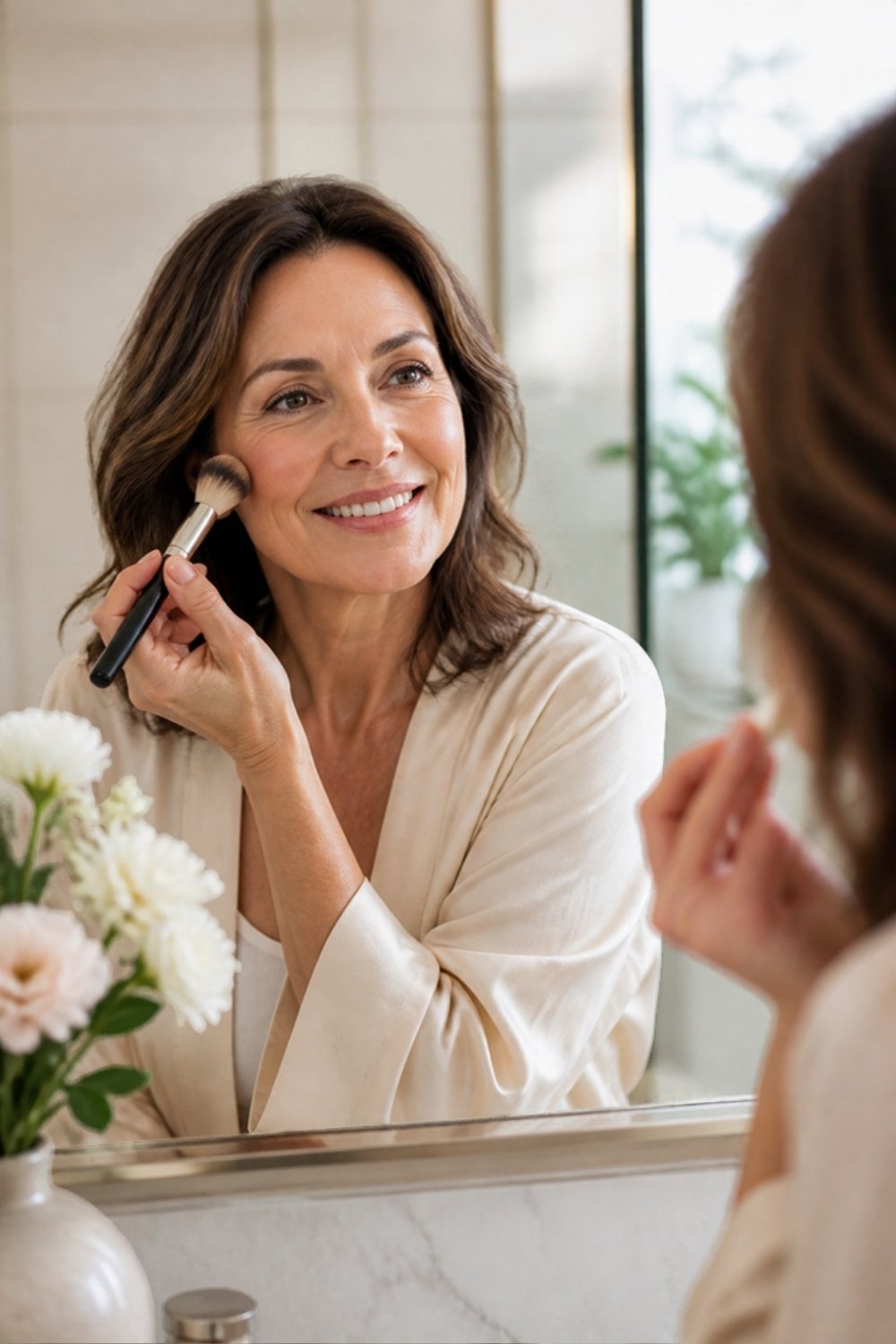
Prep: moisturizer and broad-spectrum SPF 30+, given a few minutes to settle. Base: a thin layer of skin tint or light foundation, only where needed. Concealer: a peach corrector and a slightly lighter, creamy concealer in small dots. Cheeks: cream blush placed high on the cheekbones. Eyes: primer, matte or satin neutrals, curled lashes, soft brown liner. Brows: fill sparse areas with hair-like strokes. Lips: balm, a liner a shade deeper than your lips, then a creamy color. Set: fine powder on the T-zone and under the eyes only, then a hydrating mist.
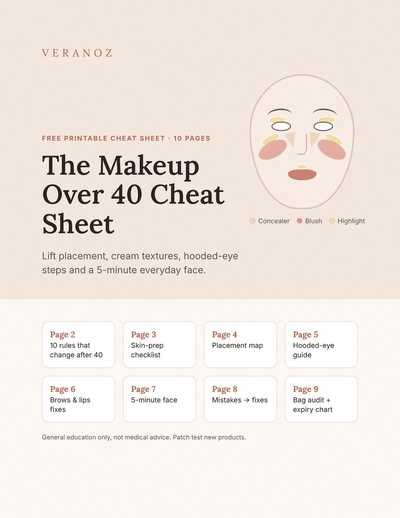
The Makeup Over 40 Cheat Sheet
The 10 makeup rules that change after 40, a lift placement map for concealer, blush and highlighter, a 3-step hooded-eye guide, a 5-minute everyday face and a makeup bag audit.
Send me the free cheat sheet →In This Guide
Skin Prep: Makeup Tips 1 to 4
Makeup over 40 is only as good as the skin underneath it. Ten minutes of prep does more for a smooth finish than any foundation.
1. Moisturize First, Every Time
Dry skin makes foundation cling to flakes and settle into lines. Apply a moisturizer suited to your skin type and give it a couple of minutes to absorb. Dry skin likes a cream with ingredients such as glycerin, ceramides or hyaluronic acid; oilier skin can use a lightweight gel-cream. Our best moisturizer for women over 40 guide helps you choose.
2. Wear Real Sunscreen Under Your Makeup
The SPF in foundation is rarely enough on its own. A Cleveland Clinic dermatologist explains that people apply far less makeup than the amount used in SPF testing, so a separate broad-spectrum sunscreen of SPF 30 or higher should go on after moisturizer and before makeup. Let it set for a few minutes so your base doesn’t pill. See our best sunscreen for women over 40.
3. Exfoliate Gently, Not the Morning of a Big Event
Dead skin cells make foundation look patchy. A gentle chemical exfoliant once or twice a week keeps skin smooth. Do it in the evening, not right before an event, and never on nights you use a retinoid. Skip retinoids if you’re pregnant, trying to conceive or breastfeeding. Our guide to how often to exfoliate your face has a schedule for every skin type.
4. Use Primer Only Where You Need It
You don’t need primer all over. Use a smoothing primer on enlarged-looking pores (often the nose and inner cheeks), a hydrating primer on dry areas, and an eyeshadow primer on lids. A thin layer is enough. For the right order of serum, moisturizer, sunscreen and primer, read how to layer skincare under makeup.
Apply makeup in natural daylight if you can, or next to a window. Overhead bathroom lights cast shadows that make you over-apply concealer, and a magnifying mirror makes you over-blend tiny areas.
Foundation and Base: Makeup Tips 5 to 8
5. Use Less Foundation Than You Think
Thin layers look more like skin. Start with a pea-sized amount in the center of the face, where redness and uneven tone usually gather, and blend outward. Most of us don’t need full coverage near the hairline or jaw.
6. Switch to a Hydrating or Satin Finish
Very matte foundations can look flat and dry on mature skin. Satin, natural or “skin-like” finishes reflect a little light and blur texture. Serum foundations, skin tints and tinted moisturizers are good options for dry or normal skin. If you’re oily, a satin finish set with powder on the T-zone works well.
7. Match Your Foundation to Your Neck and Chest
Skin tone can change over the years with sun exposure and dark spots. Swatch three shades along your jawline and choose the one that disappears into your neck in daylight. If you use a tinted sunscreen, that can double as a light base and adds protection from visible light, which the AAD notes can worsen dark spots.
8. Press, Don’t Rub
Rubbing foundation back and forth pushes it into lines and lifts the sunscreen underneath. Use a damp sponge or a dense brush and press or stipple the product into the skin. Finish by pressing your clean palms over your face to melt everything together.
Concealer: Makeup Tips 9 to 11
9. Color Correct Dark Circles First
Blue or purple under-eye shadows can look gray under concealer alone. A thin layer of peach or apricot corrector (deeper orange on deeper skin tones) neutralizes the darkness, so you need less concealer on top.
10. Use a Creamy Concealer in Dots, Not Triangles
The big under-eye triangle trend looks heavy on crepey skin. Instead, dot a creamy, hydrating concealer only in the inner corner and where the shadow is darkest, then tap it in with your ring finger. Choose a shade no more than one shade lighter than your foundation. Our under-eye wrinkles and crepey lids guide covers skincare that makes concealer sit better.
11. Spot Conceal Dark Spots With a Fine Brush
For sun spots and post-acne marks, use a slightly thicker concealer that matches your foundation exactly, apply it with a small brush right on the spot, wait a minute, then tap the edges. Fading spots over time with sunscreen and treatment products makes this step quicker; see our best dark spot treatments.
Blush, Bronzer and Highlighter: Makeup Tips 12 to 14
12. Choose Cream Blush and Place It Higher
Cream and liquid blushes blend into skin rather than sitting on top, which is more flattering on dry or textured cheeks. Smile slightly, find the top of your cheekbone, and blend blush up and back toward the temple. Placing blush low on the apples can drag the face down. Soft rose, peach and berry shades look fresh on most skin tones.
13. Bronze Lightly Where the Sun Would Hit
Skip heavy contour. A matte cream or powder bronzer one or two shades deeper than your skin, swept along the temples, the tops of the cheekbones and lightly under the jaw, warms the face and adds gentle structure.
14. Keep Highlighter Small and Satin
Glitter and frosty highlighters magnify texture and fine lines. A satin or “glow” cream highlighter pressed on the very top of the cheekbones, the center of the nose bridge and the cupid’s bow catches light without emphasizing pores. Avoid highlighting under the eyes or on areas with visible texture.
Related ReadSimple Everyday Makeup That Feels FreshEye Makeup: Makeup Tips 15 to 18
15. Prime Your Lids
Eyelid skin gets thinner and oilier lids or hooding can make shadow crease or transfer. An eyeshadow primer keeps color smooth all day. If you skip everything else, keep this step.
16. Choose Matte and Satin Shadows
Matte neutrals in the crease give definition, and a satin shade on the center of the lid brings light forward. Keep heavy shimmer and glitter off the crease and brow bone. If your lids are hooded, apply your crease color with your eyes open, slightly above your natural crease, so it shows when you look straight ahead.
17. Swap Black Liner for Brown, Taupe or Charcoal
As lashes and brows lighten, harsh black liner can look severe. A soft brown, taupe or charcoal pencil smudged into the upper lash line, or tightlined along the upper waterline, defines the eye without closing it. Keep lower liner light or skip it; heavy lower liner pulls the eye down.
18. Curl Your Lashes and Choose Lengthening Mascara
Lashes can grow thinner and straighter with age. Curl them before mascara, then use a lengthening or tubing formula, which tends to flake and smudge less than very volumizing ones. The FDA advises throwing mascara away three months after purchase, never adding water or saliva to revive it, and never sharing eye makeup. Our crow’s feet skincare tips help the skin around your eyes look smoother too.
Brows: Makeup Tips 19 to 20
19. Fill Sparse Brows With Hair-Like Strokes
Brows often thin with age, especially at the tails. Use a fine brow pencil or a micro brow pen to draw short, upward strokes in the direction of hair growth, filling only sparse areas. Choose a shade one step lighter than your hair if it’s dark, or a soft taupe if your hair is gray or silver.
20. Set and Lift With Tinted Brow Gel
Brush brows up and out with a tinted brow gel to add fullness and keep them in place. Brows that are lifted at the tail make the whole eye area look more open, which helps with heavy or hooded lids.
Lips: Makeup Tips 21 to 22
21. Prep Lips and Line Them First
Lips lose some definition and moisture over time. Smooth on a lip balm while you do the rest of your makeup and blot before color. Then use a lip liner close to your natural lip color (or a shade deeper) to define the edges and fill in lightly. Liner stops lipstick from feathering into fine lines around the mouth.
22. Pick Creamy, Satin Lip Colors Over Ultra-Matte
Very matte liquid lipsticks can look dry and emphasize lip lines. Satin, cream and tinted balm formulas look softer. Medium tones such as rose, berry, warm nude and brick tend to flatter more than very pale nudes, which can wash out the face. A touch of gloss in the center of the bottom lip adds fullness.
Free: the Natural Makeup Cheat Sheet
Where to place blush and highlighter, a hooded-eye guide, a 5-minute everyday face and a makeup bag expiry chart, on 10 printable pages.
Free. You will also get a few short emails with tips and offers. Unsubscribe anytime. Privacy policy.
Setting: Makeup Tip 23
23. Set Only Where You Need It, Then Mist
Powder everywhere can look dry and cakey. Use a finely milled translucent powder with a small brush only on the sides of the nose, the center of the forehead, the chin and a light touch under the eyes if concealer creases. Then mist with a hydrating setting spray to take away any powdery look. If you’re dry all over, skip powder and use setting spray alone.
Tools: Makeup Tips 24 to 25
24. Use the Right Tools for Mature Skin
A damp makeup sponge presses base into skin for a natural finish. A fluffy brush blends cream blush and powder, and a small, tapered brush places concealer and highlighter precisely. The AAD recommends applying makeup with a feather-light touch, and good brushes make that easier.
25. Clean Brushes and Sponges Regularly
Dirty tools spread bacteria and make makeup go on streaky. The AAD recommends cleaning makeup brushes every week, and not sharing makeup, brushes or applicators. Cleveland Clinic suggests washing brushes used with wet products such as foundation and concealer weekly, eye brushes every two weeks and powder brushes monthly, using a mild soap and letting them dry flat. Replace brushes when the bristles fray or lose their shape.
Hydrating Skin Tint or Serum Foundation
A light, hydrating base that evens tone without settling into lines. Look for a natural or satin finish and a shade range that includes your undertone.
Check on Amazon →Peach Under-Eye Color Corrector
A creamy peach or apricot corrector cancels darkness so you can use less concealer on top. Choose a deeper orange shade for deeper skin tones.
Check on Amazon →Cream Blush Stick
Swipe high on the cheekbone and blend up with fingertips or a sponge. Cream blush melts into skin instead of sitting on top of texture.
Check on Amazon →Eyeshadow Primer
Keeps shadow and liner smooth and in place for hours, and stops transfer onto the brow bone.
Check on Amazon →Heated or Classic Eyelash Curler
Curled lashes open the eye more than any mascara on its own. Replace the rubber pad when it wears down.
Check on Amazon →Makeup Brush and Sponge Set
A basic set with a foundation brush, fluffy blush brush, small concealer brush and a blending sponge covers every tip above.
Check on Amazon →Makeup Over 40: Product-Type Cheat Sheet
| Step | Swap this | For this |
|---|---|---|
| Base | Full-coverage matte foundation all over | Skin tint or satin foundation, center of face |
| Under eyes | Thick, very light concealer triangle | Peach corrector plus creamy concealer in dots |
| Cheeks | Powder blush on the apples | Cream blush high on the cheekbones |
| Highlight | Glittery powder highlighter | Satin cream glow on the top of cheekbones |
| Eyes | Shimmer all over the lid | Matte crease, satin center lid |
| Liner | Black liner all around | Brown or taupe tightline on top only |
| Brows | Heavy, blocky fill | Hair-like strokes plus tinted gel |
| Lips | Ultra-matte liquid lipstick | Liner plus satin or cream lipstick |
| Setting | Powder all over | Targeted powder plus hydrating mist |
By Skin Type
| Skin type | Base | Cheeks | Setting |
|---|---|---|---|
| Dry | Hydrating primer, serum foundation or skin tint | Cream blush and cream highlighter | Hydrating mist, minimal powder |
| Normal | Satin foundation or tinted sunscreen | Cream or powder blush | Light powder on T-zone |
| Oily or combination | Pore-smoothing primer on T-zone, long-wear satin foundation | Powder or gel blush | Fine powder on T-zone, blotting papers midday |
| Sensitive | Mineral tinted sunscreen, fragrance-free products | Simple cream blush | Fragrance-free mist |
If you get breakouts, the AAD recommends choosing makeup labeled oil-free, non-comedogenic or “won’t clog pores,” and removing all makeup before bed. A simple foundation for your daily routine is covered in our beginner makeup guide.
Makeup Mistakes That Can Make You Look Older
- Skipping moisturizer. Makeup on dry skin cracks and settles into lines.
- Too much powder. It sits in fine lines and makes skin look flat.
- Foundation that’s too light or too pink. It looks masky against the neck.
- Thick under-eye concealer. It creases and highlights crepey skin.
- Low blush placement. It drags the face down.
- Glitter on textured areas. It magnifies pores and lines.
- Harsh black liner all around. It closes and shrinks the eye.
- Over-plucked, unfilled brows. Sparse brows make eyes look tired.
- Very pale or very matte lips. They can wash out the face and show dryness.
- Sleeping in makeup. The AAD recommends removing all makeup, including eye makeup, before bed.
- Using expired products. Mascara and liquid products that smell odd or change texture should go.
A 10-Minute Everyday Routine Using These Tips
| Minute | Step |
|---|---|
| 0 to 2 | Moisturizer, then broad-spectrum SPF 30+; let it settle |
| 2 to 4 | Skin tint in the center of the face; press in with a damp sponge |
| 4 to 5 | Peach corrector and concealer dots under the eyes and on spots |
| 5 to 6 | Cream blush high on the cheekbones; a touch of bronzer on the temples |
| 6 to 8 | Eye primer, one matte crease shade, curl lashes, mascara |
| 8 to 9 | Fill brows with hair-like strokes; tinted brow gel |
| 9 to 10 | Lip liner and satin lipstick; powder on the T-zone; mist |
For a simpler daily version, our feel put together routine pairs a five-minute face with easy grooming habits.
Makeup Over 40 Checklist
- Moisturizer and broad-spectrum SPF 30+ under makeup
- Primer only where needed
- Thin, satin base pressed in, not rubbed
- Peach corrector, then concealer in dots
- Cream blush high on the cheekbones
- Satin highlight on the top of cheekbones only
- Eye primer, matte crease, satin center lid
- Brown or taupe liner, curled lashes
- Brows filled with hair-like strokes
- Lip liner plus creamy color
- Powder on the T-zone only, then mist
- Brushes washed weekly; remove makeup every night
The Makeup After 40 Playbook
A profile quiz, foundation and concealer that don’t settle into lines, lift placement maps, eye maps for hooded and crepey lids, brows and lips, 5/10/20-minute routines, day-to-evening looks, a troubleshooting table and printable face charts. Instant access.
See the Playbook ($19) →Frequently Asked Questions
How should a 40-year-old woman wear makeup?
Start with moisturizer and sunscreen, use a thin hydrating base, targeted concealer, cream blush placed high, soft eyeliner, defined brows and a creamy lip. Aim for fresh and polished rather than full coverage.
What makeup should you avoid after 40?
Heavy matte foundation, lots of loose powder, glitter on textured areas, thick under-eye concealer, harsh black liner all around the eye and very matte or very pale lipsticks tend to look less flattering on mature skin.
Is liquid or powder foundation better for mature skin?
Liquid, cream, serum and skin tint formulas usually look more natural on mature skin because they move with the skin. Powder foundations can work for oily skin but may settle into dry areas.
How do I stop makeup settling into fine lines?
Moisturize first, use less product, choose creamy concealer, press makeup in rather than rubbing, use powder only where you get oily, and finish with a hydrating mist.
Should women over 40 use highlighter?
Yes, in small amounts. A satin cream highlighter on the top of the cheekbones adds glow. Avoid glitter and avoid highlighting areas with visible texture or under the eyes.
What color eyeliner is best over 40?
Soft brown, taupe and charcoal usually look softer and more natural than black, especially if your lashes and brows have lightened.
How often should I replace makeup?
Replace mascara about every three months, and toss any product that smells off, separates or changes texture. Clean your brushes regularly and never share eye makeup.
Sources: American Academy of Dermatology, Can makeup cause acne?; American Academy of Dermatology, Sunscreen FAQs; American Academy of Dermatology, How to safely exfoliate at home; Cleveland Clinic, Is the sunscreen in your makeup enough?; Cleveland Clinic, How to clean your makeup brushes; U.S. Food and Drug Administration, Cosmetics safety Q&A: eye cosmetic safety. Application tips reflect common makeup artist recommendations; Veranoz has not tested every product listed. This guide is general information, not medical advice.
Get the Free Self-Care Reset Kit
Daily, weekly and monthly self-care checklists, the everything shower order, a 3-hour at-home spa day plan and a 30-day reset tracker. Free printable, instant access.
The Veranoz 30-Day Glow-Up Planner
Routines only work when you actually keep them. The planner gives you daily planning pages, weekly resets and habit trackers so your skincare, body care and self-care steps become automatic instead of something you remember once in a while.
Veranoz Guides to Go Deeper
Some links on Veranoz are affiliate links; we may earn a commission at no extra cost to you. This content is informational and not medical advice.