

Disclosure: As an Amazon Associate, Veranoz earns from qualifying purchases. We may earn a commission if you buy through links in this post, at no extra cost to you.
A good winter skin care routine for dry skin does three jobs: it cleans without stripping, it adds water back into the skin, and it seals that water in before cold outdoor air and dry indoor heat can pull it out again. In practice that means a creamy cleanser, a hydrating serum on damp skin, a richer cream with barrier lipids, and broad-spectrum SPF 30+ in the morning; at night, the same gentle base with your treatment product on a schedule your skin tolerates, plus a thin occlusive layer on the driest spots. Add hand cream after every wash, a thick lip balm, and a bedroom humidifier, and you have covered the biggest causes of winter dryness.
Free: the Winter Dry Skin Rescue Plan
A printable 14-day plan for dry, tight winter skin: shower rules, a face routine, and fixes for hands, lips and heels.
Free. You will also get a few short emails with tips and offers. Unsubscribe anytime. Privacy policy.
Below you’ll find a step-by-step morning and night face routine, how humectants, emollients and occlusives work (and why winter needs all three), the products and habits to pause until spring, a simple body, hand and lip plan, humidifier settings, and a printable-style checklist.
The Real Problem
Dry skin already makes less oil and holds water less well. Winter piles on: cold, dry air outside, heated air inside, hot showers and more hand washing. The result is skin that feels tight after cleansing, flakes around the nose and brows, stings with products that were fine in summer, and makes fine lines look deeper. The common reaction is to scrub harder or add more actives, which usually makes things worse. Winter skin needs fewer, gentler steps and better moisture, not more.
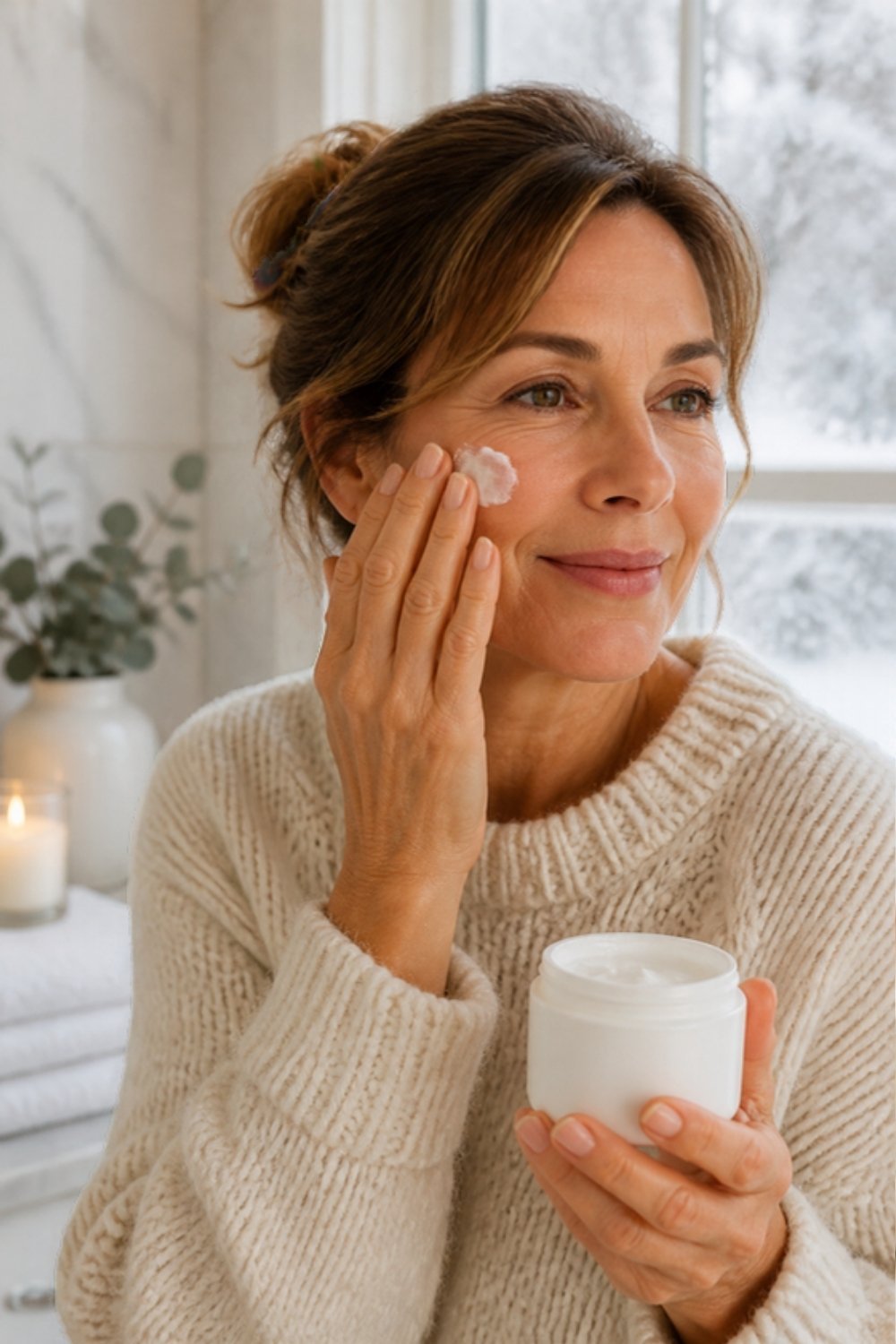
Short Answer: Your Winter Skin Care Routine
Morning: lukewarm rinse or cream cleanser, hydrating serum on damp skin, ceramide-rich cream, broad-spectrum SPF 30+, SPF lip balm. Night: gentle cleanse, treatment product (retinoid, peptide or hydrating serum) only as often as your skin stays calm, richer cream, then a thin layer of ointment on dry patches. Body: short lukewarm shower, cream or ointment on damp skin. Hands and lips: cream after every wash, gloves outside, thick balm at night. Home: humidifier at 30 to 50 percent humidity. Pause: scrubs, strong peels, alcohol-heavy toners and fragranced products while skin is dry.

The Winter Dry Skin Rescue Plan
Winter shower rules, a face routine for very dry skin, mini-routines for hands, lips and heels, an ingredient cheat sheet and a 14-day rescue checklist.
Send me the free plan →In This Guide
- Why skin gets drier in winter
- Humectants, emollients and occlusives explained
- Your winter skin care swaps
- Morning winter skin care routine
- Night winter skin care routine
- What to pause until spring
- Winter body care
- Hands and lips
- Humidifier: settings and care
- Winter skin care products to look for
- More winter skin care tips
- Dry, dehydrated or damaged barrier?
- Winter skin care checklist
- FAQ
Why Skin Gets Drier in Winter
Dry skin is skin that can’t hold on to enough water. MedlinePlus lists the usual causes: thinner skin that makes less natural oil, cold and dry winter air, low indoor humidity from heating, and frequent or long baths and showers. Harvard Health notes that dry skin is very common, and that dryness tends to show first on the arms, legs, hands and the middle of the upper back.
In other words, if your skin already runs dry, you start winter with less built-in protection, and the season removes more moisture than your skin can replace on its own. That’s why the routine that worked in July often feels thin and tight by November.
The good news: dry winter skin responds quickly to a few changes. Most women see smoother, more comfortable skin within one to two weeks of switching to gentler cleansing, richer moisturizer applied to damp skin, and a humidifier. Fine lines that look deeper on dehydrated skin often soften too, because well-hydrated skin reflects light more evenly.
Start your winter routine when the heating comes on, not when your skin is already cracked. A barrier that’s already irritated takes longer to settle than one you protect from the start.
Humectants, Emollients and Occlusives Explained
Every moisturizer is built from three kinds of ingredients. Understanding them is the fastest way to choose winter skin care products that actually work, instead of buying by price or packaging.
| Type | What it does | Common examples | Winter role |
|---|---|---|---|
| Humectants | Draw water into the top layer of skin | Glycerin, hyaluronic acid, sorbitol, urea, lactic acid | Add hydration; best applied to damp skin and always covered |
| Emollients | Soften and smooth by filling gaps between skin cells | Fatty acids (linoleic, lauric), squalane, plant oils, shea butter, ceramides and other barrier lipids | Make skin feel supple and less rough |
| Occlusives | Form a film that slows water loss | Petrolatum, mineral oil, lanolin, dimethicone and other silicones | Seal the water in; the step most summer routines skip |
Harvard Health describes humectants as ingredients that attract moisture and occlusives as ingredients that seal it in, and it notes that thicker, greasier products are generally the most effective, with petroleum jelly and mineral oil among the most effective and least expensive. Because pure occlusives contain no water, they work best on skin that is still damp.
Here’s the winter catch: a humectant on its own can leave skin feeling drier when the air is very dry, because there’s little moisture in the air to pull in and nothing stopping water from evaporating. That’s why a hyaluronic acid serum should always be followed by a cream, and why the driest nights call for a thin occlusive layer on top.
How to read a label: look for at least one ingredient from each column. A good winter cream for dry skin usually lists glycerin (humectant), a plant oil, squalane or ceramides (emollients), and petrolatum or dimethicone (occlusive) in the first part of the ingredient list.
Your Winter Skin Care Swaps
| Summer habit | Winter swap | Why it helps |
|---|---|---|
| Foaming or gel cleanser twice a day | Cream or lotion cleanser at night; lukewarm rinse in the morning if skin is dry | Removes less of your natural oil |
| Light gel moisturizer | Cream with ceramides, glycerin and an occlusive | Holds water against dry indoor air |
| Hyaluronic acid serum on dry skin | Serum on damp skin, sealed with cream within a minute | Keeps the humectant from pulling water out of skin |
| Exfoliating two or three times a week | Once a week at most, or pause entirely while flaky | Protects a more fragile winter barrier |
| Alcohol-based toner | Skip it, or use a hydrating, alcohol-free mist | Alcohol can sting and dry winter skin |
| Skipping SPF on cold or cloudy days | Broad-spectrum SPF 30+ every morning | UV reaches skin year-round; snow reflects it |
| Nothing for the air | Humidifier in the bedroom, 30 to 50 percent | Slows overnight water loss |
Morning Winter Skin Care Routine
Morning skin care in winter is about comfort and protection. Keep it to four or five steps.
| Step | What to use | How |
|---|---|---|
| 1. Cleanse | Cream cleanser, or just lukewarm water | If your skin is dry and you cleansed well the night before, a water rinse is enough |
| 2. Hydrate | Glycerin or hyaluronic acid serum | Pat onto skin that is still slightly damp |
| 3. Antioxidant (optional) | Vitamin C serum, if your skin tolerates it | Skip on days your skin stings or feels raw |
| 4. Moisturize | Cream with ceramides and glycerin | Apply within a minute to seal in the serum; include the neck |
| 5. Protect | Broad-spectrum SPF 30+ | Two finger lengths for face and neck; reapply if you’re outside for long |
| 6. Lips | Lip balm with SPF 30+ | Reapply every two hours outdoors |
The American Academy of Dermatology recommends a broad-spectrum, water-resistant sunscreen with SPF 30 or higher in winter, applied about 15 minutes before going out and reapplied at least every two hours when you’re outdoors. It also points out that snow reflects UV light and that ears, nose, lips, the back of the neck and the backs of the hands are easy to miss. Our guide to the best sunscreen for dry skin covers formulas that sit well over a rich cream.
If makeup looks patchy in winter, it’s usually dry skin underneath, not the foundation. Give your moisturizer three to five minutes to settle before sunscreen and makeup, and press (don’t rub) foundation over dry areas.
Night Winter Skin Care Routine
Night is when you can use richer textures without worrying about shine.
- Remove sunscreen and makeup. Massage a cleansing balm or oil over dry skin for about a minute, then emulsify with a little water and rinse.
- Cleanse gently. Follow with a cream cleanser only if your skin still feels coated. Lukewarm water, never hot.
- Pat, don’t rub. Leave the skin slightly damp.
- Treatment step. On treatment nights, apply your retinoid or peptide serum as directed. On off nights, use a hydrating serum instead.
- Rich moisturizer. A cream (not a lotion) with ceramides and an occlusive ingredient.
- Seal the driest spots. A rice-grain amount of petroleum jelly or a barrier balm on the sides of the nose, corners of the mouth, and any flaky patches. On very dry nights you can apply a thin layer over the whole face as the last step.
- Eyes and lips. Eye cream or a dab of your moisturizer around the orbital bone; thick balm or petroleum jelly on the lips.
If you’re using a retinoid, avoid sealing it under a heavy occlusive layer on the same night unless your dermatologist suggests it, since that can increase irritation. Alternate: retinoid nights and “slugging” nights. Skip retinoids if pregnant, trying to conceive or breastfeeding.
Not sure whether you need a night cream, a retinoid or both? Read night cream vs retinol. If you’re new to retinoids, our retinol beginner routine explains how to start slowly, which matters even more in winter.
Related ReadBest Moisturizer for Dry SkinWhat to Pause Until Spring
The AAD’s advice for relieving dry skin includes stopping products that contain alcohol (other than hand sanitizer), fragrance or retinoids while your skin is dry, and choosing gentle, fragrance-free products. It also warns that products labeled “unscented” can contain masking chemicals that may still irritate sensitive skin. You don’t have to give up everything, but this is a sensible winter order of operations:
| Product or habit | Winter guidance |
|---|---|
| Physical scrubs, cleansing brushes | Pause while skin is flaky or tight |
| Strong acid peels, leave-on AHA/BHA every day | Pause, or drop to once a week if skin is calm |
| Retinoids | Reduce frequency, buffer with moisturizer, or pause if skin stings or peels; skip retinoids if pregnant, trying to conceive or breastfeeding |
| Alcohol-heavy toners and astringents | Stop |
| Fragranced creams and essential-oil blends | Switch to fragrance-free |
| Clay masks on the whole face | Use only on oily areas, or swap for a cream mask |
| New actives | Wait until skin feels comfortable for two weeks |
| Hot showers and long baths | Five to ten minutes, warm water |
If you do keep a retinoid going, the gentlest options are using it two or three nights a week, applying it after moisturizer (“buffering”), and protecting the corners of the nose and mouth with a dab of ointment first. For a deeper guide to exfoliation frequency, see how often you should exfoliate your face.
Winter Body Care
Your face gets the attention, but shins, arms and the upper back often feel the winter first. The body routine is short:
- Shower short and warm. The AAD suggests five to ten minutes in warm water with the bathroom door closed. Our winter shower routine for dry, itchy skin walks through each step in the shower, so here we’ll focus on what comes after.
- Moisturize within a few minutes of drying off. Pat skin with a towel, leaving it slightly damp, then apply a cream or ointment. The AAD notes that creams and ointments work better than lotions for dry skin.
- Use urea or lactic acid on rough spots. MedlinePlus mentions creams containing urea or lactic acid for dry skin. They’re helpful on rough shins, elbows and heels; skip them on cracked or broken skin, where they can sting.
- Reapply on dry zones at night. Shins and the backs of arms often need a second layer before bed.
- Dress for your skin. The AAD suggests loose cotton clothing and a cotton or silk layer under wool or other rough fabrics.
- Switch laundry products. Fragrance-free detergent and skipping fabric softener can reduce itch for sensitive skin, as Harvard Health suggests.
For a full year-round plan, see our body care routine for dry skin, and if the skin on your arms and legs looks thin and crinkly, our guide to body lotion for crepey skin goes deeper.
Free: the Winter Dry Skin Rescue Plan
A printable 14-day plan for dry, tight winter skin: shower rules, a face routine, and fixes for hands, lips and heels.
Free. You will also get a few short emails with tips and offers. Unsubscribe anytime. Privacy policy.
Hands and Lips
Hands
Hands are washed many times a day and are exposed to cold air more than almost any other skin, so they crack first. The AAD’s tips:
- Cream after every hand wash. Keep a non-greasy hand cream by each sink and in your bag.
- Gloves outside in cold, dry weather.
- Gloves for wet work: dishwashing, cleaning and gardening.
- Overnight repair: a thick cream or ointment, then cotton gloves, two or three nights a week.
- SPF on the backs of hands in the morning, especially if you drive a lot.
Hand sanitizer is fine to keep using; follow it with hand cream once it dries. If your hands also show sun spots or thin, crepey skin, our guide to dry, crepey hands explains what helps.
Lips
The AAD’s advice for chapped lips is simple and effective:
- Apply a non-irritating balm several times a day and before bed. For very dry or cracked lips, a thick ointment like white petroleum jelly works better than a waxy stick.
- Use SPF 30+ on lips outdoors, even in winter, and reapply every two hours.
- Stop licking, biting or picking. Reach for balm instead.
- Avoid irritants while lips are chapped: camphor, eucalyptus, menthol, fragrance, flavorings such as cinnamon, citrus, mint and peppermint, and salicylic acid.
- Look for: petrolatum, ceramides, dimethicone, shea butter, castor seed oil, mineral oil, or zinc oxide and titanium dioxide for sun protection.
If a lip product burns, stings or tingles, stop using it. That sensation is a sign of irritation, not “working.” See a dermatologist if lips don’t improve in two to three weeks.
Humidifier: Settings and Care
A humidifier is one of the most effective winter skin care products you can buy, because it changes the air your skin sits in for eight hours a night.
- Target 30 to 50 percent humidity. Mayo Clinic recommends keeping indoor humidity in this range and checking it with a hygrometer or a humidifier that has a built-in humidistat.
- Don’t overdo it. Above about 50 percent, condensation can encourage mold, bacteria and dust mites, which can trigger allergies and asthma.
- Use distilled or demineralized water. Tap water minerals can encourage bacterial growth and leave white dust.
- Empty, dry and refill daily, especially cool-mist and ultrasonic models, and descale or disinfect as the manufacturer directs (Mayo Clinic mentions a 3 percent hydrogen peroxide rinse about every three days for many models).
- Place it in the bedroom, a few feet from the bed, on a surface that won’t be damaged by moisture.
If you wake up with a dry mouth or tight, flaky skin around your nose, your bedroom air is probably below 30 percent. A small hygrometer tells you in seconds and costs far less than another jar of cream.
Winter Skin Care Products to Look For
You don’t need a new routine for winter, just a few upgrades. These are product types, not specific brands; read labels for the ingredients above and choose fragrance-free if your skin is reactive.
Fragrance-Free Ceramide Moisturizing Cream
The core of a winter skin care routine. Look for ceramides plus glycerin and an occlusive like petrolatum or dimethicone, in a tub or tube rather than a pump lotion.
Check on Amazon →Hydrating Cream Cleanser
A non-foaming cream or lotion cleanser removes dirt and sunscreen without stripping the lipids your skin is short on in winter.
Check on Amazon →Hyaluronic Acid or Glycerin Serum
Apply to damp skin and seal immediately. Simple formulas with few ingredients are usually best tolerated in winter.
Check on Amazon →Barrier Balm or Healing Ointment
A petrolatum-based ointment is the most effective occlusive layer for very dry spots. Use a thin layer as the last step at night. Our barrier cream guide explains the options.
Check on Amazon →Cool-Mist Humidifier With Humidistat
A built-in humidistat makes it easy to stay in the 30 to 50 percent range. Choose one that’s easy to empty and clean daily.
Check on Amazon →Tinted Mineral Sunscreen SPF 30+
Creamier mineral formulas often feel comfortable on dry skin and the tint helps even out redness from the cold.
Check on Amazon →Urea Hand and Foot Cream
Urea is a humectant that also softens rough skin. Use it on hands and feet at night, under cotton gloves or socks.
Check on Amazon →Fragrance-Free Lip Ointment and SPF Lip Balm
Keep a thick ointment by the bed and an SPF 30+ balm in your coat pocket. Avoid mint, menthol and camphor while lips are chapped.
Check on Amazon →More Winter Skin Care Tips
- Moisturize more than once a day. The AAD recommends applying moisturizer after bathing, after washing your hands, and whenever skin feels dry.
- Use soap only where you need it. Armpits, groin and feet; let rinse water run over the rest.
- Avoid deodorant soaps and perfumed soaps on dry skin.
- Turn the thermostat down a little at night. Cooler, more humid bedroom air is kinder to skin than hot, dry air.
- Don’t sit right in front of heaters or fireplaces. Direct heat dries the face quickly.
- Drink enough water for your overall health; it won’t replace moisturizer, but dehydration doesn’t help.
- Keep your neck and chest in the routine. Thin skin there dries and creases too. See does neck cream work?
- Treat the eye area gently. A simple eye cream or your regular moisturizer patted along the orbital bone is enough. More in is eye cream worth it?
- Don’t scratch. Use moisturizer or a cool compress for itch.
- Keep the routine for the whole season. Skin often relapses within days of stopping.
Dry, Dehydrated or Damaged Barrier?
| Dry or dehydrated skin | Damaged (irritated) barrier | |
|---|---|---|
| How it feels | Tight, rough, sometimes itchy | Stings, burns or feels hot with products that used to be fine |
| How it looks | Dull, flaky, fine lines more visible | Red, raw, shiny-tight or patchy; rough spots that don’t improve |
| What helps | Hydrating serum on damp skin, richer cream, humidifier | Stop actives and fragrance, use only cleanser, plain cream and ointment for one to two weeks |
| When to see a dermatologist | No improvement after a few weeks | Cracks that bleed, oozing, spreading rash, or no improvement in two weeks |
If your skin is in the second column, our guide on how to calm irritated skin gently gives a simple reset routine. Persistent, severe dryness can be linked to conditions such as eczema, psoriasis or thyroid and kidney problems, so see a board-certified dermatologist if the tips here don’t help.
Related ReadA Simple Hydrating Skincare RoutineWinter Skin Care Checklist
Face, Daily
- Cream cleanser at night, water rinse or cream cleanser in the morning
- Hydrating serum on damp skin, sealed with cream right away
- Ceramide cream morning and night, including the neck
- Broad-spectrum SPF 30+ every morning, even on cloudy days
- Treatment product only as often as skin stays comfortable
- Thin ointment layer on dry spots at night
Body, Hands and Lips
- Five- to ten-minute warm shower
- Cream or ointment on damp skin within minutes
- Hand cream after every wash; gloves outside and for wet chores
- SPF lip balm by day, thick ointment at night
- Cotton layers under wool
Home and Habits
- Bedroom humidifier at 30 to 50 percent, cleaned daily
- Fragrance-free products and detergent
- Scrubs, peels and alcohol toners paused while skin is dry
- Dermatologist visit if dryness persists or skin cracks and bleeds
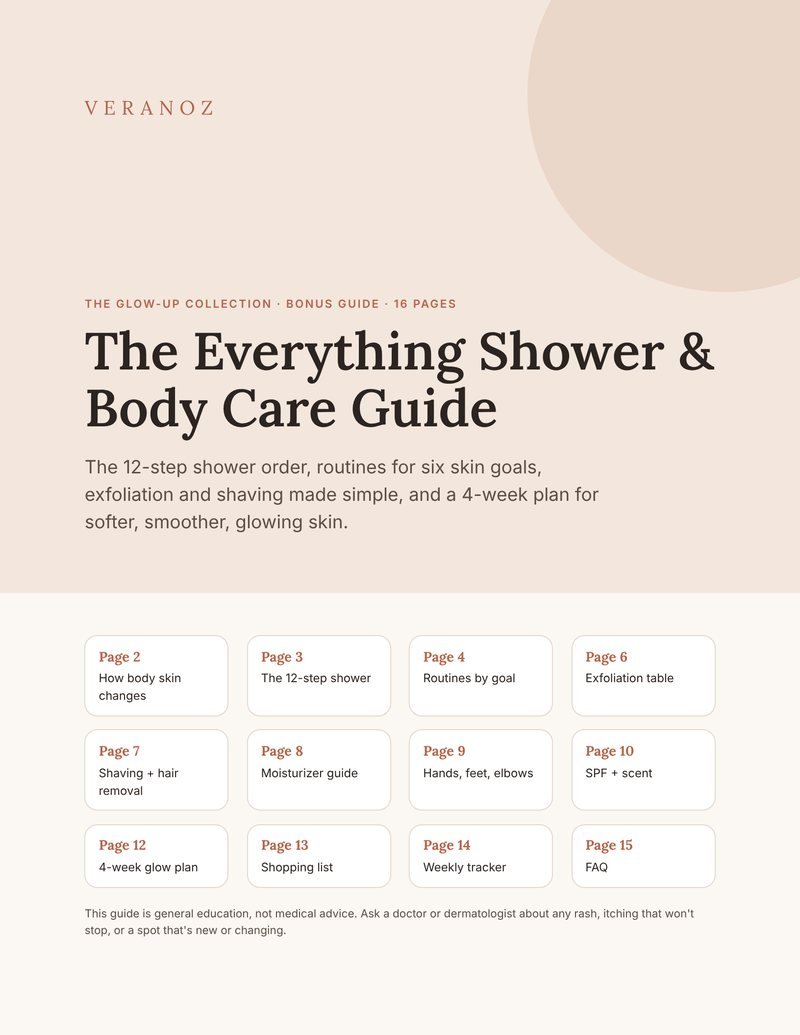
The Everything Shower & Body Care Guide
The 12-step shower order, routines for dry, crepey, bumpy or breakout-prone body skin, exfoliation and moisturizer guides, hands, feet and body SPF, and a 4-week body glow plan. 16 printable pages, instant access.
Get the Guide ($17) →Frequently Asked Questions
What is the best winter skin care routine for dry skin?
Morning: gentle cleanse or water rinse, hydrating serum on damp skin, ceramide cream, broad-spectrum SPF 30+. Night: remove sunscreen with a balm, gentle cleanse, treatment product as tolerated, rich cream, and a thin ointment layer on dry spots. Add hand cream, lip balm and a bedroom humidifier.
How should I change my skin care routine for winter?
Swap foaming cleansers for cream cleansers, gel moisturizers for creams, cut back on exfoliation, keep wearing sunscreen, apply moisturizer to damp skin, and run a humidifier at 30 to 50 percent humidity.
Is hyaluronic acid good in winter?
Yes, if you apply it to damp skin and seal it with a cream right away. On its own in very dry air, a humectant can leave skin feeling tighter.
Should I stop retinol in winter?
Not necessarily. Many people simply use it fewer nights a week and apply it after moisturizer. If your skin stings, peels or turns red, pause until it settles. Skip retinoids if pregnant, trying to conceive or breastfeeding.
Do I need sunscreen in winter?
Yes. UV light reaches your skin year-round and snow reflects it. Use a broad-spectrum SPF 30+ every morning and an SPF lip balm outdoors.
Is petroleum jelly good for winter skin?
For very dry areas, yes. It’s one of the most effective occlusives and works best on damp skin as a thin final layer. Avoid it on acne-prone areas.
What humidity is best for dry skin?
Mayo Clinic recommends 30 to 50 percent indoor humidity. Higher levels can encourage mold and dust mites.
Sources: American Academy of Dermatology, Dermatologists’ top tips for relieving dry skin; American Academy of Dermatology, 7 dermatologists’ tips for healing dry, chapped lips; American Academy of Dermatology, Why you need sun protection in the winter; Mayo Clinic, Humidifiers: Ease skin, breathing symptoms; Harvard Health Publishing, How to moisturize your skin and What to do about dry skin in winter; MedlinePlus (NIH), Dry skin. Veranoz has not tested every product listed. This guide is general information, not medical advice; see a board-certified dermatologist for persistent dryness, cracking or rashes.
Get the Free Self-Care Reset Kit
Daily, weekly and monthly self-care checklists, the everything shower order, a 3-hour at-home spa day plan and a 30-day reset tracker. Free printable, instant access.
The Veranoz 30-Day Glow-Up Planner
Routines only work when you actually keep them. The planner gives you daily planning pages, weekly resets and habit trackers so your skincare, body care and self-care steps become automatic instead of something you remember once in a while.
Veranoz Guides to Go Deeper
Some links on Veranoz are affiliate links; we may earn a commission at no extra cost to you. This content is informational and not medical advice.