
Disclosure: As an Amazon Associate, Veranoz earns from qualifying purchases. Some other links are affiliate links too. We may earn a commission at no extra cost to you. Veranoz hasn’t tested every product listed; picks are based on ingredient lists, brand information, dermatologist guidance and published retinoid research.
Walk down any skincare aisle and you’ll find retinol serums at 0.2%, 0.5%, 1%, “max strength,” “encapsulated,” “retinal,” “pro” and “advanced,” from $10 to $100+. If you already know retinol is worth using, the hard part isn’t deciding whether to use one. It’s choosing the right strength and formula for where your skin is right now, and knowing when (and whether) to move up. This guide ranks the best retinol serums by level and goal: a budget starter, a drugstore pick for dark spots and texture, the gentlest option for sensitive skin, two retinal (retinaldehyde) serums for faster results, and stronger formulas for experienced users. It also covers how to read a retinol serum label, why packaging matters more than most people think, and how to step up without wrecking your skin.
Free: the 12-Week Retinol Starter Plan
Which retinoid to pick, a night-by-night 12-week ramp-up calendar, how to tell purging from irritation and a printable progress tracker.
Free. You will also get a few short emails with tips and offers. Unsubscribe anytime. Privacy policy.
The Real Problem
Most people either buy a retinol that’s too strong too soon (and quit when they peel) or stay on a weak one for years without knowing if it’s still doing anything. Labels don’t help: many products don’t list a percentage, “retinol complex” can mean almost anything, and a serum sitting in a clear bottle on a sunny bathroom shelf may hold far less retinoid than the box claims. Picking by level, base and packaging, not by the biggest number, is how you get results you can see.
Short Answer
New to retinoids: a 0.2%–0.3% retinol (see our beginner routine). Best budget serum to step up to: The Ordinary Retinol 0.5% in Squalane. Best drugstore for dark spots and texture: CeraVe Resurfacing Retinol Serum. Best for sensitive skin: First Aid Beauty Skin Lab Retinol Serum 0.25%. Best for faster results: a retinal serum such as Geek & Gorgeous A-Game 5 or Medik8 Crystal Retinal. Best higher-strength retinol: Paula’s Choice Clinical 1% Retinol Treatment. Move up one level only after 2–3 months of comfortable use. Use at night, wear SPF 30+ every morning, and skip retinoids if you’re pregnant, trying to conceive or breastfeeding.
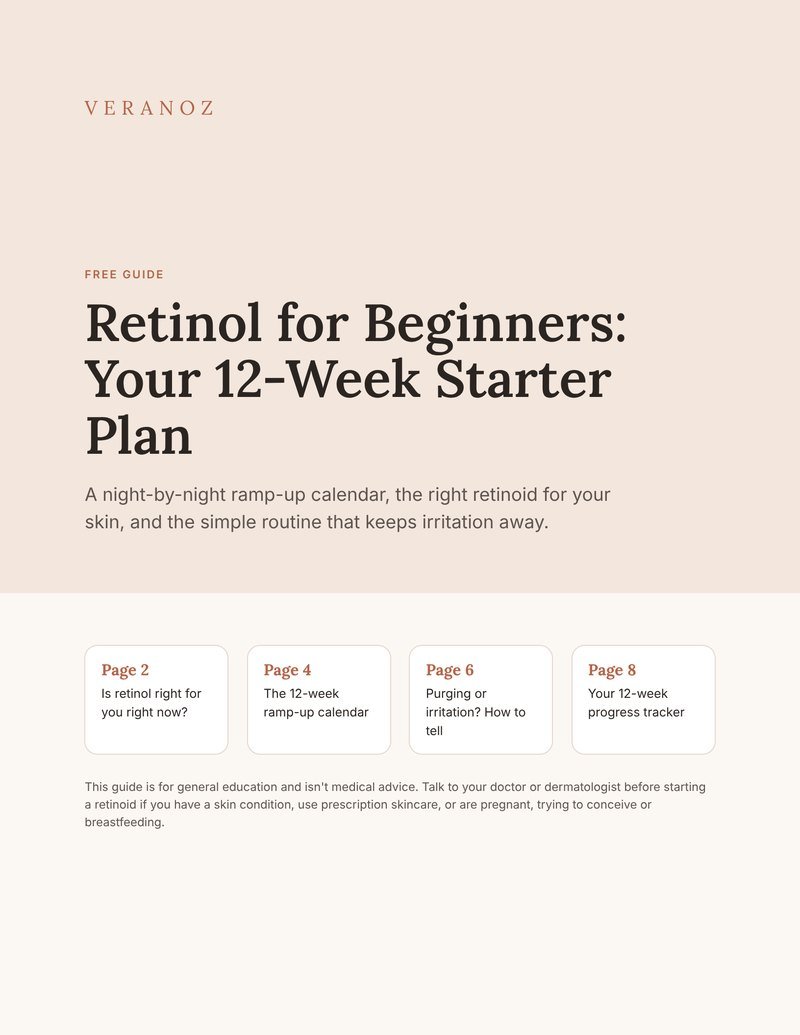
Retinol for Beginners: Your 12-Week Starter Plan
Which retinoid to pick, a night-by-night ramp-up calendar, purging vs irritation, and a printable tracker. Start retinol without the peeling.
Send me the free plan →In This Guide
What a Retinol Serum Can Do for Your Skin
Retinol is a form of vitamin A that skin converts into retinoic acid, the active form that tells skin cells to turn over faster and to make more collagen. That’s why retinoids remain the most studied over-the-counter ingredient for fine lines, rough texture and uneven tone.
The research isn’t limited to young skin. In a randomized, split-body study published in the Archives of Dermatology (Kafi and colleagues, 2007), researchers applied 0.4% retinol lotion to one upper inner arm and a plain lotion to the other in 36 adults, up to three times a week for 24 weeks. Fine wrinkles, roughness and overall scores improved significantly on the retinol side, and skin biopsies showed more glycosaminoglycans (which hold water in skin) and more procollagen, the building block of collagen. In other words, even skin with years of sun exposure can still respond to retinol.
A 2016 study in the Journal of Cosmetic Dermatology (Kong and colleagues) compared retinol directly with prescription retinoic acid over four weeks. Both thickened the epidermis and increased collagen types I and III, with retinol’s effect tending to be smaller in size, and facial image analysis showed a significant reduction in wrinkles after 12 weeks of retinol. That’s the realistic picture: retinol is gentler and slower than tretinoin, but it works.
What a serum won’t do: lift sagging jowls, erase deep folds or work in two weeks. Expect smoother texture in about a month and softer fine lines at around three months, building over 6–12 months of steady use.
Related ReadRetinol for Beginners: A Routine That Won’t Wreck Your SkinSerum or Cream: Which Form Makes Sense
A retinol serum is a concentrated treatment step that goes on before your moisturizer. A retinol cream builds the retinoid into the moisturizer itself. Neither is “stronger” by definition; it depends on the formula.
| Retinol serum | Retinol cream | |
|---|---|---|
| Best for | Oily, combination or normal skin; anyone who wants to control strength and moisturizer separately | Dry or very sensitive skin; anyone who wants one step |
| Strength range | Wide, from 0.1% to 1% retinol and retinal options | Usually lower or undisclosed |
| Flexibility | Pair with any moisturizer, buffer as needed | Retinoid and moisturizer come as a package |
| Downsides | Easier to overdo; some contain alcohol | Harder to step up gradually |
If you’re dry, sensitive or brand new to retinoids, a cream may be the easier start. We cover those in night cream vs retinol and in our guide to the best retinol for sensitive skin.
The Retinoid Strength Ladder
Think of retinoids as steps on a ladder. Each step up usually means faster results and more potential for dryness and irritation. Most people get excellent results somewhere in the middle and never need the top rung.
| Level | What it looks like | Examples | Who it’s for |
|---|---|---|---|
| 1. Gentle | Retinyl esters, HPR, or retinol 0.1%–0.3% | FAB Retinol 0.25%, The Ordinary Retinol 0.2% | First retinoid, sensitive or dry skin |
| 2. Moderate | Retinol 0.3%–0.5%, or retinal around 0.03%–0.05% | The Ordinary Retinol 0.5%, CeraVe Resurfacing, A-Game 5 | After 2–3 comfortable months at level 1 |
| 3. Strong | Retinol around 1%, or retinal around 0.06%–0.1% | Paula’s Choice 1%, Medik8 Crystal Retinal 6–10 | Experienced users with resilient skin |
| 4. Prescription | Tretinoin, tazarotene | From a dermatologist | When you want the strongest evidence and have a doctor’s plan |
Two cautions. First, percentages only compare within the same type: 0.05% retinal is not “weaker” than 0.5% retinol, because retinal is one conversion step closer to retinoic acid. Second, many brands don’t list a percentage at all. The American Academy of Dermatology (AAD) notes there’s no requirement to disclose it and advises starting with the lowest formulation you can find.
Weighing retinol against stronger options? See peptides vs retinol for fine lines for an alternative, and our beginner routine for how adapalene and tretinoin compare.
How to Read a Retinol Serum Label
1. Packaging: the factor most people ignore
Retinoids break down with light, heat and air. A 2021 study in the Journal of Cosmetic Dermatology (Temova Rakuša and colleagues) tested 16 retinoids in 12 commercial cosmetics. After six months at room temperature (25°C), retinoid content had dropped by anywhere from 0% to 80%, and by 40% to 100% at 40°C. Light caused more breakdown than heat, and some products contained less retinoid than declared. Interestingly, hydroxypinacolone retinoate (HPR) was the most stable retinoid tested.
What that means for you:
- Choose opaque, airless pumps or tubes over clear bottles and open jars.
- Store it away from the shower and windows, in a cool drawer or cabinet.
- Close it right away and use it up within the period-after-opening symbol (the little open jar with “6M” or “12M”).
- If a serum turns noticeably darker or smells off, replace it.
2. The retinoid and its strength
Look for the retinoid on the ingredient list: retinol, retinal (retinaldehyde), hydroxypinacolone retinoate, or esters like retinyl palmitate. If a percentage is listed, use the ladder above. If it isn’t, assume it’s a gentle formula and judge by how your skin responds.
3. The supporting ingredients
Niacinamide, ceramides, glycerin, squalane, panthenol, peptides and soothing extracts like oat or licorice help offset dryness. A study in Cutis (Draelos, Ertel and Berge, 2006) found that using a barrier-supporting moisturizer with niacinamide, panthenol and vitamin E before and during tretinoin treatment made the early, irritating phase of retinization easier.
4. Red flags for dry or reactive skin
- Fragrance or essential oils high on the list
- Alcohol denat. in the first few ingredients
- Acids (glycolic, lactic, salicylic) in the same formula
- “Max strength” claims with no percentage and no starting directions
Need help decoding an INCI list? Our skincare ingredient label guide walks through it.
The Best Retinol Serums by Strength
These serums were chosen for sensible strengths, formulas suited to dry or sensitive skin, good packaging and wide availability. They’re grouped roughly from gentlest to strongest. Use only one retinoid at a time.
The Ordinary Retinol 0.5% in Squalane
A simple, fragrance-free, alcohol-free retinol in squalane, a light oil that helps cushion dryness. It’s the logical next step after the brand’s 0.2% version, at a price that makes it easy to stay consistent. Use a few drops before moisturizer.
Check on Amazon →CeraVe Resurfacing Retinol Serum
Encapsulated retinol with niacinamide, licorice root extract and three ceramides, labeled free of added fragrance. It’s designed for marks and pores, which makes it a smart pick if dark spots bother you as much as fine lines. A small amount of alcohol sits low on the ingredient list.
Check on Amazon →First Aid Beauty Skin Lab Retinol Serum 0.25% Pure Concentrate
Fragrance-free 0.25% retinol with a peptide, colloidal oatmeal, allantoin, aloe, ceramides and hyaluronic acid. The brand reports that 94.6% of participants in its 8-week study, about half with self-described sensitive skin, found it gentle. More options in our best retinol for sensitive skin guide.
Check on Amazon →Geek & Gorgeous A-Game 5 (0.05% Retinal)
A lightweight 0.05% retinaldehyde serum. Retinal is one step closer to retinoic acid than retinol, so it tends to work faster at lower percentages. The brand also makes a stronger A-Game 10 (0.1%) for later. It’s alcohol-free, but it does contain honeysuckle extract, which some ingredient databases classify as a fragrance component.
Check on Amazon →Medik8 Crystal Retinal
Sold in five strengths: Crystal Retinal 1 (0.01%), 3 (0.03%), 6 (0.06%), 10 (0.1%) and 20 (0.2%). The brand suggests finishing at least one full tube before moving up and only stepping up when skin is comfortable. Coming from retinol, most women start at 3 or 6. Note that ingredient lists include fragrance components such as tonka bean and honeysuckle extracts.
Check on Amazon →Paula’s Choice Clinical 1% Retinol Treatment
A fragrance-free, sheer lotion-serum with 1% slow-release retinol, peptides, a vitamin C derivative and soothing oat, willow bark and licorice extracts. The brand’s directions start at three nights a week and build toward nightly as tolerated. Worth it once a 0.3%–0.5% retinol feels easy every other night.
Check on Amazon →Neutrogena Rapid Wrinkle Repair Retinol Pro+ 0.5% Power Serum
The brand’s highest concentration of pure retinol in a silky serum, recommended by Neutrogena for existing retinol users rather than beginners. It does contain fragrance, so it’s best for resilient, non-reactive skin.
Check on Amazon →SkinCeuticals Retinol 0.3 / 0.5 / 1.0
Offered in three clearly labeled strengths, so you can climb the ladder within one line. The formula includes alcohol denat. fairly high on the ingredient list, which suits oily skin better than dry or sensitive skin. Start at 0.3 unless you’re already comfortable with a similar strength.
Check on Amazon →Prefer One Cream Instead of a Serum Routine?
Some women would rather use a single retinol night cream that combines a low dose of retinol with peptides and hydrators, such as Kollagen Intensiv. It’s a different trade-off: simpler, but you can’t adjust the strength. The same rules apply (start every other night, sunscreen daily, skip during pregnancy). We compare cost and formulas in Kollagen Intensiv vs drugstore retinol.
Free: the 12-Week Retinol Starter Plan
Which retinoid to pick, a night-by-night 12-week ramp-up calendar, how to tell purging from irritation and a printable progress tracker.
Free. You will also get a few short emails with tips and offers. Unsubscribe anytime. Privacy policy.
Quick Comparison
| Serum | Retinoid | Level | Fragrance | Best for |
|---|---|---|---|---|
| FAB Skin Lab Retinol 0.25% | Retinol 0.25% | Gentle | Fragrance-free | Sensitive skin |
| The Ordinary Retinol 0.5% in Squalane | Retinol 0.5% | Moderate | Fragrance-free | Dry/normal, budget |
| CeraVe Resurfacing Retinol Serum | Encapsulated retinol | Moderate | No added fragrance | Marks, pores, tone |
| Geek & Gorgeous A-Game 5 | Retinal 0.05% | Moderate | Contains honeysuckle extract | Faster results, budget |
| Medik8 Crystal Retinal 3–10 | Retinal 0.03%–0.1% | Moderate to strong | Contains fragrance components | Step-by-step progression |
| Paula’s Choice Clinical 1% Retinol | Retinol 1% | Strong | Fragrance-free | Experienced users |
| Neutrogena Retinol Pro+ 0.5% Serum | Retinol 0.5% | Strong (brand’s highest) | Contains fragrance | Resilient skin, drugstore |
| SkinCeuticals Retinol 0.3/0.5/1.0 | Retinol 0.3%–1% | Moderate to strong | Contains alcohol denat. | Oily skin, splurge |
Which Serum for Your Goal
| Your main goal | Start with | Step up to | Helpful pairing |
|---|---|---|---|
| Fine lines and crepey texture | The Ordinary Retinol 0.5% or A-Game 5 | Paula’s Choice 1% or Crystal Retinal 6–10 | Peptide moisturizer, daily SPF |
| Dark spots and uneven tone | CeraVe Resurfacing Retinol Serum | A retinal serum | Vitamin C in the morning, tinted mineral SPF |
| Visible pores and roughness | CeraVe Resurfacing or SkinCeuticals 0.3 | SkinCeuticals 0.5 | Lightweight gel moisturizer |
| Adult breakouts plus lines | CeraVe Resurfacing Retinol Serum | Ask about adapalene or tretinoin | Non-comedogenic moisturizer |
| Sensitive or reactive skin | FAB Retinol 0.25% | Stay, or try a low-strength retinal | Fragrance-free ceramide cream |
| Very dry, easily irritated skin | The Ordinary Retinol 0.5% in Squalane, buffered | Paula’s Choice 1% (with the sandwich method) | Rich cream, balm on dry patches |
For pigment specifically, pair your retinoid with the strategies in our best dark spot treatments guide, and choose a daily SPF from our best daily sunscreens for your face.
When and How to Step Up
Moving up the ladder is optional. If your current serum gives you steady improvement and your skin is comfortable, staying put is a perfectly good plan. Consider stepping up only when all of these are true:
- You’ve used your current serum at least 3 nights a week for 2–3 months (or finished a full bottle).
- Your skin has no stinging, lasting redness or flaking.
- Your progress has clearly plateaued when you compare photos taken in the same light.
When you do step up:
- Go one level at a time, for example from 0.3% retinol to 0.5%, or from retinol to a low-strength retinal, never straight to 1%.
- Drop back to 2–3 nights a week with the new serum, even if you were using the old one nightly.
- Use the moisturizer sandwich for the first few weeks.
- Change only the retinoid, not your cleanser, moisturizer and sunscreen at the same time.
- Go slower in winter and whenever your skin feels drier than usual.
If your skin pushes back, step down for a few weeks. Not sure whether it’s adjustment or a problem? Our guide to retinol purging vs irritation has a side-by-side table and a quick check.
How to Layer a Retinol Serum
The full night-by-night schedule lives in our beginner routine. The short version for serums:
| Step | Retinoid night | Notes |
|---|---|---|
| 1 | Gentle cleanser | Pat dry; wait until skin is completely dry |
| 2 | Optional thin moisturizer | The “sandwich” for dry or sensitive skin |
| 3 | Retinol serum, pea-sized amount for the whole face | Avoid eyelids, nose corners and mouth creases |
| 4 | Moisturizer | Ceramides, glycerin, squalane or peptides |
| Morning | Vitamin C (optional), moisturizer, SPF 30+ | Retinoids increase sun sensitivity |
Keep exfoliating acids, scrubs and benzoyl peroxide off your retinoid nights. If you like rotating actives, skin cycling is an easy framework. Want it all mapped out? Our free Retinol Starter Plan includes a 12-week calendar and progress tracker.
Pro Tip
Most retinol serums need only a pea-sized amount, or 2–4 drops for oil and liquid formulas, for the whole face. Using more doesn’t speed results; it just adds dryness. Apply the leftover on your fingertips to the backs of your hands.
Mistakes to Avoid
- Buying the highest percentage on the shelf as your first retinoid
- Jumping from 0.2% retinol straight to 1% or a strong retinal
- Using two retinoid products at once (a serum plus a retinol eye cream plus a retinol moisturizer)
- Storing your serum in a sunny bathroom or leaving the cap off
- Using an old, darkened serum past its period-after-opening date
- Layering acids or vitamin C serum on the same night while adjusting
- Judging results at two weeks instead of three months
- Skipping sunscreen because you only use retinol at night
- Using retinoids while pregnant, trying to conceive or breastfeeding
Retinol Serum Buying Checklist
- Right level for you (gentle, moderate or strong)
- Retinoid type and strength listed, or clearly marked for beginners
- Opaque, airless pump or tube
- Fragrance-free if you’re sensitive; no alcohol denat. near the top if you’re dry
- Soothing or barrier ingredients (niacinamide, ceramides, squalane, peptides)
- A moisturizer and SPF 30+ ready to pair with it
- Plan to judge results at 12 weeks
- Step up one level only after 2–3 comfortable months
Frequently Asked Questions
What strength of retinol serum is best for beginners?
Start at 0.2%–0.3% if you’re new. Many people get excellent results at 0.3%–0.5% retinol or a low-strength retinal, and only experienced users with resilient skin need 1%.
Is retinal better than retinol for fine lines?
Retinal is one step closer to retinoic acid, so it tends to work faster at lower percentages. In tolerance testing, retinal and retinol had similarly low irritation potential. It’s a good step up once retinol feels easy.
Is a retinol serum better than a retinol cream?
Not automatically. Serums offer more strength options and pair with any moisturizer, which suits oily and combination skin. Creams are simpler and often gentler, which suits dry or sensitive skin.
Does a higher percentage mean better results?
Up to a point, but it also means more irritation. The best retinol is the strongest one you can use consistently without redness or peeling.
Does retinol go bad?
Yes. A 2021 study found retinoid content in commercial cosmetics dropped by up to 80% after six months at room temperature, and light caused more breakdown than heat. Choose opaque, airless packaging and store it somewhere cool and dark.
How long does a retinol serum take to work?
Texture often improves in 4–6 weeks. Fine lines and tone typically need about 12 weeks, with results building over 6–12 months.
Can I use a retinol serum every night?
Eventually, if your skin tolerates it, but you don’t have to. Many people get great results at three or four nights a week.
Can I use retinol with vitamin C and niacinamide?
Yes. Niacinamide can go on the same night. Use vitamin C in the morning and your retinol at night.
Is retinol safe during pregnancy?
Retinoids aren’t recommended during pregnancy, while trying to conceive or while breastfeeding. Ask your doctor about alternatives such as azelaic acid.
Sources: Kafi R et al., “Improvement of naturally aged skin with vitamin A (retinol),” Archives of Dermatology, 2007; Kong R et al., “A comparative study of the effects of retinol and retinoic acid on histological, molecular, and clinical properties of human skin,” Journal of Cosmetic Dermatology, 2016; Temova Rakuša Ž et al., “Retinoid stability and degradation kinetics in commercial cosmetic products,” Journal of Cosmetic Dermatology, 2021; Draelos ZD, Ertel KD, Berge CA, “Facilitating facial retinization through barrier improvement,” Cutis, 2006; Fluhr JW et al., “Tolerance profile of retinol, retinaldehyde and retinoic acid,” Dermatology, 1999; American Academy of Dermatology, Retinoid or retinol?; product information and ingredient lists from each brand. Veranoz has not lab-tested every product listed. This article is informational and not medical advice.
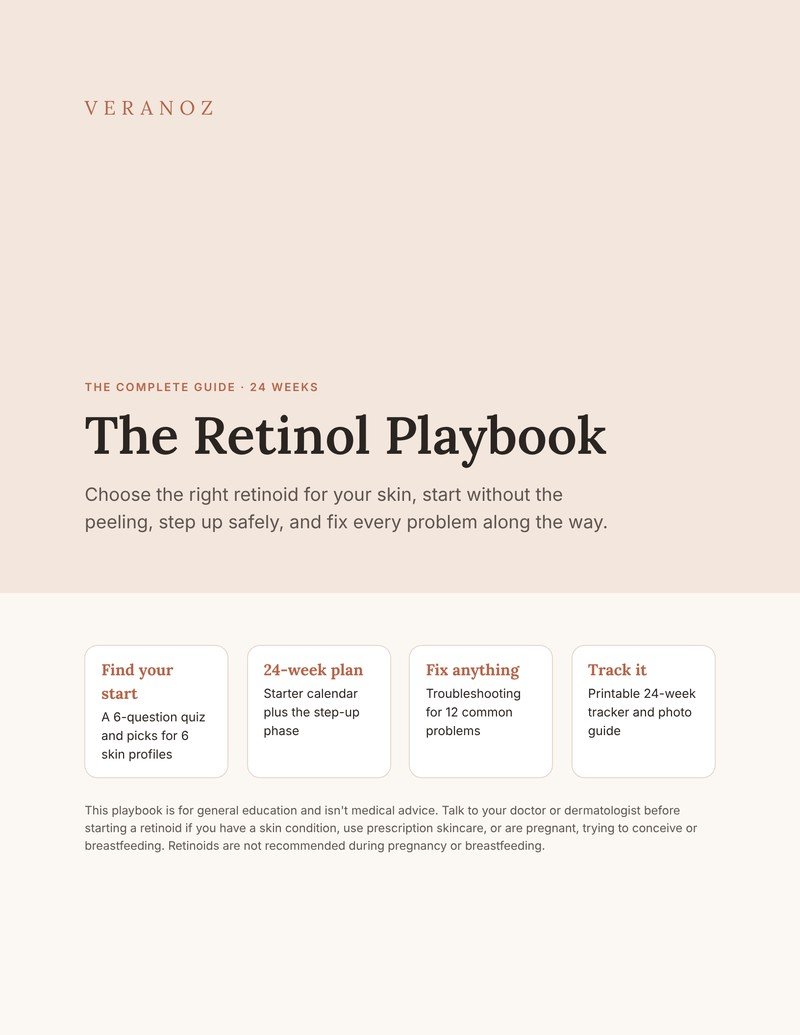
The Retinol Playbook
A skin-profile quiz with product picks, a 24-week calendar with step-up rules, fixes for 12 common problems, a pairing planner and a printable tracker. 23 pages, instant download.
See the Playbook ($29) →