

Disclosure: As an Amazon Associate, Veranoz earns from qualifying purchases. We may earn a commission if you buy through links in this post, at no extra cost to you.
A good face mask routine after 40 is simple: cleanse, apply a mask chosen for how your skin feels that day, leave it on only for the time on the label, rinse or pat in the residue, then follow straight away with serum, moisturizer and (in the morning) sunscreen. For most skin over 40, that means a hydrating or cream mask one to three times a week, a clay mask only on oily areas, an exfoliating mask no more than once a week, and an overnight mask on the driest winter nights.
Free: the 12-Week Retinol Starter Plan
Which retinoid to pick, a night-by-night 12-week ramp-up calendar, how to tell purging from irritation and a printable progress tracker.
Free. You will also get a few short emails with tips and offers. Unsubscribe anytime. Privacy policy.
Below you’ll find which face mask types suit mature skin, how often to use each one, exactly where masks go in your skincare order, how to multi-mask, a winter dryness plan, the mistakes that leave skin red or tight, and how to patch test a new mask before you put it on your whole face.
The Real Problem
Most face mask advice is written for oily twenty-something skin: “detox” clay masks, peel-offs and strong acids every few days. Skin over 40 makes less oil, loses water faster and is usually slower to recover from irritation, so the same routine leaves it tight, flaky and red. Then a mask gets blamed for “not working” when it was simply the wrong type, worn too long, or followed by nothing. The fix isn’t more masks. It’s the right mask, at the right frequency, in the right place in your routine.
Short Answer: The Face Mask Routine for Skin Over 40
Order: cleanse, (optional) toner, mask, rinse or pat in, serum, eye cream, moisturizer, sunscreen by day. Dry or mature skin: hydrating or cream mask 1 to 3 times a week, overnight mask in winter. Oily T-zone: clay mask on the oily areas only, once or twice a week, 10 to 15 minutes. Dull or rough: a gentle exfoliating mask once a week at most, never on retinoid nights. Sheet masks: 15 to 20 minutes, never overnight. Always: patch test new masks and moisturize right after.

The Winter Dry Skin Rescue Plan
Winter shower rules, a face routine for dry skin over 40, mini-routines for hands, lips and heels, an ingredient cheat sheet and a 14-day rescue checklist.
Send me the free plan →In This Guide
- Face mask types for skin over 40
- Which mask for your skin type
- How often to use a face mask
- Where a mask goes in your skincare routine
- Step-by-step face mask routine
- How to multi-mask
- Winter face mask routine for dry skin
- Face mask mistakes to avoid
- How to patch test a new mask
- Face masks worth keeping on hand
- FAQ
Face Mask Types for Skin Over 40
Face masks are short, concentrated treatments. They can make skin feel softer, plumper, calmer or less oily for a day or two, but they are not a replacement for your daily moisturizer, sunscreen or a proven treatment product. Think of them as a weekly top-up that fills the gaps in your everyday skin care.
Here’s how the main face mask types compare for mature skin:
| Mask type | What it does | Best for over 40 | Go easy if |
|---|---|---|---|
| Hydrating gel mask | Humectants such as glycerin or hyaluronic acid draw water into the top layer of skin | Dehydrated, dull or tight skin; combination skin | Your skin is very dry and needs oils too (layer a cream after) |
| Cream mask | Richer emollients and occlusives soften and help hold water in | Dry, mature or flaky skin; winter | You’re prone to clogged pores on the T-zone |
| Clay or mud mask | Absorbs excess oil from the surface; feels “clean” | Oily T-zone, enlarged-looking pores, adult breakouts | Your skin is dry or sensitive (use on oily areas only) |
| Exfoliating mask (AHA, BHA, enzyme) | Loosens dead skin cells for smoother, brighter-looking skin | Rough texture, dullness, makeup that sits on dry patches | You use retinoids, have rosacea, or your skin is red or stinging |
| Sheet mask | A fabric or hydrogel sheet soaked in serum holds hydrating ingredients against skin | A quick plump before an event; travel; dehydrated skin | The serum contains fragrance or alcohol you react to |
| Overnight (sleeping) mask | A leave-on gel or cream that seals in moisture while you sleep | Very dry winter skin, skin that feels tight by morning | You’re acne-prone (choose non-comedogenic) |
| Soothing mask | Calming ingredients such as oat, panthenol or allantoin | Reactive or easily flushed skin | Labels list fragrance or essential oils |
Peel-off masks are the one type most dermatologists are lukewarm about for mature skin. Pulling a film off thinner, drier skin can be irritating, and anything they remove can be removed more gently by a mild exfoliating mask.
If you only buy one mask, make it a hydrating cream mask. It suits almost every skin over 40, it’s hard to overuse, and it makes the biggest visible difference to tight, dull skin.
Which Face Mask Is Best for Your Skin Type?
The American Academy of Dermatology (AAD) groups skin into five types: sensitive, normal, dry, oily and combination. Your type can shift with age, season and medications, so match your mask to how your skin feels now, not how it felt at 25.
| Your skin feels | Main mask | Occasional extra | Skip |
|---|---|---|---|
| Dry, tight, flaky | Cream or hydrating mask, 2 to 3 times a week | Overnight mask; very gentle exfoliating mask every 1 to 2 weeks | Clay all over, peel-offs, alcohol-heavy masks |
| Normal but dull | Hydrating gel mask, 1 to 2 times a week | Exfoliating mask once a week | Back-to-back exfoliating nights |
| Oily or combination | Clay on the T-zone, hydrating on cheeks (multi-mask) | BHA mask once a week | Heavy cream masks on the T-zone |
| Sensitive or reactive | Soothing or simple hydrating mask, fragrance-free | None until skin is calm | Acids, enzymes, scrubs, warming masks |
| Prone to breakouts | Clay or BHA mask once or twice a week | Light gel mask on dry patches | Rich oils on breakout areas |
If your skin is sensitive, burning or stinging after products, the AAD suggests being cautious with physical exfoliation, and the same caution applies to exfoliating masks. A calm, comfortable barrier first, active treatments later. Our guide to calming irritated skin covers what to do when your face is already red.
How Often Should You Use a Face Mask?
There’s no single number, and the label on your mask is the best guide. As a general pattern for skin over 40:
| Mask type | How often | How long |
|---|---|---|
| Hydrating gel or cream | 1 to 3 times a week; some can be used nightly | 10 to 20 minutes, or as labeled |
| Clay or mud | Once or twice a week, oily areas only | 10 to 15 minutes; rinse before it cracks |
| Exfoliating (AHA, BHA, enzyme) | Once a week at most | Exactly the time on the label |
| Sheet mask | Up to several times a week if your skin likes it | 15 to 20 minutes; never overnight |
| Overnight mask | 1 to 3 nights a week, more in winter | Overnight, in place of (or over) moisturizer |
| Soothing | Whenever skin feels reactive | As labeled |
The AAD notes that the more aggressive an exfoliation method is, the less often you should use it, and that over-exfoliating leaves skin red and irritated. Count exfoliating masks as part of your total exfoliation for the week, not an extra. If you already use an acid toner or scrub, you may not need an exfoliating mask at all. See how often you should exfoliate your face for a full schedule.
A sensible starting point: one hydrating mask and, if you need it, one clay or exfoliating mask per week. Give it a month. If skin feels comfortable and looks better, add a second hydrating session. If it feels tight or stings, cut back.
Where Does a Face Mask Go in Your Skincare Routine?
Masks work best on clean skin, before your leave-on products. The basic order is:
- Cleanse. Remove makeup and sunscreen first (a balm or oil cleanser helps), then use a gentle cleanser.
- Toner (optional). A hydrating, alcohol-free toner is fine. Skip acid toners on nights you use an exfoliating mask.
- Mask. Wash-off masks go on now. Sheet masks go on now too.
- Rinse or pat in. Rinse wash-off masks with lukewarm water. For sheet masks, pat the leftover serum into your skin.
- Serum. Your treatment serum goes on next.
- Eye cream, if you use one.
- Moisturizer. Seal everything in, ideally while skin is still slightly damp.
- Overnight mask (night only). Use it in place of moisturizer, or as a final layer over a light one.
- Sunscreen (morning only). Broad-spectrum SPF 30 or higher as your last step.
The AAD recommends applying moisturizer while skin is still damp, and that’s exactly the moment right after you rinse a mask. Leaving skin bare after a clay or exfoliating mask is what makes it feel tight an hour later. For more on layering, see our skincare routine order guide.
Morning or Night?
Either works. Hydrating and sheet masks are lovely in the morning before makeup because they leave skin smooth and plump. Exfoliating masks are better at night: you can follow with a calming moisturizer, and your skin isn’t heading straight into sun. Whenever you exfoliate, wear sunscreen the next day.
Face Masks and Retinoids
If you use retinol or a prescription retinoid, keep exfoliating and clay masks on different nights from your retinoid. The AAD points out that retinoids can make skin more sensitive, and exfoliating on top of them can worsen dryness. Hydrating and soothing masks pair well with retinoid routines and can help on “rest” nights. Skip retinoids if you’re pregnant, trying to conceive or breastfeeding. Our skin cycling routine shows how to schedule actives and recovery nights.
Step-by-Step Face Mask Routine
1. Prep Your Skin
Tie your hair back and use a headband. Cleanse with lukewarm water and pat dry with a clean towel. Clay and exfoliating masks go on dry skin; many hydrating and cream masks work well on slightly damp skin. Check your label.
2. Apply an Even Layer
Use clean fingers or a flat silicone or synthetic brush. Spread a thin, even layer, avoiding the eye area, lip line and nostrils unless the label says otherwise. Bring cream and hydrating masks down onto your neck, which is often drier than your face. Keep clay off the neck and cheeks if they’re dry.
3. Set a Timer
Follow the time on the label. Leaving a mask on longer is not better. Clay masks should be rinsed while still slightly damp, before they crack and pull. Exfoliating masks should come off at once if they burn or sting.
4. Rinse Gently
Rinse with lukewarm water and a soft, damp washcloth if needed. Don’t scrub off clay; let water soften it first. Pat dry.
5. Seal It In
While your skin is still slightly damp, apply serum and moisturizer. A short, gentle facial massage at this point feels lovely and helps you spread product evenly. If you like tools, our facial roller vs gua sha guide explains which suits you.
6. Clean Up
Wash your mask brush after each use and let it dry flat. Close jars tightly and keep them out of a steamy shower, which can shorten a product’s life.
Kollagen Intensiv Anti-Aging Serum
A peptide-based serum from Skinception made for skin over 40. It slots into step 5, right after you rinse your mask and before moisturizer. Read our Kollagen Intensiv review to see the ingredients and who should skip it.
See Kollagen Intensiv →How to Multi-Mask
Multi-masking means using two or more masks at once on different parts of your face. It’s ideal after 40, when many women have an oily T-zone but dry cheeks, or a few breakouts on the chin and tightness everywhere else.
- Map your face. Look in the mirror about an hour after cleansing. Shiny areas (forehead, nose, chin) are clay candidates. Tight or flaky areas (cheeks, around the mouth, jawline) want hydration.
- Apply the clay first to oily areas only, keeping a small gap from the drier zones.
- Apply the hydrating or cream mask to the cheeks, jaw and neck.
- Rinse the clay first when its time is up (usually 10 to 15 minutes). Many cream masks can stay a few minutes longer, as labeled, then be rinsed or tissued off.
- Moisturize everywhere, using a lighter layer on the T-zone.
| Concern | Multi-mask combo |
|---|---|
| Oily T-zone, dry cheeks | Clay on forehead, nose and chin; cream mask on cheeks and jaw |
| Chin breakouts, dry elsewhere | BHA or clay mask on the chin only; hydrating mask everywhere else |
| Rough texture, sensitive cheeks | Gentle exfoliating mask on forehead and nose; soothing mask on cheeks |
| Puffy eyes, tired skin | Hydrating mask on the face; chilled under-eye patches |
Keep a “mask night” tray: a clay mask, a cream mask, a flat brush, a headband and a timer. When everything’s in one place, a 15-minute multi-mask fits into any weeknight.
Free: the 12-Week Retinol Starter Plan
Which retinoid to pick, a night-by-night 12-week ramp-up calendar, how to tell purging from irritation and a printable progress tracker.
Free. You will also get a few short emails with tips and offers. Unsubscribe anytime. Privacy policy.
Winter Face Mask Routine for Dry Skin
Cold air outside and heated air inside pull moisture from skin, and dryness becomes more common with age. The National Institute on Aging notes that aging skin produces less oil, and that dry air, hot showers and harsh soaps can make dryness worse. In winter, shift your masks toward hydration and barrier support:
| Day | Winter face mask plan (dry or mature skin) |
|---|---|
| Monday | Hydrating cream mask after cleansing, then serum and moisturizer |
| Tuesday | Usual routine (retinoid night if you use one) |
| Wednesday | Overnight mask in place of moisturizer |
| Thursday | Usual routine |
| Friday | Gentle exfoliating mask (every other week), then a rich moisturizer |
| Saturday | Sheet mask in the morning before makeup |
| Sunday | Overnight mask; humidifier on in the bedroom |
Pair your masks with the habits the AAD and Mayo Clinic recommend for dry skin:
- Keep washing short and warm, not hot. The AAD suggests five to ten minutes in warm water.
- Moisturize while skin is damp, and choose creams or ointments over thin lotions in winter.
- Look for proven moisturizing ingredients such as glycerin, hyaluronic acid, shea butter, dimethicone, ceramides, petrolatum and lactic acid.
- Use a humidifier, especially in the bedroom while you sleep, and clean it regularly.
- Choose “fragrance-free” rather than “unscented,” which the AAD notes can still contain masking fragrance.
Our simple hydrating skincare routine and best moisturizer for women over 40 guide build out the rest of your winter routine.
Related ReadWinter Shower Routine for Dry, Itchy SkinFace Mask Mistakes to Avoid
- Leaving masks on too long. Clay that cracks and pulls dries skin out. A sheet mask worn too long can over-hydrate and irritate the barrier. Dermatology Times reports that standard sheet masks are formulated for about 15 to 20 minutes and advises against wearing them overnight.
- Clay all over dry skin. If only your nose is oily, only your nose needs clay.
- Stacking exfoliants. An acid toner, a scrub and an exfoliating mask in the same week is a fast route to redness, especially with retinoids.
- Skipping moisturizer afterward. Every mask, even a hydrating one, should be followed by a moisturizer to hold that water in.
- Masking on irritated, sunburned or broken skin. Wait until it heals.
- Believing “tingling means it’s working.” Mild tingling may be normal for some acids, but burning, stinging or redness means rinse it off.
- Using DIY kitchen masks with lemon, cinnamon, baking soda or undiluted essential oils. These are common irritants.
- Double-dipping fingers into jars. Use a clean spatula to keep bacteria out of the product.
- Forgetting the neck. Hydrating and cream masks can go right down to the collarbone.
- Expecting permanent change. Masks make skin look and feel better for a short time. Lasting change comes from daily sunscreen, a good moisturizer and consistent treatment products.
How to Patch Test a New Face Mask
Skin over 40 can react to products it tolerated for years, and a mask puts a lot of product on your face at once. The AAD recommends testing a new product before using it on your face:
- Choose a spot about the size of a quarter on the inside of your arm or the bend of your elbow, where it won’t be rubbed or washed off.
- Apply it as you’d use it. For a wash-off mask, leave it on for the time on the label, then rinse.
- Repeat twice a day for seven to ten days.
- Watch for red, itchy or swollen skin. If you react, wash it off gently, stop using it, and see a dermatologist if the reaction is severe or doesn’t improve.
- No reaction? Try it on a small area of your face, such as along the jaw, before a full mask.
Our full gentle skincare routine for sensitive skin has more on introducing new products slowly.
Face Masks Worth Keeping on Hand
You don’t need a cabinet full of masks. Two or three well-chosen types cover nearly every need after 40.
Hydrating Cream Mask
Look for glycerin, hyaluronic acid, ceramides, shea butter or squalane near the top of the ingredient list, and “fragrance-free” on the label. This is the mask you’ll use most.
Check on Amazon →Overnight Sleeping Mask
A leave-on gel-cream applied as your last step at night. Choose one without exfoliating acids, so it’s safe to use alongside the rest of your routine.
Check on Amazon →Gentle Clay Mask
Kaolin-based clay is usually milder than stronger clays. Use it on oily areas only and rinse before it fully dries.
Check on Amazon →Hydrogel or Sheet Masks
Hydrogel masks cling well to the face and feel cooling. Wear for 15 to 20 minutes and pat the leftover serum in.
Check on Amazon →Silicone Mask Brush and Headband Set
A flat brush spreads a thinner, more even layer, so a jar lasts longer, and a soft headband keeps clay out of your hairline.
Check on Amazon →Weekly Face Mask Schedules
| Skin type | Weekly face mask routine |
|---|---|
| Dry or mature | Hydrating cream mask twice; overnight mask once or twice; gentle exfoliating mask every other week |
| Combination | Multi-mask once (clay T-zone plus hydrating cheeks); hydrating mask once |
| Oily, breakout-prone | Clay or BHA mask once or twice; light gel mask once |
| Sensitive | Soothing or simple hydrating mask once or twice; no exfoliating masks until calm |
| Using a retinoid | Hydrating or soothing mask on non-retinoid nights; skip exfoliating masks or keep to once every 2 weeks |
Masks fit beautifully into a self care Sunday routine or a weekly beauty reset.
Face Mask Routine Checklist
- Patch test any new mask for 7 to 10 days
- Cleanse first and pull hair back
- Choose the mask for how skin feels today
- Clay on oily areas only; hydrating everywhere else
- Set a timer and follow the label
- Exfoliating mask once a week at most, not on retinoid nights
- Rinse with lukewarm water and pat dry
- Serum and moisturizer on damp skin straight after
- Overnight mask on dry winter nights
- Sunscreen the next morning
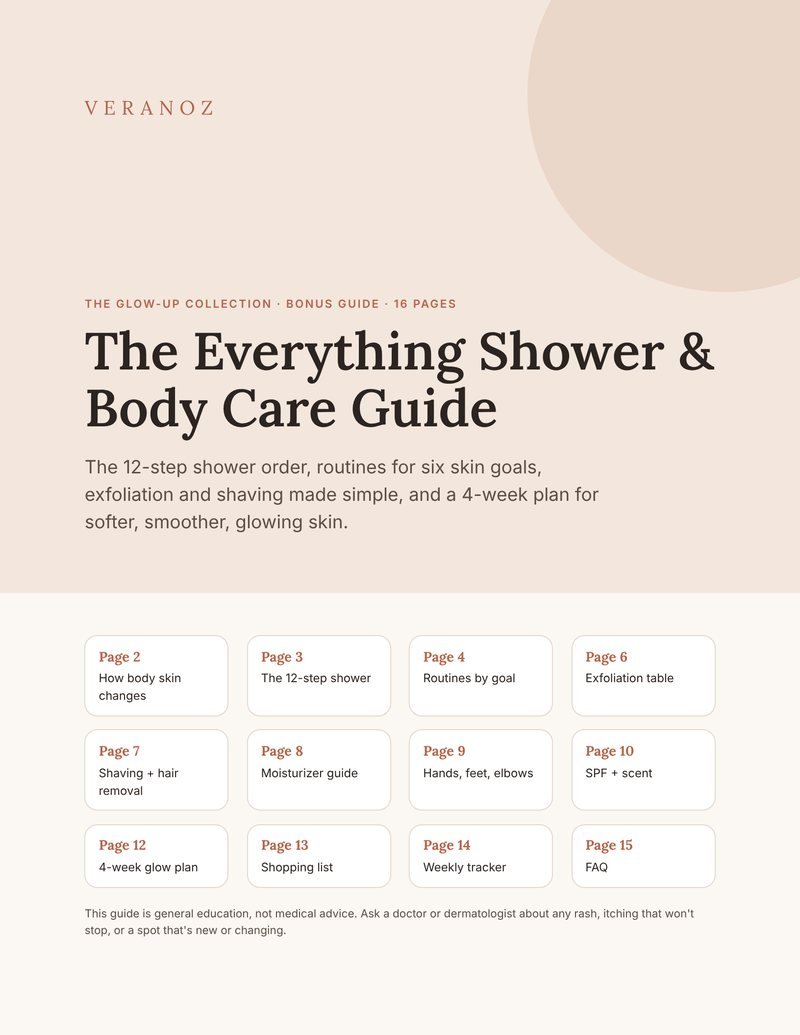
The Everything Shower & Body Care Guide
The 12-step shower order, routines for dry, crepey, bumpy or breakout-prone body skin, exfoliation and moisturizer guides, hands, feet and body SPF, and a 4-week body glow plan. 16 printable pages, instant access.
Get the Guide ($17) →Frequently Asked Questions
What is the correct order for a face mask routine?
Cleanse, use a hydrating toner if you like, apply the mask, rinse or pat in the residue, then apply serum, eye cream and moisturizer. Overnight masks go on last at night, and sunscreen goes on last in the morning.
Do you use a face mask before or after moisturizer?
Wash-off and sheet masks go before moisturizer, on clean skin. Overnight or sleeping masks go after, as your final step or in place of moisturizer.
How often should you use a face mask after 40?
Most mature skin does well with a hydrating mask one to three times a week. Use clay masks once or twice a week on oily areas only, and exfoliating masks no more than once a week.
Which face mask is best for mature skin?
A hydrating cream mask with ingredients such as glycerin, hyaluronic acid, ceramides or shea butter suits most skin over 40. Add an overnight mask in winter and a gentle exfoliating mask if your skin is rough and tolerates it.
Can I use a face mask every day?
Some gentle hydrating and sheet masks are designed for frequent use, but clay and exfoliating masks are not. Check the label, and cut back if your skin feels tight, red or stinging.
Can I leave a sheet mask on overnight?
No. Standard sheet masks are made for about 15 to 20 minutes. If you want an overnight treatment, choose a product labeled as an overnight or sleeping mask.
Should I wash my face after a face mask?
Rinse off wash-off masks with lukewarm water; you don’t need to cleanse again. After a sheet mask, pat the remaining serum in rather than rinsing, then moisturize.
Sources: American Academy of Dermatology, How to safely exfoliate at home; American Academy of Dermatology, Dermatologists’ top tips for relieving dry skin; American Academy of Dermatology, How to test skin care products; Mayo Clinic, Dry skin: diagnosis and treatment; National Institute on Aging, Skin care and aging; Dermatology Times, Social media mythbusters: overnight sheet masks. Veranoz has not tested every product listed. This guide is general information, not medical advice; see a dermatologist for persistent irritation, rashes or skin changes.
Get the Free Self-Care Reset Kit
Daily, weekly and monthly self-care checklists, the everything shower order, a 3-hour at-home spa day plan and a 30-day reset tracker. Free printable, instant access.
The Veranoz 30-Day Glow-Up Planner
Routines only work when you actually keep them. The planner gives you daily planning pages, weekly resets and habit trackers so your skincare, body care and self-care steps become automatic instead of something you remember once in a while.
Veranoz Guides to Go Deeper
Some links on Veranoz are affiliate links; we may earn a commission at no extra cost to you. This content is informational and not medical advice.