

Disclosure: As an Amazon Associate, Veranoz earns from qualifying purchases. We may earn a commission if you buy through links in this post, at no extra cost to you.
The glowing skin tips that work best after 40 are simple: protect your skin from the sun every day, keep it hydrated, cleanse gently, exfoliate a little (not a lot), use one or two proven ingredients such as vitamin C, niacinamide or a retinoid, and back it all up with sleep, a balanced diet, movement and no smoking. Glow is mostly light bouncing off a smooth, well-hydrated, even-toned surface. Dryness, dead skin buildup, sun damage and irritation all scatter that light, so the goal of a glowing skin routine is to fix those four things gently and consistently.
Free: the 12-Week Retinol Starter Plan
Which retinoid to pick, a night-by-night 12-week ramp-up calendar, how to tell purging from irritation and a printable progress tracker.
Free. You will also get a few short emails with tips and offers. Unsubscribe anytime. Privacy policy.
Below you’ll find 20 glowing skin tips, a morning and night glowing skin routine for mature skin, the ingredients worth using, how to get glowing skin naturally through daily habits, which “natural” tricks to skip, a quick pre-event glow plan, and a checklist.
The Real Problem
After 40, skin often looks flatter even when you’re doing “everything right.” Skin gets thinner and drier with age, years of sun show up as uneven tone, and dead cells shed more slowly. The usual reaction is to scrub harder, layer more actives or try a viral DIY mask, which irritates skin and makes it look duller and redder. Real glow comes from a calm, hydrated, protected skin barrier and a few targeted ingredients, not from doing more.
Short Answer: The Glowing Skin Routine
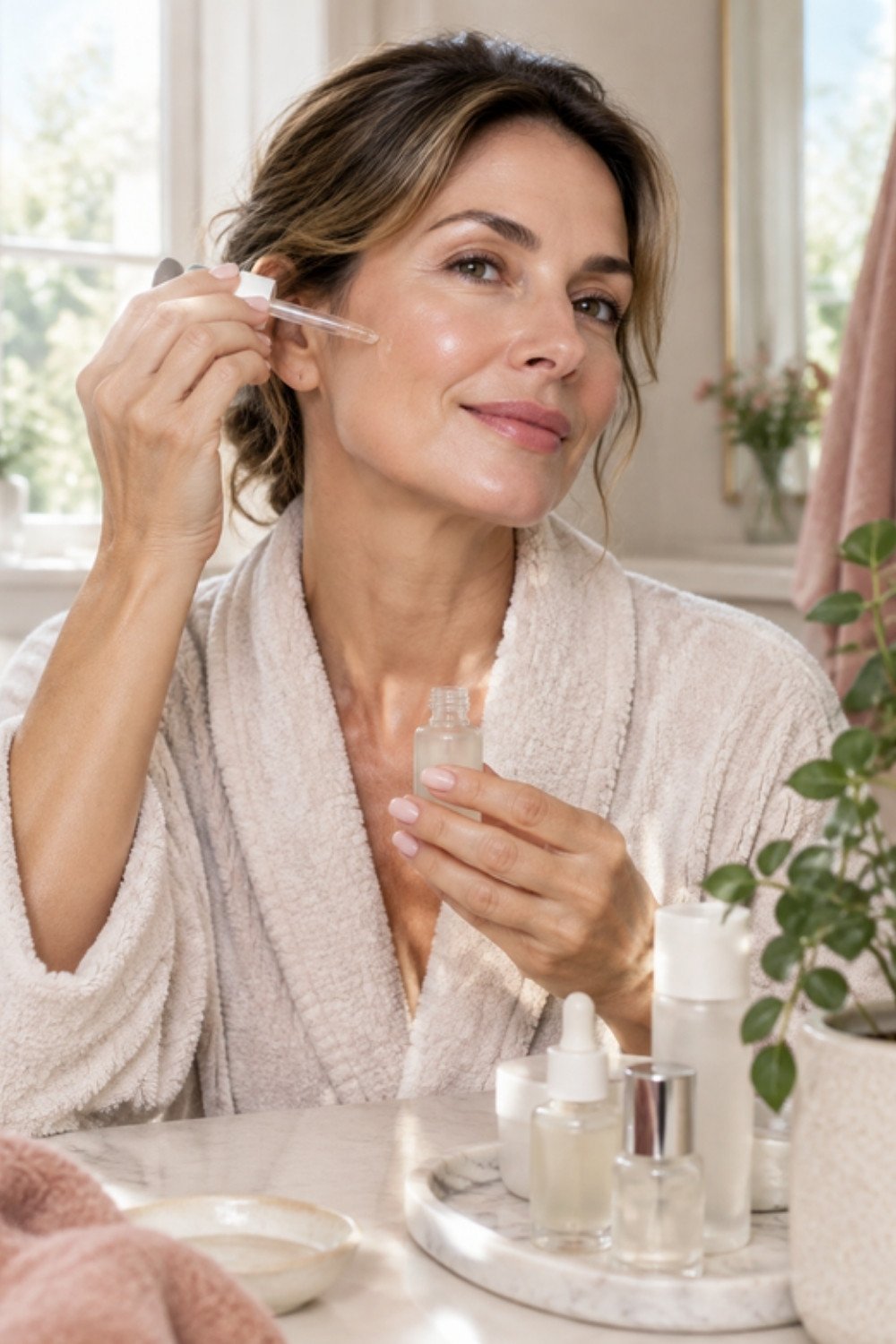
Morning: gentle cleanse or rinse, vitamin C or niacinamide serum, hydrating serum on damp skin, moisturizer, broad-spectrum SPF 30+ (tinted if you have dark spots). Night: remove sunscreen and makeup, gentle cleanse, a retinoid two to three nights a week as tolerated (skip retinoids if pregnant, trying to conceive or breastfeeding), moisturizer. Weekly: gentle exfoliation one to three times, depending on your skin. Daily habits: 7+ hours of sleep, plenty of fruit and vegetables, regular movement, less alcohol, no smoking. Expect visible change in four to twelve weeks.

The Winter Dry Skin Rescue Plan
Winter shower rules, a face routine for dry skin over 40, mini-routines for hands, lips and heels, an ingredient cheat sheet and a 14-day rescue checklist.
Send me the free plan →In This Guide
- What makes skin glow, and why it fades after 40
- 20 glowing skin tips
- Glowing skin routine: morning and night
- Ingredients for glowing skin
- How to get glowing skin naturally
- Natural remedies: what helps and what to skip
- Exfoliating for glow without damage
- Quick glow before an event
- Glowing skin products to look for
- When dullness needs a dermatologist
- Glowing skin checklist
- FAQ
What Makes Skin Glow, and Why It Fades After 40
Glowing skin isn’t shiny or oily skin. It’s skin that reflects light evenly. Three things make that happen: a smooth surface without a buildup of dead cells, enough water in the top layer of skin, and an even tone without blotches of redness or brown spots.
Age works against all three. MedlinePlus explains that as we get older the outer layer of skin thins, oil glands produce less oil so skin becomes drier, connective tissue loses strength and elasticity, and skin heals more slowly. It also notes that sun exposure is the single biggest factor in skin aging, which is why age spots and uneven tone appear on the face, chest and hands first.
The AAD adds a few accelerators of its own in its list of ways to reduce premature skin aging: smoking, which causes wrinkles and a dull, sallow complexion; drinking alcohol, which dehydrates and damages skin over time; harsh scrubbing, which irritates skin; and using products that sting or burn.
The good news is that most of those causes are within your control, and skin responds quickly to better hydration and gentler care. Hydration changes can show within a week or two; changes in tone and texture from ingredients like vitamin C or retinoids usually take two to three months.
Take a photo in the same spot by a window, with no makeup, before you change your routine. Take another after eight weeks. Daily mirror checks are too close to show gradual improvement.
20 Glowing Skin Tips
Skin care
- Wear sunscreen every single morning. The AAD recommends a broad-spectrum, water-resistant SPF 30 or higher on all uncovered skin, plus shade, a wide-brimmed hat and sunglasses. Daily UV protection is the most effective long-term glow habit there is.
- Use enough sunscreen. About one teaspoon for the face, roughly two finger lengths, applied about 15 minutes before you go out and reapplied every two hours outdoors.
- Choose a tinted sunscreen if you have dark spots. The AAD notes that tinted formulas containing iron oxide may help protect against dark spots caused by visible light.
- Cleanse gently. Use a mild cleanser, lukewarm water and your fingertips, then pat dry with a soft towel. The AAD warns that washcloths, mesh sponges and scrubbing can irritate skin.
- Moisturize every day. Moisturizers trap water in the skin, which makes it look smoother and more youthful, according to the AAD. Hydrated skin reflects light better.
- Apply hydrating serums to damp skin. Harvard Health recommends using hyaluronic acid on skin that is still damp and sealing it with moisturizer right away.
- Add vitamin C in the morning. A review in the Journal of Clinical and Aesthetic Dermatology describes topical vitamin C as an antioxidant that supports collagen, helps reduce melanin formation and complements sunscreen.
- Try niacinamide if your skin is red or uneven. Cleveland Clinic says niacinamide may strengthen the skin barrier, calm redness, brighten tone and improve the look of fine lines, and that most products contain 5 percent or less.
- Use a retinoid at night, slowly. Retinoids are the classic ingredient for smoother texture and fine lines, but they can cause dryness and peeling. Start two or three nights a week. Skip retinoids if pregnant, trying to conceive or breastfeeding. Our retinol after 40 beginner routine shows how.
- Exfoliate gently and not too often. One to three times a week is enough for most skin; less if you use a retinoid.
- Stop anything that stings or burns. The AAD points out that irritation can make skin look older.
- Keep your neck, chest and hands in the routine. They show sun damage as clearly as your face.
Lifestyle
- Protect your sleep. The CDC recommends 7 or more hours for adults up to 60 and 7 to 9 hours for ages 61 to 64. In a BMJ study from Karolinska Institutet, people looked less healthy and more tired in photos taken after sleep deprivation.
- Don’t smoke. Mayo Clinic notes that smoking narrows the small blood vessels in the outer layers of skin, dulls its appearance and damages collagen and elastin.
- Drink less alcohol. The AAD says alcohol dehydrates skin and damages it over time.
- Eat plenty of fruit and vegetables. The AAD notes that a diet rich in fruit and vegetables may help prevent damage that leads to premature aging, while a diet high in sugar or refined carbohydrates may speed it up.
- Move most days. The AAD suggests moderate exercise may improve circulation and give skin a more youthful look.
- Drink enough fluids. Mayo Clinic says pale yellow urine and rarely feeling thirsty are signs you’re getting enough. Water helps you feel better, but it won’t replace moisturizer.
- Manage stress. Mayo Clinic notes that high stress can make skin more sensitive and trigger breakouts; sleep, activity, meditation or yoga and time with people you enjoy all help.
- Be patient and consistent. Pick a routine and stick with it for at least eight weeks before judging it.
For the habit side of glow, see our 10 best habits for glowing skin.
Glowing Skin Routine: Morning and Night
| Step | Morning | Night |
|---|---|---|
| 1. Cleanse | Gentle cleanser or lukewarm rinse | Cleansing balm or micellar water to remove sunscreen and makeup, then a gentle cleanser |
| 2. Treat | Vitamin C or niacinamide serum | Retinoid two to three nights a week; exfoliating acid on a different night, once or twice a week |
| 3. Hydrate | Hyaluronic acid serum on damp skin | Hydrating serum on non-retinoid nights |
| 4. Moisturize | Lightweight cream or lotion | Richer cream with ceramides or glycerin |
| 5. Protect | Broad-spectrum SPF 30+, tinted if you have dark spots | None needed; a thin layer of ointment on very dry patches |
Keep it to one “active” per night. A retinoid night, an exfoliation night and two or three plain hydrating nights is a sensible weekly rhythm for mature skin, and it’s the idea behind our skin cycling routine for beginners. For full morning steps, read our morning routine ideas guide; for a minimal version, see a simple hydrating skincare routine.
Related ReadBest Serum for Glowing Skin: What to ChooseIngredients for Glowing Skin
| Ingredient | What it does for glow | How to use it | Watch out for |
|---|---|---|---|
| Sunscreen (SPF 30+) | Prevents the sun damage behind dullness, spots and lines | Every morning, about a teaspoon for the face | Too thin a layer; forgetting neck and hands |
| Vitamin C (L-ascorbic acid) | Antioxidant; supports collagen; helps even tone | Morning, before moisturizer; 10 to 20 percent is the typical effective range | Unstable; can sting sensitive skin |
| Niacinamide | Barrier support, less redness, more even tone | Once or twice daily; often 5 percent or less | Rarely, itching or mild burning |
| Hyaluronic acid | Draws water into skin for a plumper, smoother look | On damp skin, sealed with moisturizer | Can feel tight if not followed by cream |
| Retinoids | Smoother texture, softer fine lines over time | Night, two to three times a week to start | Dryness, peeling; skip if pregnant, trying to conceive or breastfeeding |
| Alpha hydroxy acids (glycolic, lactic) | Dissolve dead cells for a smoother, brighter surface | Night, once or twice a week | Irritation if combined with retinoids on the same night |
| Ceramides, glycerin, squalane | Repair and hydrate the barrier | In your moisturizer, morning and night | Very few issues |
The Al-Niaimi and Chiang review notes that vitamin C concentrations above about 8 percent are needed to be biologically meaningful, that concentrations above 20 percent add no benefit and may irritate, and that pairing vitamin C with vitamin E and ferulic acid improves stability. If you have dark spots specifically, see our guide to the best dark spot treatments and how to get even skin tone.
If you’d rather use a single night cream that combines a retinoid with peptides and hydrators, our Kollagen Intensiv review explains who it suits. Not sure where to start with targeted creams in general? Our Skinception review covers which ones are worth considering.
How to Get Glowing Skin Naturally
“Naturally” usually means through habits rather than procedures. These are the lifestyle factors with the most support from dermatology and health organizations.
Sleep
Sleep is one of the cheapest glow treatments available. Aim for a consistent bedtime and wake time, a dark, cool bedroom and devices put away at least half an hour before bed, as the CDC recommends. If you wake up puffy, Mayo Clinic suggests sleeping with your head slightly raised and limiting salt and fluids right before bed.
Food
Mayo Clinic recommends a diet rich in fruits, vegetables, whole grains and lean proteins, with plenty of water and limited added sugar and refined carbohydrates. The AAD says the evidence is still limited but suggests the same pattern may help prevent aging-related skin damage. In practice: a colorful plate, some healthy fats, and fewer sugary snacks.
Movement
U.S. physical activity guidelines recommend 150 to 300 minutes of moderate activity a week and muscle strengthening on at least two days. The post-walk flush fades, but regular activity supports circulation, sleep and mood, all of which show on your face.
Stress
Stress doesn’t just feel bad; the AAD notes it can trigger or worsen acne, eczema, psoriasis and rosacea. Relaxation techniques like slow breathing and progressive muscle relaxation get easier with practice, according to Mayo Clinic. Our guide to building a self care routine helps you fit them into a busy week.
Smoking and alcohol
Smoking is one of the clearest causes of a dull, sallow complexion. Alcohol dehydrates skin. If you want one lifestyle change with a visible payoff, cutting back on either is it.
Related ReadHow to Refresh Dull Looking Skin NaturallyNatural Remedies: What Helps and What to Skip
Natural doesn’t automatically mean gentle. Some kitchen and plant ingredients are soothing; others are acidic, abrasive or allergenic, and irritation is the opposite of glow.
| Usually fine for most skin | Skip or patch test first |
|---|---|
| Colloidal oatmeal products for dry, itchy skin | Lemon juice or other undiluted citrus on the face |
| Aloe vera gel (patch test first) | Baking soda pastes |
| Plant oils such as squalane or jojoba as a final layer on dry skin | Sugar or salt scrubs on facial skin |
| Honey as a short wash-off mask | Undiluted essential oils |
| A cool washcloth for morning puffiness | Toothpaste on spots |
The AAD warns that aggressive exfoliation can increase pigmentation in some people, especially on darker skin tones or skin with dark spots, which is one reason harsh DIY scrubs often backfire. Patch test any new product on your inner forearm and wait 24 hours, as Cleveland Clinic suggests. If your skin is already stinging, our guide to calming irritated skin gently will help you reset first.
Free: the 12-Week Retinol Starter Plan
Which retinoid to pick, a night-by-night 12-week ramp-up calendar, how to tell purging from irritation and a printable progress tracker.
Free. You will also get a few short emails with tips and offers. Unsubscribe anytime. Privacy policy.
Exfoliating for Glow Without Damage
Exfoliation removes the layer of dead cells that makes skin look flat. Done well, it’s one of the fastest ways to brighten. Done too often, it causes redness and irritation. The AAD’s advice:
- Know your skin type. Dry, sensitive or acne-prone skin may do best with a mild chemical exfoliant and a washcloth; oily or thicker skin may tolerate stronger methods.
- Check your other products. Prescription retinoids, retinol and benzoyl peroxide already make skin more sensitive. Exfoliating on top of them can make dryness worse.
- Be gentle. Apply scrubs or chemical exfoliants in small circles for about 30 seconds, then rinse with lukewarm water.
- Moisturize right after. Exfoliation can be drying.
- Never exfoliate broken or sunburned skin.
- The stronger the method, the less often you should use it.
For a frequency guide by skin type, see how often you should exfoliate your face.
Quick Glow Before an Event
When you need to look rested in an hour, focus on hydration, puffiness and light.
- Cool compress. A cool, damp washcloth under and around the eyes for a few minutes, sitting up.
- Hydrating sheet or cream mask for 10 to 15 minutes while you do your hair.
- Hyaluronic acid serum on damp skin, then moisturizer.
- Gentle facial massage while you apply moisturizer, using light upward and outward strokes. Our facial roller vs gua sha guide covers tools.
- SPF if it’s daytime.
- Cream blush and a touch of cream highlighter on the high points of the cheeks. Creams sit better on mature skin than powders.
- Glow on the body too: a few drops of body oil for glowing skin on collarbones and shoulders.
Skip anything new the day of an event. A new mask, peel or active ingredient is the most common cause of last-minute redness.
Glowing Skin Products to Look For
These are product types, not specific brands. Read labels for the ingredients above and choose fragrance-free if your skin reacts easily.
Broad-Spectrum Tinted Sunscreen SPF 30+
The single most important glow product. Tinted mineral formulas with iron oxide also help with visible light and even out tone. See our picks for the best sunscreen for women over 40.
Check on Amazon →Vitamin C Serum
Look for L-ascorbic acid in the 10 to 20 percent range, ideally with vitamin E and ferulic acid, in opaque, air-tight packaging.
Check on Amazon →Niacinamide Serum
A gentle, versatile option that pairs well with most routines. Start with 5 percent or less if your skin is sensitive.
Check on Amazon →Hyaluronic Acid Serum
Use on damp skin and seal right away. Look for formulas that mention more than one molecular weight.
Check on Amazon →Gentle Lactic Acid Exfoliant
Lactic acid is generally milder than glycolic acid. Use it at night once or twice a week, on a different night from your retinoid.
Check on Amazon →Ceramide Moisturizer
Ceramides, glycerin and squalane rebuild a barrier that holds water and reflects light evenly.
Check on Amazon →Beginner Retinol Night Serum
Start with a low strength two or three nights a week and moisturize well. Our beginner routine explains how to build up.
Check on Amazon →When Dullness Needs a Dermatologist
Most dullness improves with the routine above. See a board-certified dermatologist if:
- Your skin stings or burns with gentle products, or a rash doesn’t settle within two weeks.
- You have patches of brown pigment on the cheeks, forehead or upper lip that don’t fade with sunscreen and gentle brighteners.
- Redness, flushing or bumps keep returning.
- Any spot is new, changing, itching or bleeding. The AAD recommends regular skin self-checks.
- Your skin suddenly becomes very dry or itchy for no obvious reason.
A dermatologist can also discuss prescription retinoids and in-office treatments if you want faster results than over-the-counter products provide.
Glowing Skin Checklist
Every Morning
- Gentle cleanse or lukewarm rinse
- Vitamin C or niacinamide
- Hydrating serum on damp skin
- Moisturizer, including neck and chest
- Broad-spectrum SPF 30+, about one teaspoon for the face
Every Night
- Remove sunscreen and makeup
- Gentle cleanse with fingertips, lukewarm water
- One active only: retinoid, exfoliant or neither
- Moisturizer; ointment on dry patches
- Same bedtime, 7+ hours
Every Week
- Gentle exfoliation one to three times, as tolerated
- Hydrating mask once
- Activity on most days, strength work twice
- Plenty of fruit and vegetables; less alcohol
- Progress photo every eight weeks
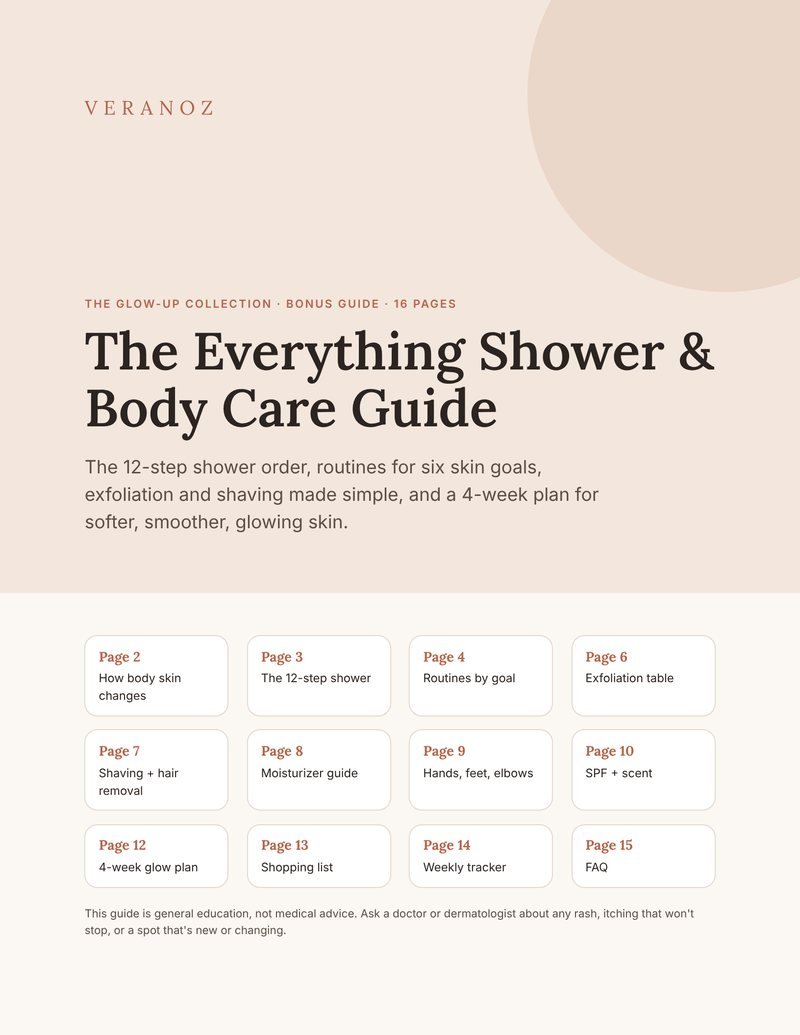
The Everything Shower & Body Care Guide
The 12-step shower order, routines for dry, crepey, bumpy or breakout-prone body skin, exfoliation and moisturizer guides, hands, feet and body SPF, and a 4-week body glow plan. 16 printable pages, instant access.
Get the Guide ($17) →Frequently Asked Questions
What are the best glowing skin tips for women over 40?
Wear broad-spectrum SPF 30+ every day, moisturize morning and night, cleanse gently, use vitamin C or niacinamide in the morning and a retinoid at night as tolerated, exfoliate gently once or twice a week, sleep 7+ hours, eat plenty of fruit and vegetables, and don’t smoke.
How can I get glowing skin naturally?
Focus on habits: consistent sleep, a diet rich in fruits, vegetables and whole grains, regular exercise, less alcohol, no smoking and stress management. Pair them with gentle cleansing, daily moisturizer and sunscreen. Skip harsh DIY remedies like lemon juice or baking soda.
What is a good glowing skin routine?
Morning: cleanse, vitamin C or niacinamide, hydrating serum, moisturizer, SPF 30+. Night: remove makeup, cleanse, one active (retinoid or gentle exfoliant), moisturizer. Keep it consistent for at least eight weeks.
How long does it take to get glowing skin?
Hydration improvements can show within a week or two. Changes in texture and tone from ingredients like vitamin C and retinoids usually take two to three months of consistent use.
Does drinking water give you glowing skin?
Drinking enough fluid supports your overall health, but it won’t fix dry skin on its own. Moisturizer and hydrating serums applied to the skin make a bigger visible difference.
Can I use vitamin C and retinol together?
Many people use vitamin C in the morning and a retinoid at night, which keeps irritation down. Skip retinoids if pregnant, trying to conceive or breastfeeding.
Why does my skin look dull even though I moisturize?
Common causes are dead skin buildup, sun damage, short sleep, smoking, and irritation from too many actives. Add gentle exfoliation, daily SPF and a vitamin C serum, and cut back on anything that stings.
Sources: American Academy of Dermatology, 11 ways to reduce premature skin aging, 10 skin care tips dermatologists use, Face washing 101, How to safely exfoliate at home and How to apply sunscreen; Mayo Clinic, Skin care: 5 tips for healthy skin, Bags under eyes, Water: How much should you drink every day? and Relaxation techniques; MedlinePlus (NIH), Aging changes in skin; Al-Niaimi F, Chiang NYZ, Topical vitamin C and the skin, J Clin Aesthet Dermatol, 2017; Cleveland Clinic, Niacinamide; Harvard Health Publishing, Hyaluronic acid for skin; Centers for Disease Control and Prevention, About sleep; U.S. Department of Health and Human Services, Physical Activity Guidelines for Americans, executive summary; Karolinska Institutet, A good night’s sleep the key to being attractive. Veranoz has not tested every product listed. This guide is general information, not medical advice; see a board-certified dermatologist for persistent skin concerns.
Get the Free Self-Care Reset Kit
Daily, weekly and monthly self-care checklists, the everything shower order, a 3-hour at-home spa day plan and a 30-day reset tracker. Free printable, instant access.
The Veranoz 30-Day Glow-Up Planner
Routines only work when you actually keep them. The planner gives you daily planning pages, weekly resets and habit trackers so your skincare, body care and self-care steps become automatic instead of something you remember once in a while.
Veranoz Guides to Go Deeper
Some links on Veranoz are affiliate links; we may earn a commission at no extra cost to you. This content is informational and not medical advice.